
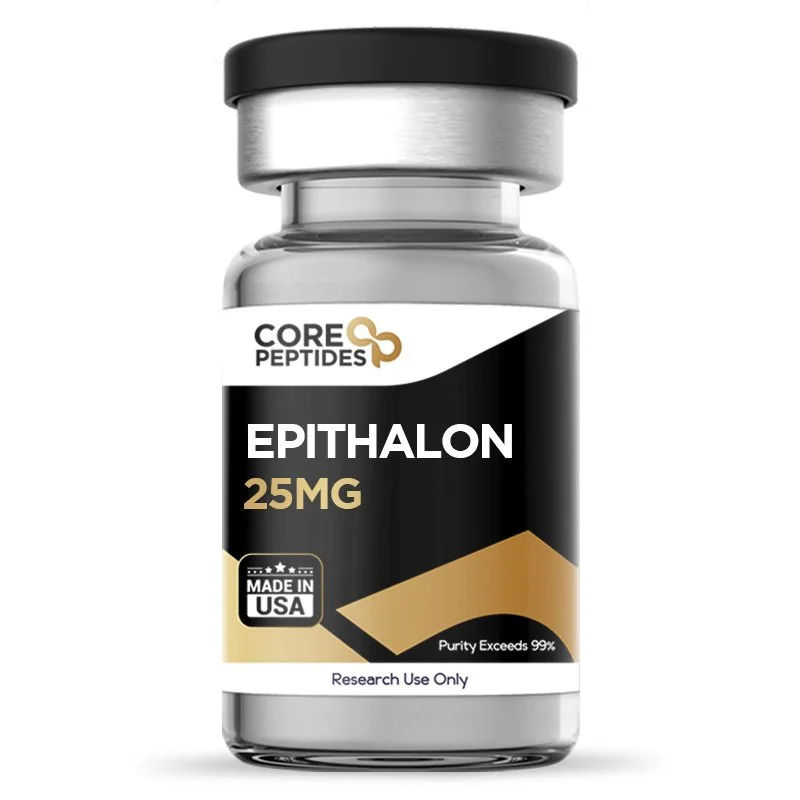
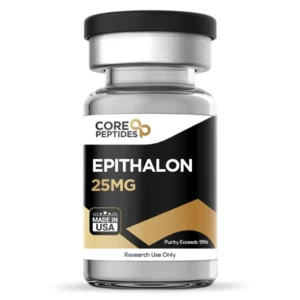
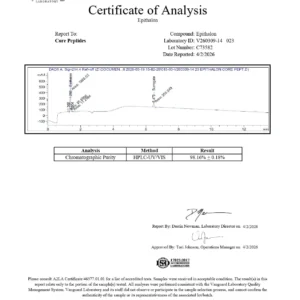
Epithalon (Epitalon) 25mg
€81.00
Epithalon Peptide 25mg — Proven Pineal Telomerase Research Compound
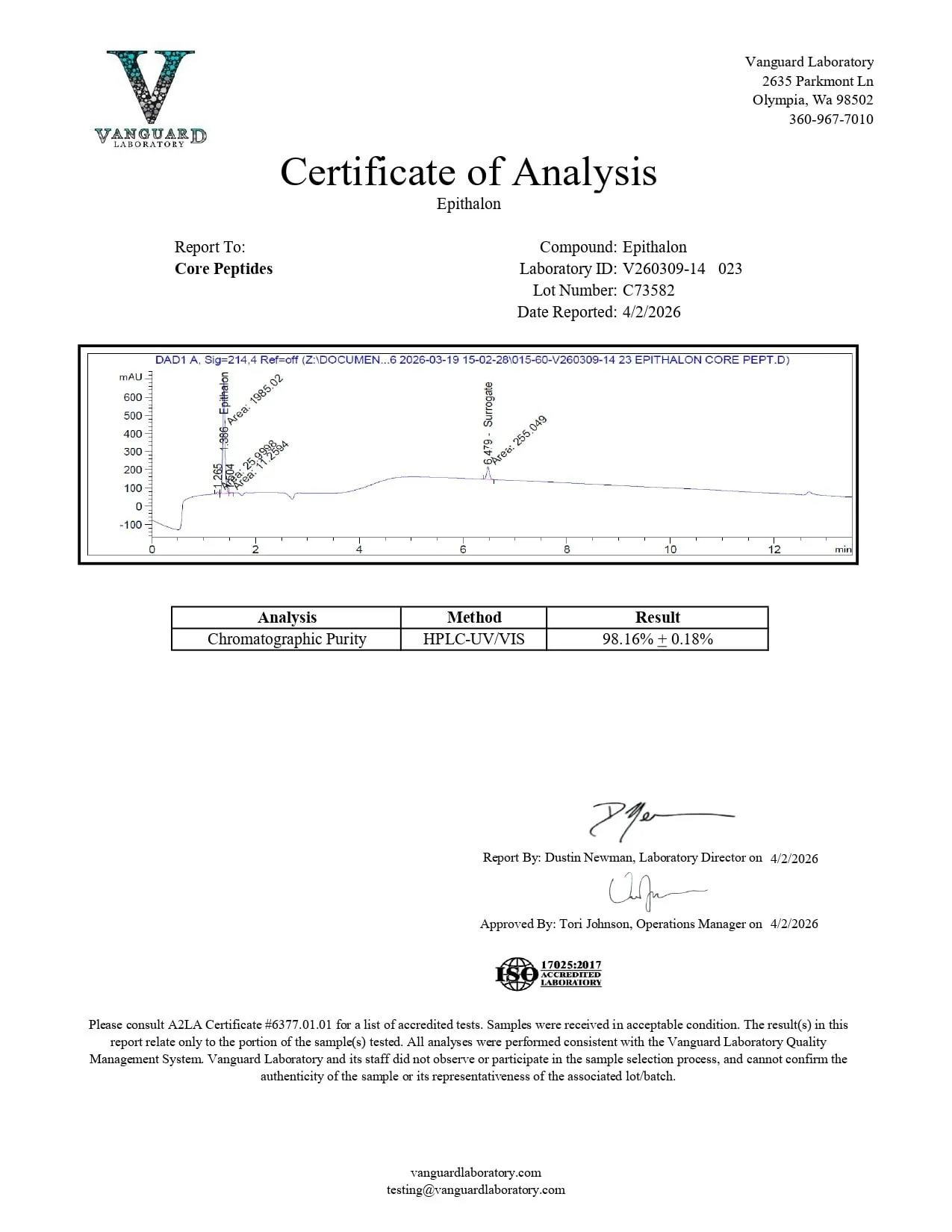
Epithalon peptide — also known as Epitalon, AEDG peptide, tetrapeptide Epitalon or Epithalone — is a synthetic tetrapeptide derived from Epithalamin, a naturally occurring peptide produced in the pineal gland. Research has suggested that Epithalon may regulate the function of the brain, the pineal gland and the eye retina — with particular investigation into its potential to stimulate telomerase generation, exhibit antioxidant properties, and modulate melatonin production through pineal gland stimulation. Supplied as a lyophilised powder in a single 25mg vial with a verified purity of >99% for in-vitro scientific research.
⚠️ Research Use Only. This product is intended exclusively for in-vitro scientific research. It is not approved for human or animal consumption, clinical use, or therapeutic application.
Table of Contents
- Product Specifications
- Epithalamin Origin and Synthetic Derivation
- Telomerase Activation Research
- Pineal Gland and Melatonin Research
- Antioxidant and Anti-Carcinogenic Research
- Eye Retina Research
- Research Applications
- Reconstitution and Storage
- FAQ
Product Specifications
| Parameter | Detail |
|---|---|
| Peptide | Epithalon (Epitalon / AEDG / Epithalone) |
| Sequence | Ala-Glu-Asp-Gly |
| Origin | Derived from Epithalamin (pineal gland peptide) |
| Quantity | 25mg |
| Unit | 1 Vial |
| Form | Lyophilised powder |
| Purity | >99% |
| SKU | P-EPITALON-25 |
Note on spelling: Epithalon and Epitalon are used interchangeably across research literature and supplier designations — both refer to the same Ala-Glu-Asp-Gly tetrapeptide. This product SKU uses “Epitalon” while the research literature uses both spellings.
Epithalamin Origin and Synthetic Derivation
The research history of epithalon peptide begins with Epithalamin — a naturally occurring polypeptide produced in the pineal gland, extracted and investigated for its biological properties before the specific active tetrapeptide sequence was identified and synthesised.
Epithalamin research suggested that this pineal gland extract could increase melatonin production, improve immunological and anti-carcinogenic functions in rodent models, and restore reproductive function in aged subjects. These findings motivated the synthesis of a peptide similar to Epithalamin — the tetrapeptide Ala-Glu-Asp-Gly — designated Epithalon. The synthetic version was designed to reproduce the key biological activities of the natural pineal gland peptide in a structurally defined, synthetically reproducible form.
Advances in peptide synthesis technology enabled the production of this four-amino-acid sequence from both pineal gland tissue extracts and eye retina tissue — establishing the dual tissue source that connects Epithalon research to both pineal biology and retinal research applications.
Telomerase Activation Research
The most scientifically significant and frequently cited research hypothesis surrounding epitalon peptide concerns its potential to stimulate the generation of telomerase — the enzyme responsible for maintaining and extending telomere length at the ends of chromosomes.
Telomeres are the protective DNA caps at chromosome ends that shorten with each cell division — a process central to cellular aging and senescence. Telomerase can reverse this shortening by adding telomeric repeats back to chromosome ends. In most somatic cells, telomerase activity is minimal — making compounds that may activate its expression objects of intense longevity and anti-aging research interest.
Research has examined Epithalon’s capacity to upregulate telomerase expression and activity in cell line models — with telomere lengthening reported as a downstream effect in preclinical studies. The proposed mechanism involves the peptide’s gene regulatory activity — influencing the transcriptional control of telomerase-encoding gene expression in a pattern consistent with the broader Khavinson bioregulator approach of epigenetic-like gene modulation.
Pineal Gland and Melatonin Research
The pineal gland origin of Epithalon’s parent molecule Epithalamin establishes a mechanistic connection between epithalon and the neuroendocrine biology of the pineal gland — specifically melatonin synthesis and circadian rhythm regulation.
Research has speculated that Epithalon may stimulate pineal gland function — potentially increasing melatonin production through gene regulatory effects on melatonin synthesis pathway enzymes. Melatonin is the primary hormone produced by the pineal gland, regulating circadian rhythm, sleep-wake cycle timing and serving as one of the body’s primary antioxidant hormones.
The sleep regulation research dimension of Epithalon connects its pineal biology profile to its anti-aging applications — given that melatonin production declines significantly with age, and the restoration of pineal function has been a persistent theme in longevity research.
Antioxidant and Anti-Carcinogenic Research
Research on Epithalamin — Epithalon’s natural parent — suggested strong antioxidant characteristics and improved anti-carcinogenic function in rodent research models. These properties have been investigated in the context of Epithalon itself — examining whether the synthetic tetrapeptide reproduces the antioxidant and anti-tumour biology of the natural pineal extract.
Antioxidant research has examined Epithalon’s capacity to reduce oxidative stress markers in research models — a property of direct relevance to both aging biology (where oxidative damage accumulation is a primary aging mechanism) and cancer biology (where oxidative stress plays a role in both carcinogenesis and tumour progression).
Anti-carcinogenic research has examined whether Epithalon’s gene regulatory activity and antioxidant properties extend to modulation of cancer-relevant gene expression — consistent with the immunological improvements observed in Epithalamin research.
Eye Retina Research
A distinct research application of Epithalon involves the eye retina — one of the two tissue sources from which peptides related to Epithalamin have been characterised. Research has investigated Epithalon’s potential to extend the retina’s workable integrity — examining whether the compound’s gene regulatory and antioxidant properties have protective effects on retinal cell function and longevity.
Retinal degeneration is a significant age-related research challenge — with progressive photoreceptor and retinal pigment epithelium dysfunction central to conditions including age-related macular degeneration. Epithalon’s investigated potential to support retinal integrity connects its anti-aging research profile to a specific and clinically relevant tissue target.
Research Applications
Epithalon is investigated within the following approved in-vitro research domains:
- Telomerase activation and telomere length maintenance research
- Chromosomal integrity and cellular aging biology
- Pineal gland function and melatonin synthesis regulation
- Sleep regulation and circadian rhythm research
- Antioxidant mechanism and oxidative stress research
- Anti-carcinogenic biology and immunological function
- Eye retina integrity and photoreceptor biology
- Longevity and lifespan extension biology
- Reproductive function restoration in aged research models
Reconstitution and Storage
Reconstitute with sterile or bacteriostatic water. Add solvent slowly along the vial wall and allow to dissolve by gentle rotation. Do not shake or vortex. Store lyophilised powder at −20°C. Once reconstituted, maintain at 4°C and use within the timeframe specified by your research protocol. Protect from light and avoid repeated freeze-thaw cycles.
Explore additional telomerase, anti-aging and pineal research compounds in our Anti-Age, Sleep Enhancement and Immunity research categories.
FAQ
What is epithalon peptide? Epithalon peptide — also known as Epitalon, AEDG peptide or Epithalone — is a synthetic tetrapeptide (Ala-Glu-Asp-Gly) derived from Epithalamin, the naturally occurring pineal gland peptide. Research has suggested it may regulate brain, pineal gland and eye retina function, with investigation into telomerase activation, antioxidant properties, melatonin production through pineal stimulation, anti-carcinogenic function and retinal integrity. Supplied as a 25mg lyophilised powder with >99% purity for in-vitro scientific research.
What is epitalon peptide and how does it relate to epithalon? Epitalon peptide and epithalon peptide refer to the same compound — Ala-Glu-Asp-Gly tetrapeptide — with the naming difference reflecting an alternative transliteration of the Russian scientific name. Both designations appear in research literature and supplier contexts interchangeably. The SKU for this product uses “Epitalon” while the broader research community uses both spellings. The compound, sequence and research profile are identical regardless of the spelling used.
What is epithalon’s telomerase activation research significance? Epithalon’s telomerase activation research significance lies in its investigated capacity to upregulate telomerase expression and activity in cell line models — with telomere lengthening reported as a downstream effect in preclinical research. Telomerase can reverse the telomere shortening that drives cellular aging and senescence — making compounds that may activate its expression central subjects of longevity biology research. The proposed mechanism involves Epithalon’s gene regulatory activity influencing telomerase-encoding gene transcription.
Does epithalon peptide have sleep research relevance? Yes — Epithalon has sleep research relevance through its pineal gland biology connection. Research has speculated that the compound may stimulate pineal gland function, potentially increasing melatonin production through gene regulatory effects on melatonin synthesis enzymes. Since melatonin is the primary hormone regulating circadian rhythm and sleep-wake cycle timing, Epithalon’s investigated pineal activity connects it directly to sleep and circadian biology research applications.
What is the 25mg format’s research significance for epithalon? The 25mg format provides a substantially larger research supply than the 10mg format — appropriate for extended research programmes requiring batch consistency, multiple experimental series, larger-scale cell culture studies or longitudinal telomere biology investigations requiring sufficient compound across the full study duration. Both formats carry >99% purity specification — the format choice depends on research programme scope.
Be the first to review “Epithalon (Epitalon) 25mg”
Related products
Healing and Regeneration research
Longevity and Anti-aging Research
Core Peptides
Cognitive Enhancement Research
Core Peptides
Core Peptides
Longevity and Anti-aging Research
Core Peptides
Reviews
There are no reviews yet.