
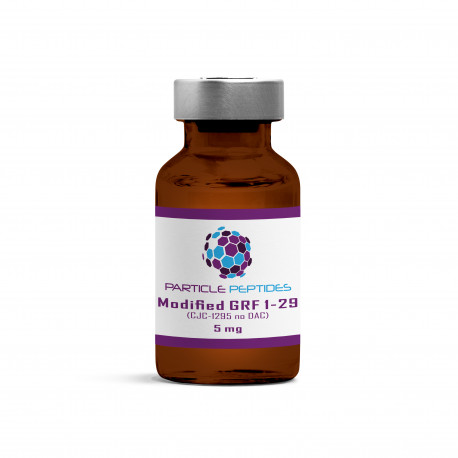
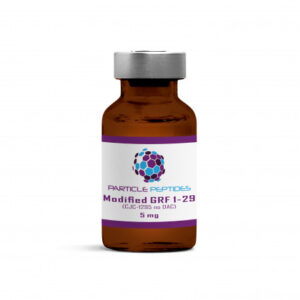
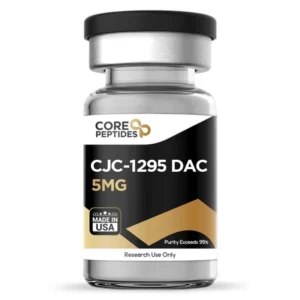
Mod GRF 1-29 (CJC-1295 No DAC) 5mg
€49.99
Modified GRF 1 29 — Proven GHRH Analogue Research Peptide 5mg
Modified GRF 1 29 — also designated Mod GRF 1-29 and structurally identical to CJC-1295 without the DAC component — is a truncated, purposefully modified analogue of growth hormone releasing hormone (GHRH), developed in the 1980s from the original GRF 1-29 sequence. Its structural modifications were introduced specifically to extend its half-life beyond that of native GHRH while preserving the full biological activity of the parent molecule. Supplied as a lyophilised white powder in a single 5mg vial with a verified purity of ≥99%, this compound is formulated to the exacting standards required for in-vitro scientific research.
⚠️ Research Use Only. This product is intended exclusively for in-vitro scientific research. It is not approved for human or animal consumption, clinical use, or therapeutic application.
Table of Contents
- Product Specifications
- Development History and Structural Modifications
- Mechanism of Action
- Mod GRF 1-29 vs CJC-1295 with DAC
- Research Applications
- Reconstitution and Storage
- FAQ
Product Specifications
| Parameter | Detail |
|---|---|
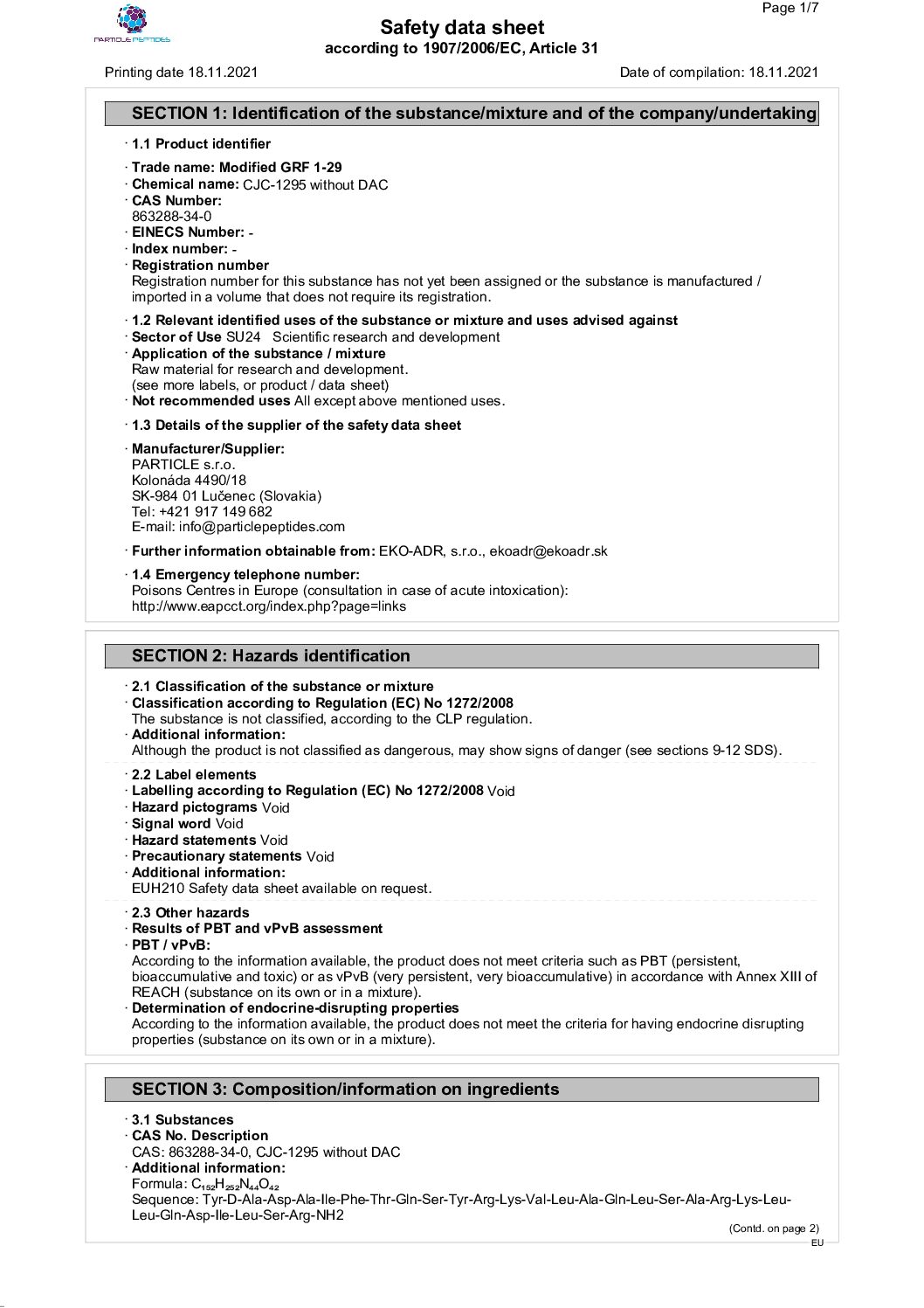
| Peptide | Mod GRF 1-29 (CJC-1295 No DAC) |
| Quantity | 5mg |
| Unit | 1 Vial |
| Physical Appearance | White powder |
| Salt Form | Acetate |
| Peptide Purity | ≥99% |
| Molecular Mass | 3,367.9 Da |
| CAS Number | 863288-34-0 |
| Solubility | Sterile / Bacteriostatic water — 1ml/vial |
| Sequence | Tyr-D-Ala-Asp-Ala-Ile-Phe-Thr-Gln-Ser-Tyr-Arg-Lys-Val-Leu-Ala-Gln-Leu-Ser-Ala-Arg-Lys-Leu-Leu-Gln-Asp-Ile-Leu-Ser-Arg-NH2 |
Development History and Structural Modifications
The development of modified grf 1 29 traces to the 1980s — a period of intensive research into synthetic analogues of the endogenous GHRH sequence. Native GRF 1-29 — the first 29 amino acids of GHRH — was identified as the biologically active fragment responsible for GH secretagogue activity. However, its rapid enzymatic degradation in circulation severely limited its research and therapeutic utility.
Structural modifications to produce Mod GRF 1-29 involved targeted amino acid substitutions designed to resist the specific proteolytic cleavage sites in the native sequence. The incorporation of D-Ala at position 2 — a critical modification shared with other protease-resistant GHRH analogues — addressed the primary degradation site while preserving receptor binding affinity.
These mod peptides engineering principles produced a compound with a meaningfully extended half-life relative to native GRF 1-29 — enabling research protocols that require sustained GHRH receptor engagement without the rapid clearance that limits native peptide utility.
Mechanism of Action
Mod GRF 1-29 binds to and activates the GHRH receptor (GHRHR) on pituitary somatotroph cells — the same receptor engaged by endogenous GHRH. This receptor activation triggers a cAMP-mediated signalling cascade that stimulates GH synthesis and secretion.
The compound’s effects on GH and subsequent IGF-1 levels are broadly consistent with those of native GHRH and have been confirmed in both in-vitro and in-vivo research settings. Research has characterised downstream effects including muscle and bone growth modulation, wound healing acceleration, fat metabolism enhancement and positive effects on cardiovascular function, metabolic rate and immune system activity — all consistent with GH axis stimulation.
Mod GRF 1-29 vs CJC-1295 with DAC
The primary research distinction between Mod GRF 1-29 and CJC-1295 with DAC lies in pharmacokinetics rather than pharmacodynamics.
Modified GRF 1-29 (CJC-1295 no DAC for sale): Provides a more acute, pulsatile GH release profile — clearing more rapidly from circulation and producing GH secretion patterns that more closely mimic physiological GH pulsatility.
CJC-1295 with DAC: The DAC component enables albumin binding and dramatically extends the half-life, producing sustained GH stimulation over days rather than hours — at the cost of GH pulsatility preservation.
The choice between these two analogues in research contexts depends on whether the protocol requires pulsatile or sustained GH axis stimulation — a mechanistically distinct distinction with direct implications for study design.
Research Applications
Modified GRF 1-29 is investigated within the following approved in-vitro research domains:
- GHRH receptor binding and activation studies
- GH pulsatility preservation and measurement research
- IGF-1 axis modulation and downstream signalling
- Muscle and bone growth mechanism investigation
- Wound healing and tissue repair research
- Fat metabolism and body composition studies
- Cardiovascular function and metabolic rate research
- Immune system modulation investigation
- Sleep architecture and GH secretion correlation studies
Reconstitution and Storage
Reconstitute with sterile or bacteriostatic water at 1ml per vial. Add solvent slowly along the vial wall and allow to dissolve by gentle rotation. Do not shake or vortex.
Store lyophilised powder at −20°C. Once reconstituted, maintain at 4°C and use within the timeframe specified by your research protocol. Protect from light and avoid repeated freeze-thaw cycles.
Explore additional GHRH analogue and GH secretagogue research compounds in our Muscle Growth, Anti-Age and Weight Loss research categories.
FAQ
What is modified GRF 1 29? Modified GRF 1 29 is a truncated GHRH analogue developed in the 1980s from the first 29 amino acids of GHRH. Structural modifications — principally D-Ala substitution at position 2 — extend its half-life relative to native GRF 1-29 by resisting enzymatic degradation. It is structurally identical to CJC-1295 without the DAC component, activates the GHRH receptor to stimulate GH and IGF-1 production and is supplied as a 5mg lyophilised white powder with ≥99% purity for in-vitro scientific research.
What is modified GRF 1 29 dosage in research? Modified GRF 1 29 dosage parameters in published preclinical and clinical research vary by study model, species and target endpoint. Research protocols characterise dose-response relationships for GHRH receptor activation and downstream GH secretion. This compound is supplied for in-vitro research use only — no therapeutic or personal dosage recommendation is made or implied. Investigators should reference peer-reviewed literature and approved institutional protocols.
What is CJC-1295 no DAC for sale in research contexts? CJC-1295 no DAC for sale refers to Mod GRF 1-29 — the structurally identical compound without the Drug Affinity Complex modification that characterises CJC-1295 with DAC. The absence of DAC means the compound does not bind albumin, produces a more acute pulsatile GH release profile and clears circulation more rapidly. This makes it suited to research protocols examining physiological GH pulsatility rather than sustained stimulation.
What are mod peptides in GHRH analogue research? Mod peptides in GHRH analogue research typically refers to modified versions of native growth hormone releasing hormone sequences — engineered to extend half-life, improve receptor binding affinity or resist enzymatic degradation while preserving the biological activity of the parent sequence. Mod GRF 1-29 is the primary example of this approach, with D-amino acid substitutions providing protease resistance without compromising GHRH receptor engagement.
How does Mod GRF 1-29 differ from CJC-1295 with DAC? The key difference is pharmacokinetic profile. Mod GRF 1-29 produces an acute, pulsatile GH release that more closely mirrors physiological GH secretion patterns. CJC-1295 with DAC binds albumin through its Drug Affinity Complex, extending its half-life from hours to days and producing sustained rather than pulsatile GH stimulation. Both are GHRH analogues activating the same receptor — the distinction is in the duration and pattern of GH axis engagement.
Be the first to review “Mod GRF 1-29 (CJC-1295 No DAC) 5mg”
Related products
Longevity and Anti-aging Research
Core Peptides
Particle Peptides
Weight Loss Research
Longevity and Anti-aging Research
Longevity and Anti-aging Research
Core Peptides
Core Peptides
Reviews
There are no reviews yet.