


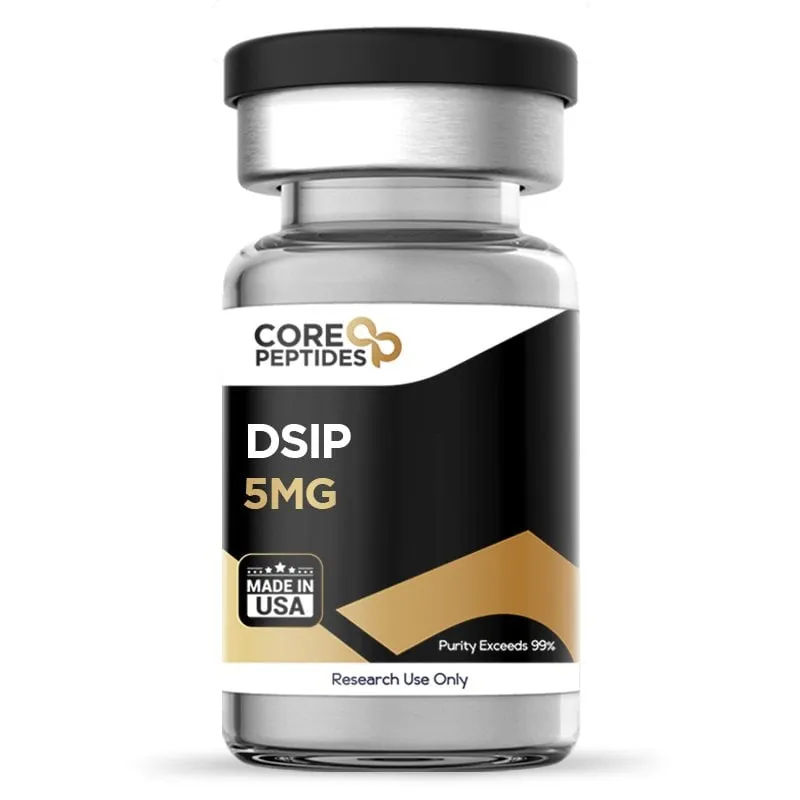

DSIP (Delta Sleep-Inducing Peptide) 5mg
€41.00
DSIP Peptide For Sale — Proven Neuropeptide Sleep Research Compound 5mg
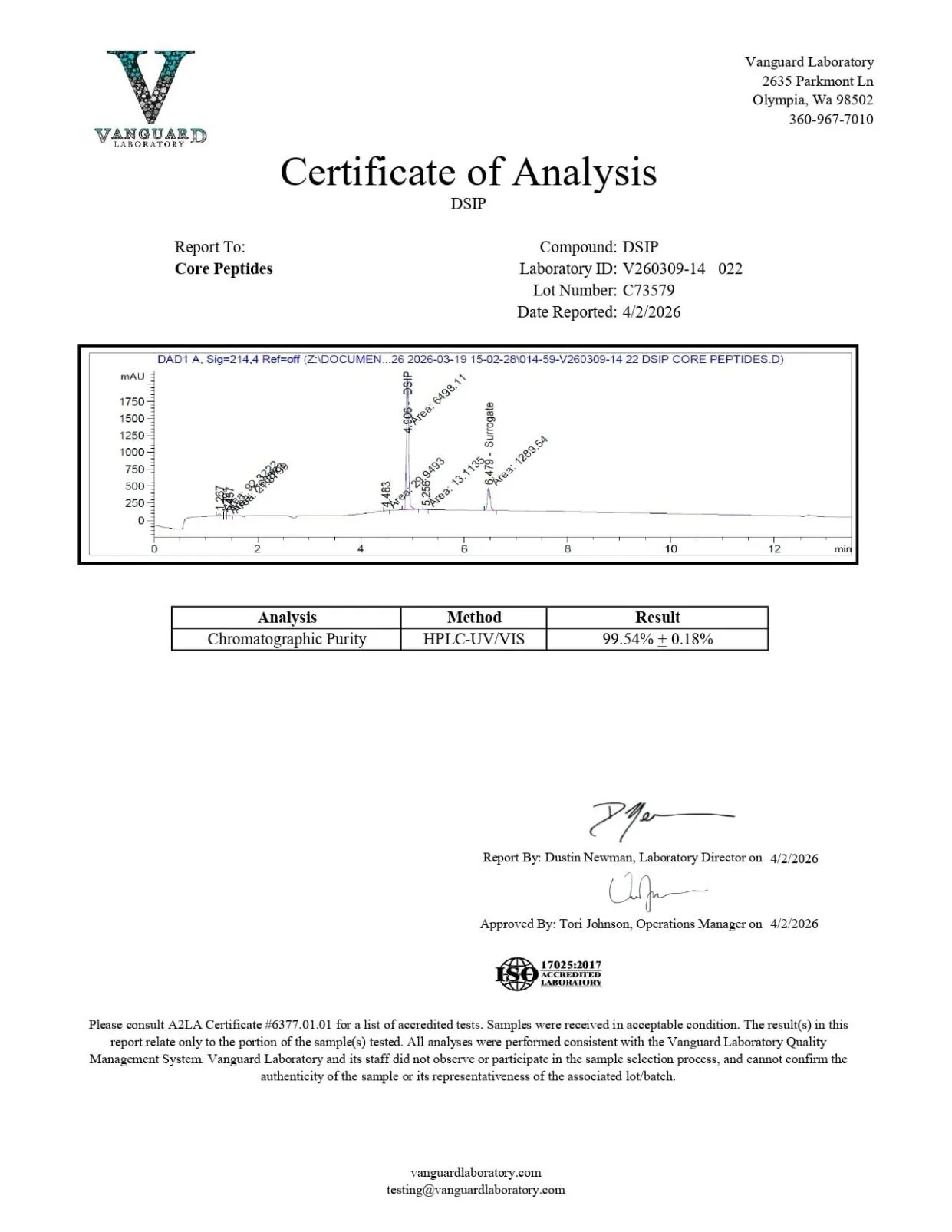
DSIP peptide for sale in research-grade form — Delta Sleep-Inducing Peptide — is a naturally occurring nine-amino-acid neuropeptide first isolated and characterised from the central nervous system of experimental models of electrically induced sleep between 1963 and 1977. Initially regarded solely for its sleep-inducing properties, DSIP has since been suggested by extensive research to influence a considerably broader range of physiological processes — including electrophysiological activity, neurotransmitter regulation, pain modulation and withdrawal biology. Supplied as a lyophilised powder in a single 5mg vial with a verified purity of >99% for in-vitro scientific research.
⚠️ Research Use Only. This product is intended exclusively for in-vitro scientific research. It is not approved for human or animal consumption, clinical use, or therapeutic application.
Table of Contents
- Product Specifications
- Discovery and CNS Origin
- Sleep Cycle Regulation Research
- Electrophysiological and Neurotransmitter Research
- Pain Modulation and Withdrawal Research
- Research Applications
- Reconstitution and Storage
- FAQ
Product Specifications
| Parameter | Detail |
|---|---|
| Peptide | DSIP (Delta Sleep-Inducing Peptide) |
| Amino Acids | 9 |
| Classification | Naturally Occurring Neuropeptide |
| First Characterised | 1963–1977 |
| Quantity | 5mg |
| Unit | 1 Vial |
| Form | Lyophilised powder |
| Purity | >99% |
| SKU | P-DSIP-5 |
Discovery and CNS Origin
DSIP peptide for sale carries a research history that began with its isolation from the central nervous system of experimental models during electrically induced sleep — a methodological context that immediately connected the peptide to sleep biology from its earliest characterisation.
First examined between 1963 and 1977, DSIP represents one of the earlier neuropeptides to be identified and studied in the context of sleep regulation research. Its isolation from CNS tissue during sleep states — rather than from peripheral tissue — established its centrally acting research profile and provided the biological rationale for the name that has defined its research identity ever since.
The nine-amino-acid sequence of this compound places it among the shorter naturally occurring neuropeptides — a structural simplicity that has facilitated synthetic production and enabled sustained research investigation across multiple decades and research groups globally.
Sleep Cycle Regulation Research
The defining and most extensively investigated research application of the disp peptide — a search variant reflecting the alternative spelling found in some research databases — is sleep cycle regulation. As suggested by its name, DSIP was initially characterised for its capacity to induce delta sleep states in experimental models.
Delta sleep — also known as slow-wave sleep (SWS) — is the deepest stage of non-REM sleep, characterised by slow, high-amplitude delta brainwaves. This sleep stage is considered the most restorative phase of the sleep cycle, associated with physical repair, immune function support and memory consolidation. Research investigating DSIP’s capacity to promote delta sleep induction examines the neuropeptide’s effects on sleep architecture — the distribution and duration of different sleep stages across a sleep period.
Research has examined DSIP’s potential to regulate the sleep cycle across multiple parameters — onset latency, slow-wave sleep promotion, circadian rhythm interaction and the electrophysiological brain wave patterns associated with different sleep stages.
Electrophysiological and Neurotransmitter Research
Beyond sleep architecture investigation, research has characterised DSIP’s potential impact on electrophysiological activity in the central nervous system. The peptide appears to influence neural firing patterns and brain wave activity in research models — effects consistent with its proposed role as a neuromodulator with actions extending beyond simple sleep induction.
Neurotransmitter level regulation has been investigated as a mechanistic pathway for DSIP’s broader physiological effects. Research has examined its capacity to modulate neurotransmitter concentrations in brain tissue — with serotonin, dopamine and related monoamine systems among the pathways under investigation. These neurotransmitter interactions provide mechanistic connections between DSIP’s sleep-regulating activity and its investigated applications in pain modulation and withdrawal biology.
Pain Modulation and Withdrawal Research
Two research directions that emerged from investigation of DSIP’s broader physiological profile are pain modulation and withdrawal symptom research — applications that reflect the peptide’s multi-system regulatory activity rather than a single, narrow sleep-focused mechanism.
Pain modulation research has examined DSIP’s potential to mitigate pain signalling — with proposed mechanisms involving both direct neurotransmitter interactions and the indirect effects of improved sleep quality on pain perception thresholds. The relationship between sleep architecture, neurotransmitter balance and pain processing provides a plausible mechanistic framework for this research direction.
Withdrawal biology research has investigated DSIP’s potential to mitigate withdrawal symptoms in experimental models — a research area connecting its neurotransmitter regulatory activity to the neurochemical dysregulation that characterises substance withdrawal states.
Research Applications
DSIP is investigated within the following approved in-vitro research domains:
- Delta sleep induction and slow-wave sleep architecture research
- Sleep cycle regulation and sleep onset investigation
- Electrophysiological activity and neural firing pattern research
- Neurotransmitter level regulation studies
- Pain modulation and nociceptive signalling research
- Withdrawal biology and neurochemical dysregulation investigation
- Circadian rhythm and chronobiology research
- Neuroendocrine regulation investigation
Reconstitution and Storage
Reconstitute with sterile or bacteriostatic water. Add solvent slowly along the vial wall and allow to dissolve by gentle rotation. Do not shake or vortex. Store lyophilised powder at −20°C. Once reconstituted, maintain at 4°C and use within the timeframe specified by your research protocol. Protect from light and avoid repeated freeze-thaw cycles.
Explore additional sleep and neuropeptide research compounds in our Sleep Enhancement, Reproductive Health and Anti-Age research categories.
FAQ
What is DSIP peptide for sale? DSIP peptide for sale is Delta Sleep-Inducing Peptide — a naturally occurring nine-amino-acid neuropeptide first isolated from CNS tissue during electrically induced sleep and characterised between 1963 and 1977. It is researched for sleep cycle regulation, delta sleep induction, electrophysiological activity, neurotransmitter level modulation, pain mitigation and withdrawal biology. Supplied as a 5mg lyophilised powder with >99% purity for in-vitro scientific research.
What is a disp peptide in search contexts? The term “disp peptide” appearing in search contexts is an alternative spelling or typographical variant of “DSIP peptide” — Delta Sleep-Inducing Peptide. Both refer to the same nine-amino-acid neuropeptide. DSIP is the correct scientific designation. Searches using either spelling typically reference the same research compound and its investigated applications in sleep cycle regulation, neurotransmitter modulation and pain biology.
What research applications is DSIP used for beyond sleep? DSIP research applications beyond sleep cycle regulation include electrophysiological activity investigation in CNS tissue, neurotransmitter level regulation studies across serotonin and dopamine systems, pain modulation and nociceptive signalling research, withdrawal biology and neurochemical dysregulation investigation, circadian rhythm and chronobiology research, and neuroendocrine regulation studies. All applications are within approved in-vitro and preclinical research frameworks.
What is delta sleep and why is DSIP research significant? Delta sleep — also known as slow-wave sleep (SWS) — is the deepest phase of non-REM sleep, characterised by slow, high-amplitude delta brainwaves. It is considered the most restorative sleep stage, associated with physical repair, immune function and memory consolidation. DSIP research is significant because understanding the neuropeptide mechanisms governing delta sleep induction has implications for research into insomnia, sleep disorders and the broader relationship between sleep quality and physiological health.
Is the 5mg DSIP format different from larger format preparations? The 5mg format is a smaller research quantity appropriate for initial investigation, single experimental series or lower-volume assay requirements. Larger format DSIP preparations (such as 10mg) are available for extended research programmes requiring greater compound volume. Both formats carry the same >99% purity specification — the format choice depends on the research volume requirements and programme duration.
Be the first to review “DSIP (Delta Sleep-Inducing Peptide) 5mg”
Related products
Reproductive Health Research
Longevity and Anti-aging Research
Core Peptides
Longevity and Anti-aging Research
Reproductive Health Research
Reproductive Health Research
Core Peptides
Longevity and Anti-aging Research
Reviews
There are no reviews yet.