
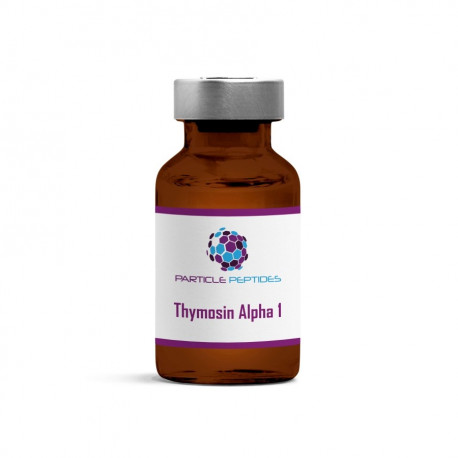
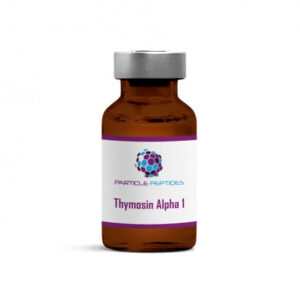
Thymosin Alpha 1 (Tα1) 5mg
€44.99
Thymosin Alpha 1 Peptide — Proven Immune Research Compound 5mg
Thymosin alpha 1 peptide — also designated Tα1 and clinically referenced as Zadaxin — is a naturally occurring peptide isolated from thymus gland tissue, first characterised in 1972. The thymus gland is a central organ of the adaptive immune system, and thymosin alpha 1 plays a critical role in regulating immune responses and T-lymphocyte function. With a research history spanning over five decades, this peptide has been studied across immunocompromised states, malignancies, infectious diseases and vaccine response enhancement. Supplied as a lyophilised white powder in a single 5mg vial with a verified purity of ≥96%, this compound is formulated for in-vitro scientific research.
⚠️ Research Use Only. This product is intended exclusively for in-vitro scientific research. It is not approved for human or animal consumption, clinical use, or therapeutic application in non-approved jurisdictions.
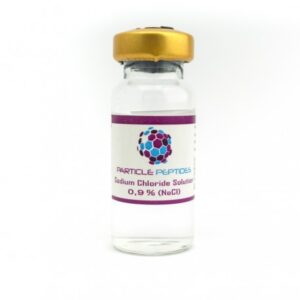
⚠️ Special Reconstitution Note: Reconstitute with Phosphate Buffered Saline Solution (PBS) 2.5ml/vial. Allow 24 hours for complete dissolution before use.
Table of Contents
- Product Specifications
- Thymus Biology and Research Context
- Mechanism of Action — Immune Regulation
- Clinical Research History
- Vaccine Enhancement Research
- Research Applications
- Reconstitution and Storage
- FAQ
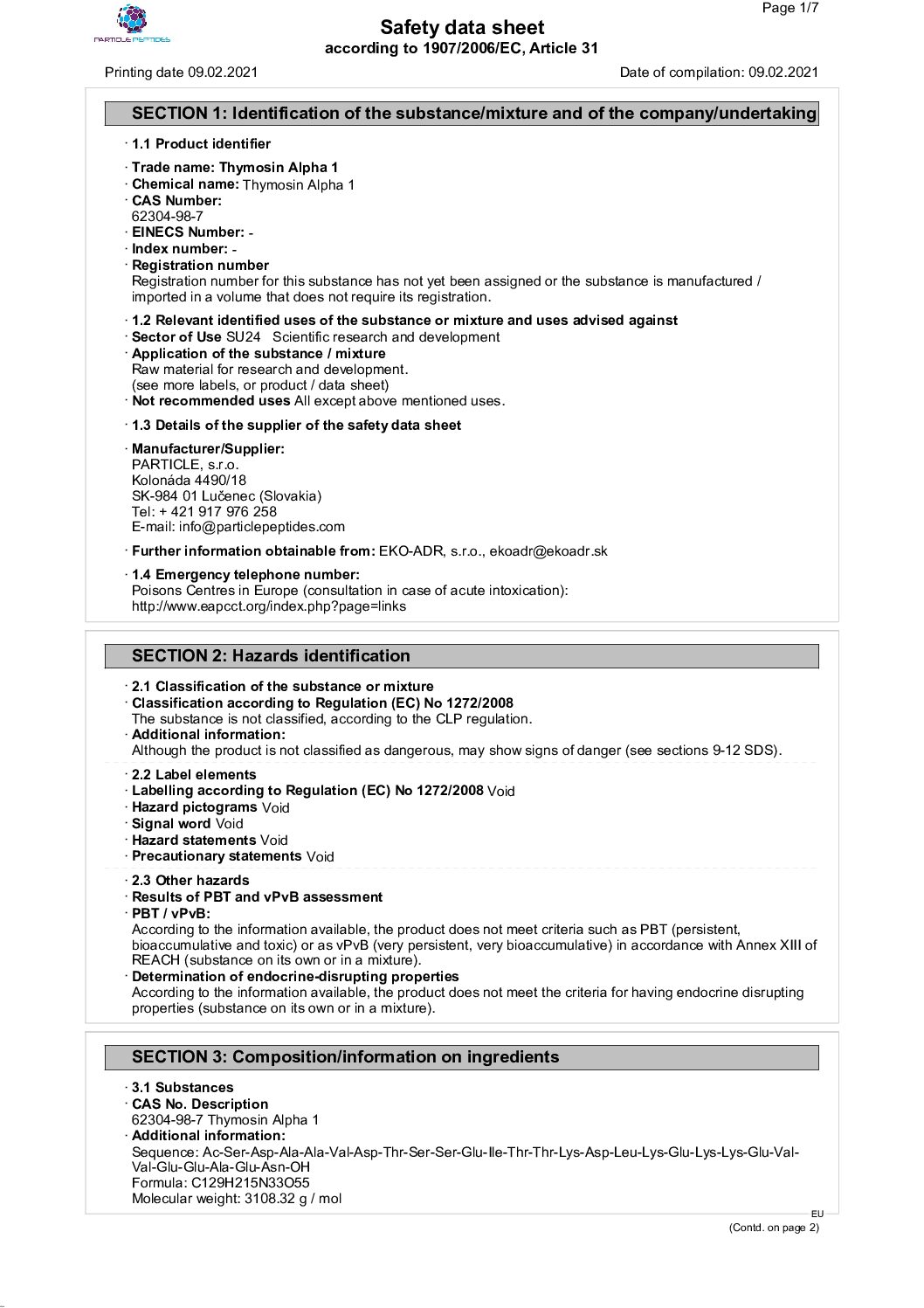
Product Specifications
| Parameter | Detail |
|---|---|
| Peptide | Thymosin Alpha 1 (Tα1 / Zadaxin) |
| Quantity | 5mg |
| Unit | 1 Vial |
| Physical Appearance | White powder |
| Salt Form | Acetate |
| Peptide Purity | ≥96% |
| Molecular Mass | 3,108.32 Da |
| CAS Number | 62304-98-7 |
| Solubility | Phosphate Buffered Saline (PBS) — 2.5ml/vial |
| Reconstitution Note | Allow 24 hours for complete dissolution |
| Sequence | Ac-Ser-Asp-Ala-Ala-Val-Asp-Thr-Ser-Ser-Glu-Ile-Thr-Thr-Lys-Asp-Leu-Lys-Glu-Lys-Lys-Glu-Val-Val-Glu-Glu-Ala-Glu-Asn-OH |
Thymus Biology and Research Context
The thymus gland occupies a unique and essential position in the architecture of the adaptive immune system. It is the primary site of T-lymphocyte maturation — the process by which naive T-cells develop the receptor diversity and self-tolerance required for effective and regulated immune function.
Thymosin alpha 1 is a peptide produced endogenously within the thymus that plays a direct regulatory role in this maturation process. First isolated from thymus tissue in 1972, it was identified as one of the biologically active fractions responsible for the thymus gland’s profound influence on systemic immune competence.
The thymus undergoes progressive involution with age — a process that correlates with declining T-cell output and the immunosenescence characteristic of aging. This age-related decline in thymic function and thymosin production has positioned thymosin alpha 1 buy research interest at the intersection of immunology, aging biology and longevity research.
Mechanism of Action — Immune Regulation
Thymosin alpha 1 exerts its immunomodulatory effects through multiple receptor-mediated and intracellular signalling pathways. Research has characterised its activity across the following mechanistic domains.
T-cell maturation and differentiation is the primary area of investigation — consistent with its thymic origin and its role in the natural process of T-lymphocyte development. Research has examined its capacity to promote the differentiation of naive T-cells into effector subtypes relevant to both cellular and humoral immunity.
Toll-like receptor (TLR) pathway modulation has been characterised — with thymosin alpha 1 demonstrating the capacity to activate TLR-mediated signalling in dendritic cells and macrophages, driving innate immune activation that bridges to adaptive immune responses.
Cytokine expression modulation — including effects on interferon-gamma, interleukin-2 and other immune regulatory cytokines — has been documented across multiple research models. Natural killer (NK) cell activation and dendritic cell maturation have also been investigated as downstream effects of thymosin alpha 1 receptor engagement.
Clinical Research History
The research history of thymosin alpha 1 buy online interest is notably extensive for a peptide research compound — spanning over five decades from its first isolation to current investigation.
Published research has examined thymosin alpha 1 across a substantial range of disease models and clinical applications. Immunocompromised states — including HIV-related immune deficiency and post-chemotherapy immunosuppression — have been primary research targets. Malignancy research has investigated the compound’s potential to enhance tumour immunosurveillance through T-cell and NK cell activation.
Infectious disease research has spanned bacterial infections, fungal infections, cystic fibrosis complications and chronic viral hepatitis — the latter representing the most extensively clinically documented application. Thymosin alpha 1 has received approval in 35 developing countries for the treatment of hepatitis B and C — a regulatory milestone that reflects the depth of its clinical evidence base in this specific application.
Sepsis research has also been conducted — examining thymosin alpha 1’s immunomodulatory potential in the context of dysregulated systemic immune response, where T-cell exhaustion is a significant prognostic factor.
Vaccine Enhancement Research
A specific and growing area of thymosin alpha 1 price research interest involves vaccine response enhancement. Research has examined the compound’s capacity to improve the immunogenicity of vaccines in immunocompromised and elderly populations where conventional vaccine efficacy is reduced.
The mechanism proposed involves thymosin alpha 1’s enhancement of antigen-presenting cell function and T-helper cell priming — amplifying the adaptive immune response to vaccine antigens in populations where baseline immune competence is insufficient for robust vaccine-induced protection.
This application area represents a convergence of the compound’s core immunomodulatory properties with a significant unmet clinical research need — making it an active and expanding domain of investigation.
Research Applications
Thymosin alpha 1 is investigated within the following approved in-vitro and preclinical research domains:
- T-cell maturation, differentiation and activation studies
- Toll-like receptor pathway modulation research
- Innate and adaptive immune response integration
- NK cell and dendritic cell activation investigation
- Cytokine expression modulation research
- Immunocompromised state and immunosuppression research
- Chronic viral hepatitis B and C immune mechanism studies
- HIV-related immune dysfunction investigation
- Malignancy immunosurveillance research
- Vaccine response enhancement and adjuvant biology
- Sepsis and systemic inflammatory immune dysregulation research
- Cystic fibrosis and chronic infection immunity research
Reconstitution and Storage
⚠️ Critical Note: Thymosin Alpha 1 requires reconstitution with Phosphate Buffered Saline Solution (PBS) at 2.5ml per vial. This differs from standard peptide reconstitution protocols. Allow 24 hours for complete dissolution before use in research applications — do not assume dissolution is complete before this period.
Add PBS slowly along the vial wall. Do not shake or vortex. Store lyophilised powder at −20°C. Once reconstituted, maintain at 4°C and use within the timeframe specified by your research protocol. Protect from light and avoid repeated freeze-thaw cycles.
Explore additional immune system and longevity research peptides in our Immunity, Anti-Age and Healing research categories.
FAQ
What is thymosin alpha 1 peptide? Thymosin alpha 1 peptide — also designated Tα1 and clinically known as Zadaxin — is a naturally occurring thymic peptide first isolated in 1972. It plays a central role in T-lymphocyte maturation and immune regulation. Research history spanning over five decades has examined its utility across immunocompromised states, malignancies, chronic hepatitis B and C, sepsis, cystic fibrosis and vaccine response enhancement. Approved in 35 developing countries for hepatitis B and C treatment. Supplied as a 5mg lyophilised white powder with ≥96% purity for in-vitro scientific research.
Where can I buy thymosin alpha 1? Thymosin alpha 1 buy options are available through specialist research peptide suppliers. This compound is supplied strictly for in-vitro scientific research. It is not approved for human consumption or therapeutic use in non-approved jurisdictions. Researchers should ensure compliance with all applicable institutional and regulatory requirements when procuring this compound.
Where can I buy thymosin alpha 1 online? Thymosin alpha 1 buy online is available through research peptide platforms supplying in-vitro research compounds. This product is not approved for human administration outside the 35 countries where it holds regulatory approval for specific hepatitis indications. All research use should comply with institutional and regulatory requirements applicable to the researcher’s jurisdiction.
What is thymosin alpha 1 price for research purposes? Thymosin alpha 1 price for research-grade lyophilised peptide reflects the compound’s 28-amino-acid sequence complexity, its ≥96% purity specification, its specialised PBS reconstitution requirements and its 24-hour dissolution period. These characteristics distinguish it from simpler short peptides and are reflected in its research-grade pricing. For current pricing, reference the product details above.
Why does thymosin alpha 1 require PBS reconstitution and a 24-hour wait? Thymosin alpha 1’s requirement for PBS reconstitution rather than standard sterile or bacteriostatic water reflects the peptide’s structural characteristics and solubility profile. The 24-hour dissolution period is specified to ensure complete and uniform dissolution of the lyophilised material — incomplete dissolution prior to use in research applications can produce inconsistent results. Always follow this reconstitution protocol precisely to ensure research reproducibility.
What makes thymosin alpha 1 significant in hepatitis B and C research? Thymosin alpha 1’s significance in hepatitis B and C research derives from its investigated capacity to enhance T-cell and natural killer cell activity against hepatitis-infected hepatocytes, modulate antiviral cytokine expression and improve immune-mediated viral clearance. Its regulatory approval in 35 countries for these indications — an unusual degree of clinical validation for a research peptide — reflects the depth of its evidence base in this specific application and sustains substantial ongoing research interest.
Be the first to review “Thymosin Alpha 1 (Tα1) 5mg”
Related products
Core Peptides
Weight Loss Research
Longevity and Anti-aging Research
Longevity and Anti-aging Research
Reproductive Health Research
Core Peptides
Cognitive Enhancement Research
Cognitive Enhancement Research
Reviews
There are no reviews yet.