
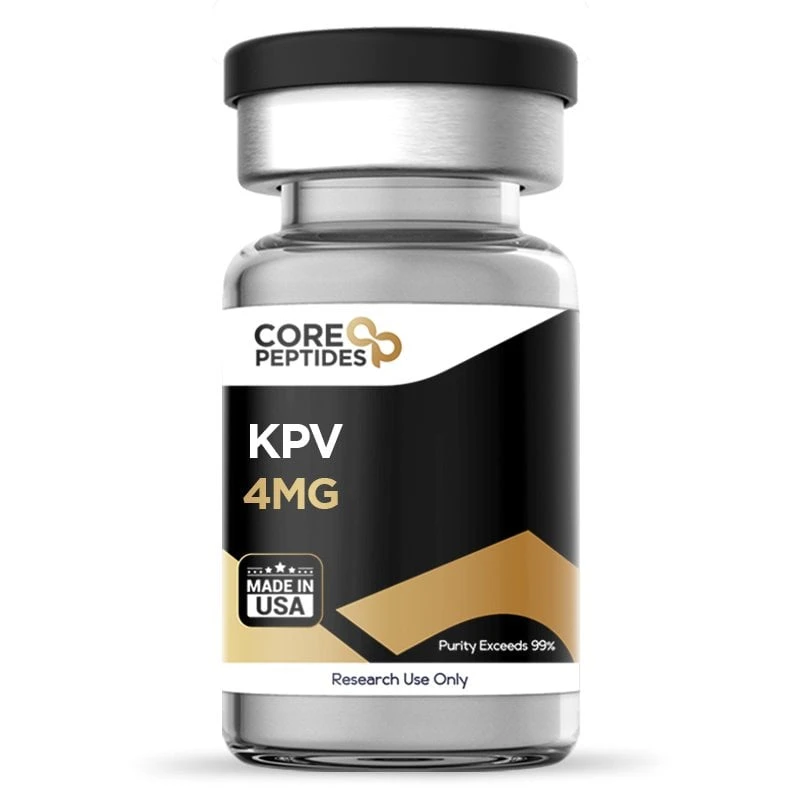
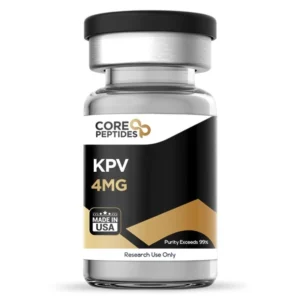
KPV 4mg
€38.00
KPV Peptide For Sale — Proven Anti-Inflammatory Research Tripeptide 4mg
KPV peptide for sale in research-grade form is a tripeptide derived from the C-terminal fragment of alpha-melanocyte stimulating hormone (alpha-MSH) — the three-amino-acid sequence Lysine-Proline-Valine identified as the primary amino acid messenger sequence responsible for the parent hormone’s biological properties. First isolated and characterised in 1989, KPV has been researched for its capacity to modulate inflammatory pathways — specifically through potential inhibition of pro-inflammatory cytokine synthesis and release in intestinal and immune cells. Supplied as a lyophilised powder in a single 4mg vial at >99% purity for in-vitro scientific research.
⚠️ Research Use Only. This product is intended exclusively for in-vitro scientific research. It is not approved for human or animal consumption, clinical use, or therapeutic application.
Table of Contents
- Product Specifications
- Alpha-MSH Origin and C-Terminal Derivation
- 1989 Discovery and Isolation Research
- Anti-Inflammatory Mechanism Research
- Intestinal Biology and IBD Research
- Wound Healing and Antimicrobial Research
- Research Applications
- Reconstitution and Storage
- FAQ
Product Specifications
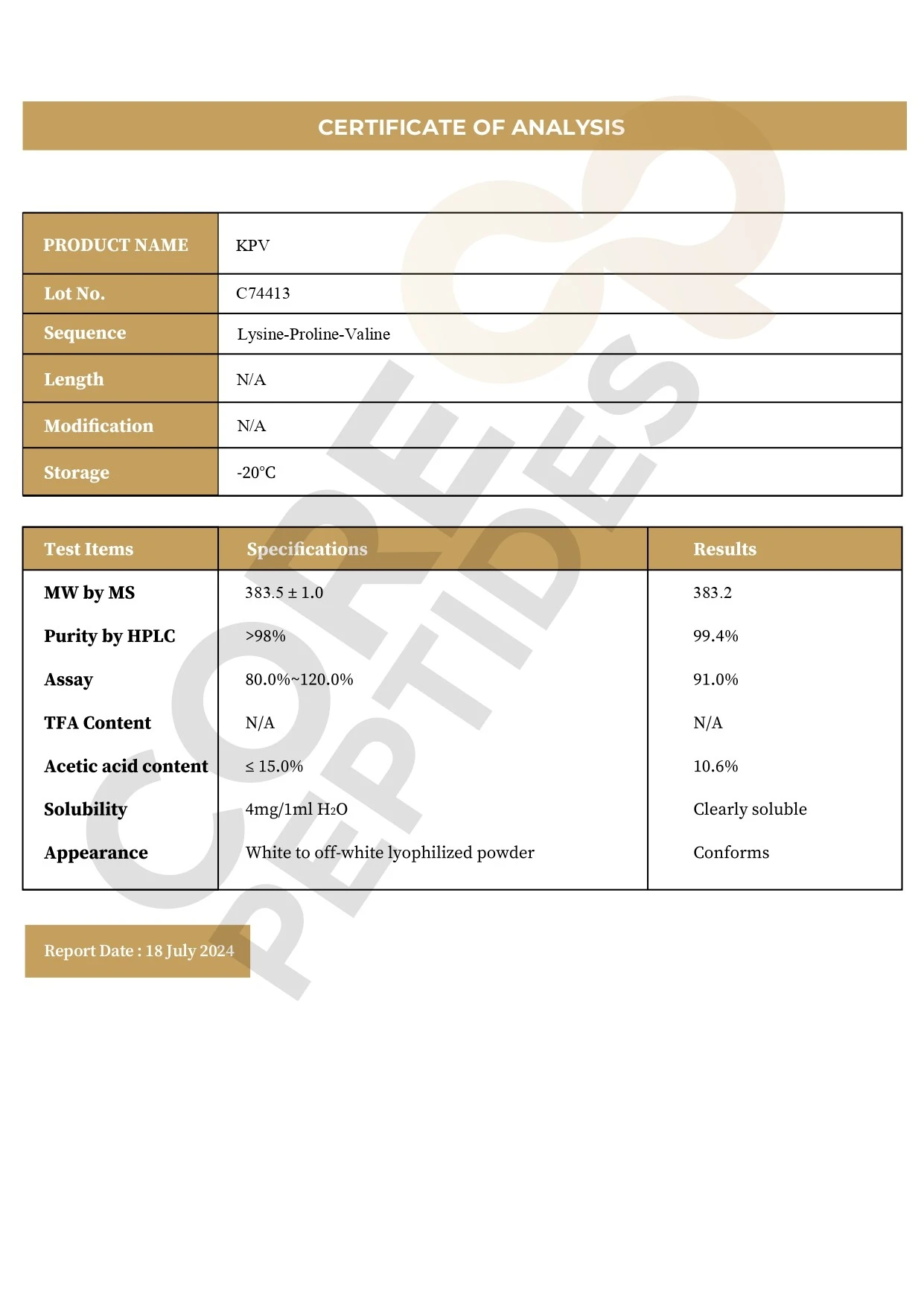
| Parameter | Detail |
|---|---|
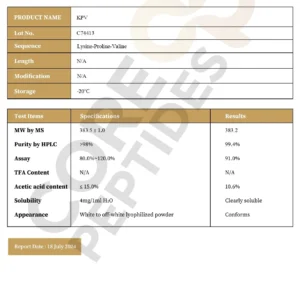
| Peptide | KPV (Lysine-Proline-Valine) |
| Parent Hormone | Alpha-Melanocyte Stimulating Hormone (alpha-MSH) |
| Fragment Type | C-terminal fragment |
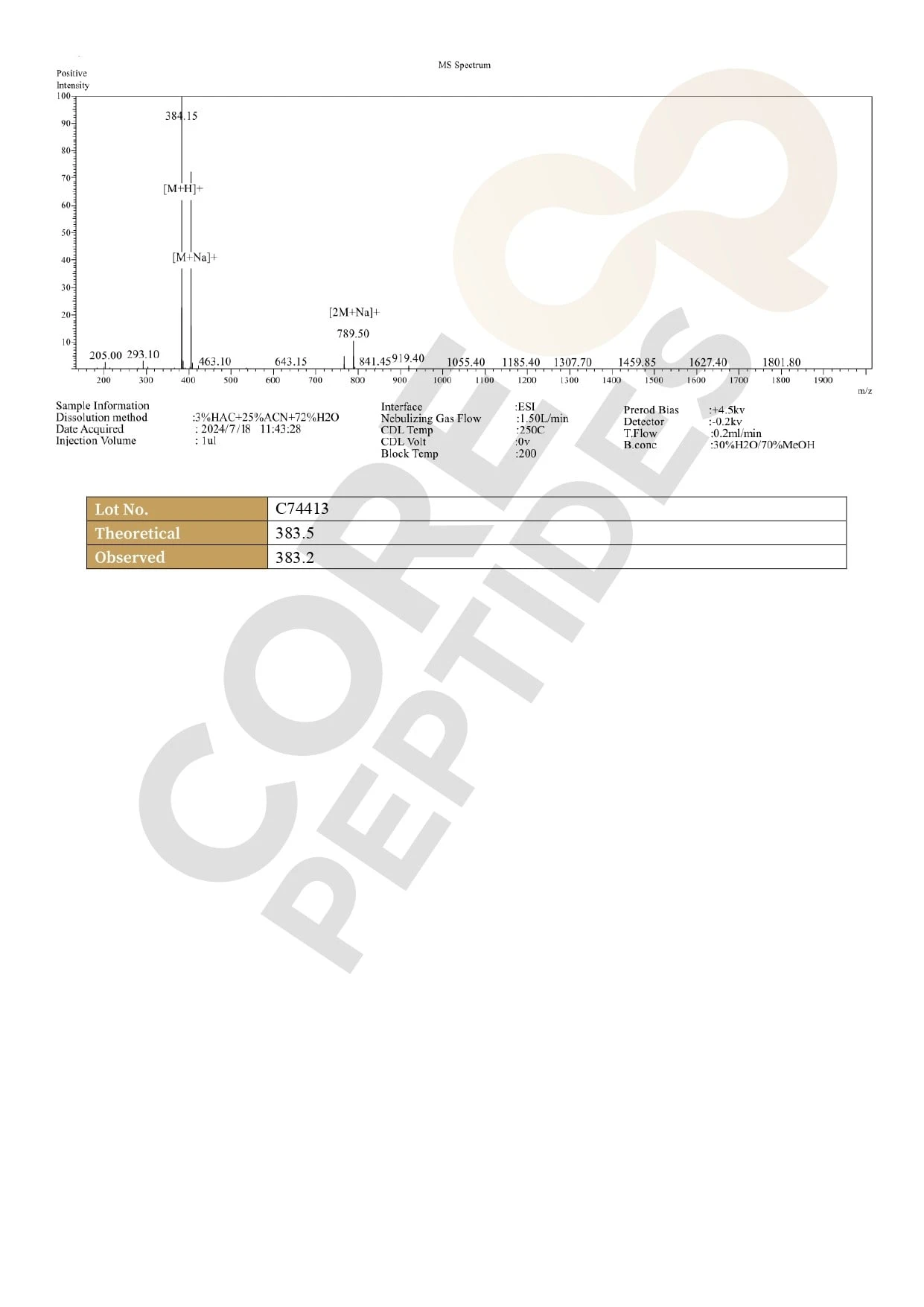
| Amino Acids | 3 |
| Quantity | 4mg |
| Unit | 1 Vial |
| Form | Lyophilised powder |
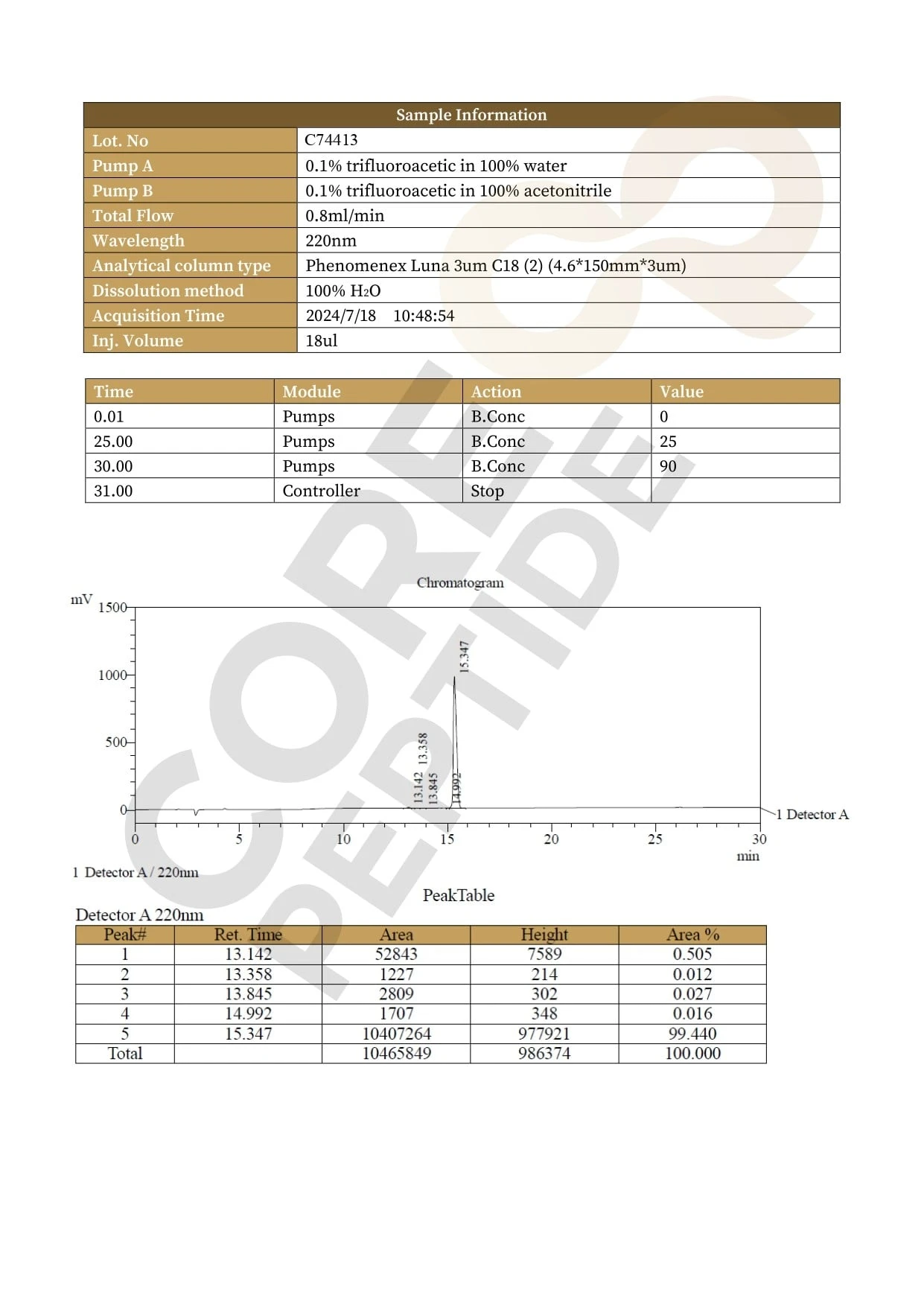
| Purity | >99% |
| SKU | P-KPV-4 |
Alpha-MSH Origin and C-Terminal Derivation
KPV peptide for sale originates from alpha-melanocyte stimulating hormone — a 13-amino-acid endogenous peptide hormone classified as a melanotropin that plays roles in metabolic function and multiple other biological processes. alpha-MSH itself is produced from the larger proopiomelanocortin (POMC) precursor protein — one of the most functionally diverse precursor molecules in endocrinology.
The discovery that the C-terminal tripeptide of alpha-MSH — the final three amino acids Lysine-Proline-Valine — constitutes the primary amino acid messenger sequence responsible for the parent hormone’s anti-inflammatory properties was a significant finding in peptide biology. It established that the full 13-amino-acid alpha-MSH sequence was not required for its anti-inflammatory activity — the minimal three-amino-acid fragment retained this essential function.
This structural minimalism has practical research advantages. Buy kpv peptide preparations in this compact tripeptide format offer precise concentration control, simplified pharmacokinetics and a research tool that enables mechanistic attribution of biological effects specifically to the KPV sequence rather than to the broader alpha-MSH structural context.
1989 Discovery and Isolation Research
The formal isolation of KPV and initial characterisation of its biological potential was published in 1989 — one of the earlier systematic investigations into alpha-MSH C-terminal fragment activity.
The research team isolated the KPV tripeptide and investigated its potential to inhibit vasopermeability and swelling of blood vessels — a vascular permeability assay relevant to inflammatory biology. In experimental mouse models, KPV was presented at the ear to assess its capacity to mitigate swelling. The researchers reported that the isolated fragment appeared to have inhibited the swelling — providing initial evidence for the anti-inflammatory activity of the C-terminal alpha-MSH tripeptide independent of the full-length hormone.
This 1989 characterisation established the research foundation for buy kpv investigation that has expanded significantly since — encompassing intestinal inflammation, wound healing, antimicrobial biology and broader inflammatory pathway research.
Anti-Inflammatory Mechanism Research
KPV’s anti-inflammatory research profile encompasses two primary mechanistic dimensions. The first involves direct inhibition of pro-inflammatory cytokine production and release in intestinal and immune cell research models.
Research has examined KPV’s capacity to reduce the synthesis and secretion of key inflammatory mediators — including TNF-alpha, IL-1beta and IL-6 — in activated immune cell and intestinal epithelial cell models. KPV’s anti-inflammatory action is proposed to be induced by inactivating inflammatory signalling pathways — potentially including NF-κB activation and related downstream cytokine expression cascades.
The second mechanistic dimension involves direct receptor interaction. As a C-terminal alpha-MSH fragment, KPV is investigated for its capacity to engage melanocortin receptor subtypes that mediate alpha-MSH’s anti-inflammatory activity — providing a receptor-level mechanism for the inflammatory pathway inhibition observed in cell culture research models.
Intestinal Biology and IBD Research
The most extensively investigated applied research context for kpv for sale compounds is inflammatory bowel disease — intestinal inflammation where dysregulated immune activation in the gastrointestinal mucosa drives progressive tissue damage.
KPV’s tripeptide structure provides a practical research advantage in intestinal biology — its small molecular mass facilitates oral delivery research in gastrointestinal models where larger peptides are typically degraded before reaching target tissue. Research has examined KPV’s capacity to reduce intestinal inflammation and protect epithelial barrier integrity in colitis research models — with multiple administration routes investigated given the small peptide’s accessibility across different delivery approaches.
The inhibition of pro-inflammatory cytokine synthesis in intestinal and immune cells is directly relevant to IBD pathology — where dysregulated cytokine production by lamina propria immune cells and intestinal epithelial cells drives the chronic inflammatory cycle characteristic of conditions including Crohn’s disease and ulcerative colitis research models.
Wound Healing and Antimicrobial Research
Beyond intestinal inflammation, kpv peptide buy research has examined two additional biological dimensions of direct research relevance.
Wound healing research has investigated KPV’s capacity to accelerate epithelial repair — examining whether its anti-inflammatory properties translate to improved healing outcomes in wound biology models where the inflammatory phase of healing is accelerated toward resolution. Post-surgical scarring minimisation has been investigated as a specific application area, examining whether KPV modulation of inflammatory signalling reduces the fibrotic component of wound healing.
Antimicrobial research has characterised KPV’s capacity to inhibit pathogen growth — reflecting alpha-MSH’s own documented antimicrobial properties and investigating whether the minimal C-terminal fragment retains this activity. Post-surgical infection reduction is a specific application area examined in wound biology research contexts.
Research Applications
KPV is investigated within the following approved in-vitro research domains:
- Pro-inflammatory cytokine inhibition in intestinal and immune cells
- NF-κB pathway and inflammatory cascade modulation
- Melanocortin receptor anti-inflammatory mechanism research
- Inflammatory bowel disease and mucosal inflammation models
- Epithelial barrier integrity research
- Wound healing and epithelial repair biology
- Post-surgical scarring and fibrosis reduction research
- Antimicrobial mechanism investigation
- Alpha-MSH C-terminal fragment pharmacology research
Reconstitution and Storage
Reconstitute with bacteriostatic water at 1ml per vial. Add solvent slowly along the vial wall and allow to dissolve by gentle rotation. Do not shake or vortex. Store lyophilised powder at −20°C. Once reconstituted, maintain at 4°C and use within the timeframe specified by your research protocol. Protect from light and avoid repeated freeze-thaw cycles.
Explore additional immunity and healing research compounds in the Immunity Enhancement Research and Healing and Regeneration Research categories.
FAQ
What is KPV peptide for sale? KPV peptide for sale is a tripeptide (Lysine-Proline-Valine) derived from the C-terminal fragment of alpha-melanocyte stimulating hormone — identified as the primary amino acid messenger sequence responsible for the parent hormone’s anti-inflammatory properties. First characterised in 1989, it is researched for pro-inflammatory cytokine inhibition, IBD biology, wound healing and antimicrobial activity. Supplied as a 4mg lyophilised powder with >99% purity for in-vitro scientific research.
Where can I buy KPV peptide? Buy KPV peptide through specialist research peptide suppliers. This compound is supplied strictly for in-vitro scientific research. It is not approved for human consumption, therapeutic use or clinical application. Researchers should ensure compliance with all applicable institutional requirements.
Is KPV for sale for human anti-inflammatory use? KPV for sale through this platform is supplied exclusively for in-vitro scientific research. It is not approved for human administration, IBD treatment or any clinical anti-inflammatory application. All research involving this compound should comply with applicable institutional and regulatory requirements.
How does KPV relate to alpha-MSH? KPV is the C-terminal tripeptide fragment of alpha-MSH — the final three amino acids (Lysine-Proline-Valine) of the 13-amino-acid parent hormone. Research established that this minimal C-terminal sequence constitutes the primary amino acid messenger responsible for alpha-MSH’s anti-inflammatory properties. Studying KPV independently of full-length alpha-MSH enables mechanistic research specifically attributing anti-inflammatory effects to this minimal sequence rather than to the full hormonal context.
What are the research applications of buy KPV? Buy KPV for approved in-vitro research examining pro-inflammatory cytokine inhibition, NF-κB pathway modulation, melanocortin receptor anti-inflammatory biology, IBD and mucosal inflammation models, epithelial barrier integrity, wound healing biology, post-surgical scarring research and antimicrobial investigation. All applications are within approved in-vitro and preclinical research frameworks.
Be the first to review “KPV 4mg”
Related products
Healing and Regeneration research
Core Peptides
Healing and Regeneration research
Core Peptides
Healing and Regeneration research
Healing and Regeneration research
Core Peptides
Cognitive Enhancement Research
Reviews
There are no reviews yet.