
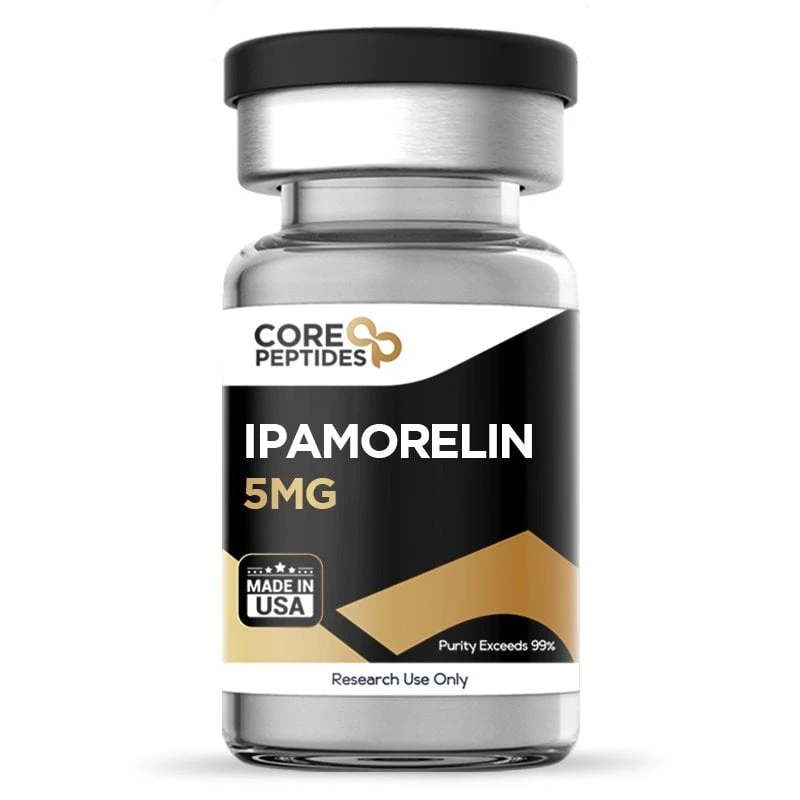
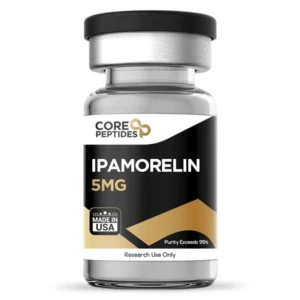
Ipamorelin 5mg
€41.00
Ipamorelin 5mg Peptide— Proven Selective GHS-R Research
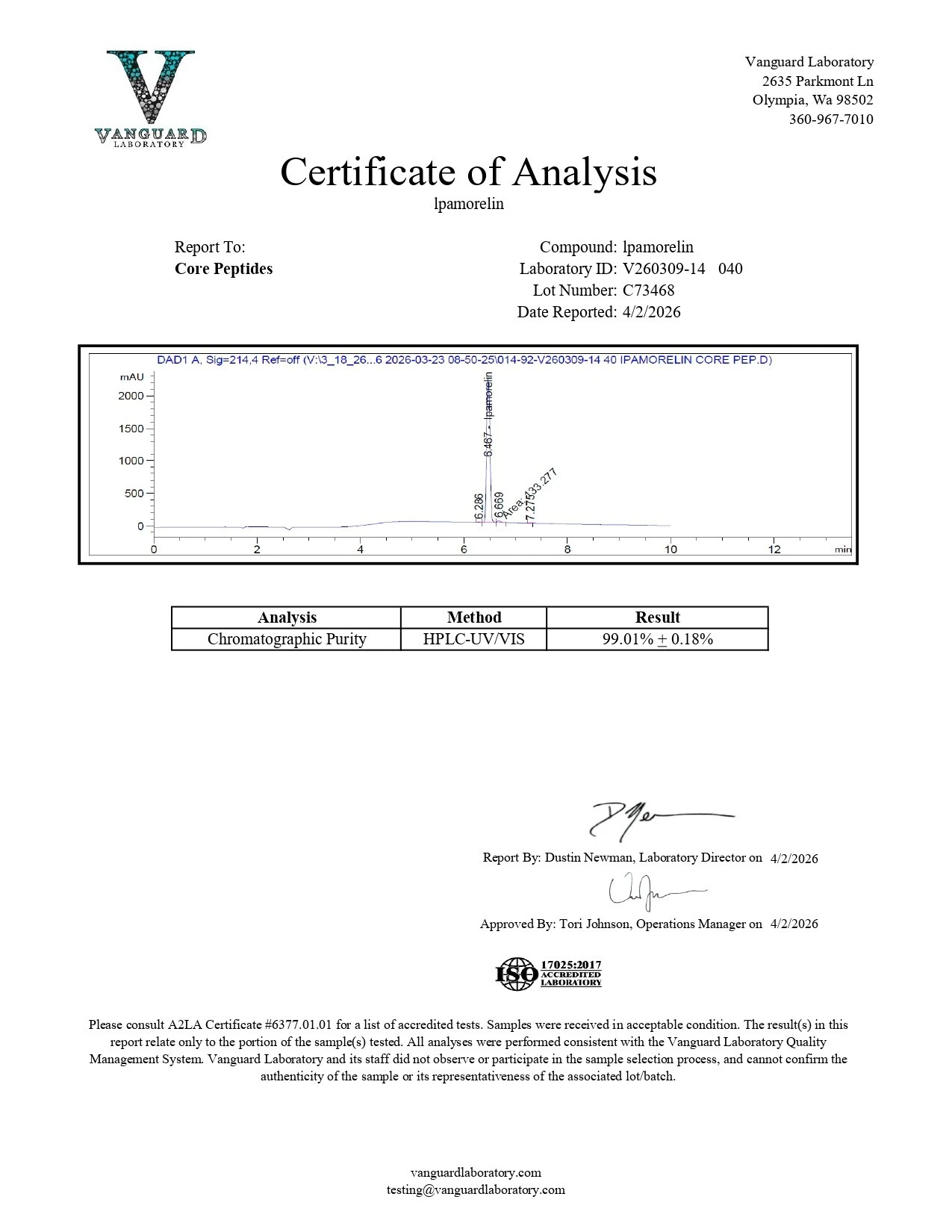
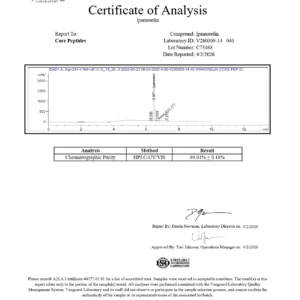
Ipamorelin 5mg is a synthetic pentapeptide formally classified as a Growth Hormone Secretagogue (GHS) — a compound designed to stimulate GH release through ghrelin receptor agonism rather than through the GHRH receptor pathway engaged by CJC-1295 analogues. Carrying the sequence Aib-His-D-2-Nal-D-Phe-Lys-NH2, ipamorelin was specifically designed to act via binding to ghrelin receptors on the pituitary gland — the GHS-R (Growth Hormone Secretagogue Receptors) — to stimulate the release of growth hormone. Its defining research characteristic is its remarkable selectivity: unlike the majority of GHS-R agonists, ipamorelin does not produce significant ACTH or cortisol elevation at GH-stimulating concentrations. Supplied as a lyophilised powder in a single 5mg vial at >99% purity for in-vitro scientific research.
⚠️ Research Use Only. This product is intended exclusively for in-vitro scientific research. It is not approved for human or animal consumption, clinical use, or therapeutic application.
Table of Contents
- Product Specifications
- GHS Classification and Receptor Mechanism
- Selectivity Profile — ACTH and Cortisol
- IGF-1 Axis and Downstream Research
- Research Applications
- Reconstitution and Storage
- FAQ
Product Specifications
| Parameter | Detail |
|---|---|
| Peptide | Ipamorelin |
| Classification | Synthetic Pentapeptide / GH Secretagogue |
| Sequence | Aib-His-D-2-Nal-D-Phe-Lys-NH2 |
| Amino Acids | 5 |
| Quantity | 5mg |
| Unit | 1 Vial |
| Form | Lyophilised powder |
| Purity | >99% |
| SKU | P-IPAMORELIN-5 |
GHS Classification and Receptor Mechanism
Ipamorelin 5mg was specifically designed to act via ghrelin receptor binding — targeting the GHS-R (Growth Hormone Secretagogue Receptors) on the pituitary gland. The GHS-R system is the same receptor class activated by ghrelin — the endogenous hunger hormone that simultaneously stimulates GH secretion and appetite through hypothalamic-pituitary pathways.
The name “ipamorelin” reflects the intention of its development — a selective GH secretagogue engineered to achieve GHS-R agonism with a highly refined pharmacological profile. The incorporation of D-amino acids at positions 3 (D-2-Nal) and 4 (D-Phe) provides resistance to enzymatic degradation while maintaining receptor binding affinity appropriate for in-vitro research protocols.
Through GHS-R engagement, buy ipamorelin 5mg research compounds stimulate GH synthesis and secretion from pituitary somatotrophs — initiating the downstream IGF-1 axis effects that underpin its research applications in muscle growth biology, metabolic research and sleep architecture investigation.
Selectivity Profile — ACTH and Cortisol
The defining research feature of ipamorelin peptide for sale preparations is their selectivity — specifically the absence of significant ACTH and cortisol elevation at concentrations that effectively stimulate GH release.
Most GHS-R agonists — including GHRP-2 and GHRP-6 — produce adrenal axis activation alongside GH stimulation. This ACTH and cortisol elevation represents a confounding variable in research protocols specifically designed to examine GH-mediated biology, and in therapeutic contexts would represent a limitation on clinical utility.
Ipamorelin’s capacity to stimulate GH release through GHS-R agonism without triggering this adrenal axis response makes it the cleanest GHS-R agonist for research protocols where GH-specific effects need to be examined without cortisol and ACTH confounding. This selectivity has sustained ipamorelin as a benchmark research tool in the GH secretagogue category — providing a point of comparison against which the adrenal axis activity of other GHS-R agonists is characterised.
IGF-1 Axis and Downstream Research
GH secretion stimulated by buy ipamorelin peptide in research models initiates the downstream IGF-1 axis effects central to multiple research domains.
IGF-1 (insulin-like growth factor 1) is the primary downstream mediator of GH’s anabolic and metabolic effects — acting on muscle, bone, adipose and other tissue types to promote cell growth, protein synthesis and metabolic regulation. Research examining ipamorelin’s effects on IGF-1 axis biology investigates both the immediate GH release response and the downstream consequences of sustained IGF-1 elevation in relevant cell culture and tissue research models.
Sleep architecture research represents a distinct but related application — given the well-established relationship between GH pulse amplitude and slow-wave sleep quality. Ipamorelin’s GH-stimulating activity, combined with its minimal off-target effects on other hormone systems, makes it a useful research tool for protocols examining GH-sleep architecture interactions.
Research Applications
Ipamorelin is investigated within the following approved in-vitro research domains:
- GHS-R ghrelin receptor binding and activation studies
- Selective GH secretagogue biology and ACTH-sparing mechanism
- IGF-1 axis modulation downstream of GH stimulation
- Muscle tissue anabolic signalling and hypertrophy research
- Adipose tissue metabolic regulation investigation
- Sleep architecture and GH pulse correlation research
- Bone mineral density and skeletal tissue research
- Comparative GHS-R agonist selectivity studies
Reconstitution and Storage
Reconstitute with NaCl, sterile water or bacteriostatic water at 1ml per vial. Add solvent slowly along the vial wall and allow to dissolve by gentle rotation. Do not shake or vortex. Store lyophilised powder at −20°C. Once reconstituted, maintain at 4°C and use within the timeframe specified by your research protocol. Protect from light and avoid repeated freeze-thaw cycles.
Explore additional GH secretagogue research compounds in the Muscle Growth Research, Weight Loss Research and Sleep Enhancement Research categories.
FAQ
What is ipamorelin 5mg? Ipamorelin 5mg is a synthetic pentapeptide GH secretagogue carrying the sequence Aib-His-D-2-Nal-D-Phe-Lys-NH2. It was specifically designed to bind GHS-R ghrelin receptors on the pituitary gland to stimulate GH release. Its defining characteristic is selectivity — not producing significant ACTH or cortisol elevation at GH-stimulating concentrations. Supplied as a 5mg lyophilised powder with >99% purity for in-vitro scientific research.
Where can I buy ipamorelin 5mg for research? Buy ipamorelin 5mg through specialist research peptide suppliers. This compound is supplied strictly for in-vitro scientific research. It is not approved for human consumption, therapeutic use or clinical application. Researchers should ensure compliance with all applicable institutional requirements.
What is ipamorelin dosage in research contexts? Ipamorelin dosage parameters in published research vary by experimental model, target tissue and research endpoint. Cell culture effective concentrations differ substantially from in-vivo parameters characterised in preclinical research. This compound is supplied for in-vitro research use only — no therapeutic or personal dosage recommendation is made or implied. Investigators should reference peer-reviewed literature and approved institutional protocols.
What is ipamorelin dosage per day in published research? Ipamorelin dosage per day as examined in published preclinical and clinical research varies by study design, species and target endpoint. This product is for in-vitro research use only — administration in humans falls outside its intended research use. No daily dosage recommendation is provided or implied for any human or animal application.
What is ipamorelin dosing frequency in research protocols? Ipamorelin dosing frequency in research — whether single administration, pulsatile or continuous — is a protocol design decision based on whether the research aims to model physiological GH pulse patterns or examine effects of sustained GHS-R engagement. This product is supplied for in-vitro research only. All dosing parameters should be derived from published literature and institutional protocols.
How does ipamorelin 5mg differ from GHRP-2 and GHRP-6? The primary distinction between ipamorelin and GHRP-2/GHRP-6 is selectivity. All three activate GHS-R to stimulate GH release, but GHRP-2 and GHRP-6 produce ACTH and cortisol elevation alongside GH stimulation. Ipamorelin does not produce significant adrenal axis activation at GH-stimulating concentrations — making it the preferred GHS-R agonist for research protocols where GH-specific effects must be examined without corticosteroid confounding variables.
Be the first to review “Ipamorelin 5mg”
Related products
Weight Loss Research
Reproductive Health Research
Weight Loss Research
Core Peptides
Core Peptides
Core Peptides
Longevity and Anti-aging Research
Core Peptides
Reviews
There are no reviews yet.