
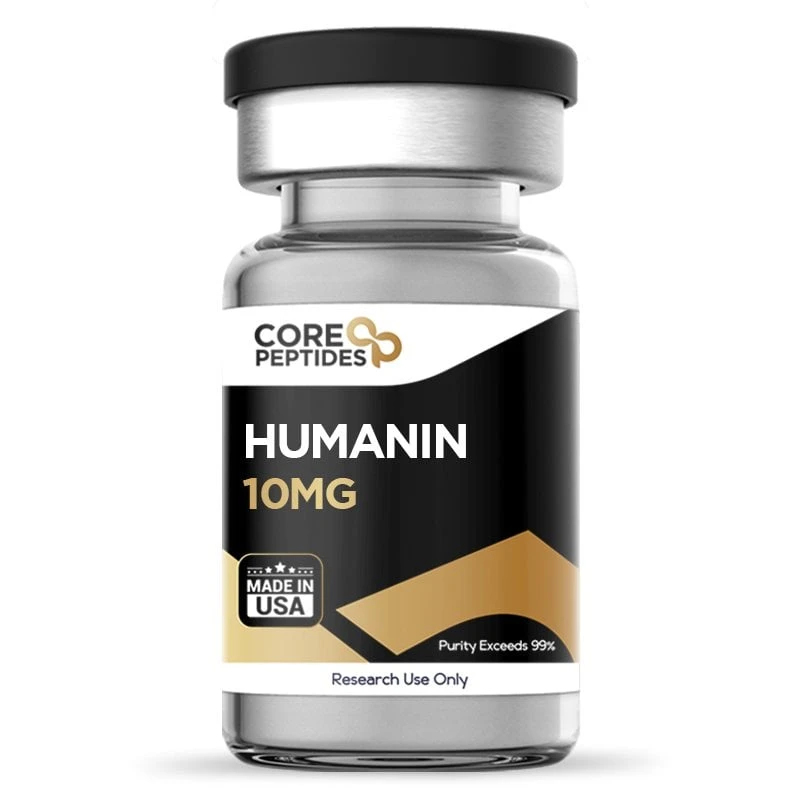
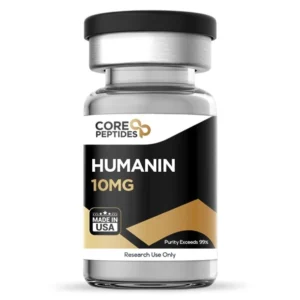
Humanin 10mg
€125.10
Humanin Peptide 10mg — Proven Mitochondrial Research Compound
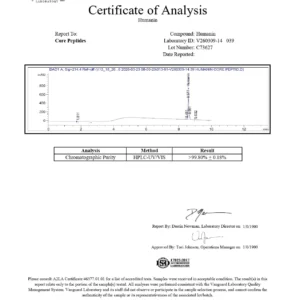
Humanin peptide occupies a unique position in biomedical research — it is one of a small class of peptides encoded not by the nuclear genome but by the mitochondrial genome, specifically the 16S ribosomal RNA gene. This mitochondrial origin makes it structurally and mechanistically distinct from the large majority of research peptides derived from nuclear-encoded proteins. Researchers have suggested potential roles in cell metabolism regulation and inflammation response modulation, positioning it at the intersection of mitochondrial biology, aging research and cytoprotective investigation. Supplied as a lyophilised powder in a single 10mg vial with a verified purity of >99% for in-vitro scientific research.
⚠️ Research Use Only. This product is intended exclusively for in-vitro scientific research. It is not approved for human or animal consumption, clinical use, or therapeutic application.
Table of Contents
- Product Specifications
- Mitochondrial Genome Origin
- Variable Length Biology — 21 vs 24 Amino Acid Forms
- Cell Metabolism Research
- Inflammation Response Research
- Evolutionary Context — Mitochondrial Endosymbiosis
- Research Applications
- Reconstitution and Storage
- FAQ
Product Specifications
| Parameter | Detail |
|---|---|
| Peptide | Humanin |
| Encoding Gene | 16S ribosomal RNA gene (mitochondrial genome) |
| Amino Acid Length | 21 (mitochondrial synthesis) or 24 (cytosolic synthesis) |
| Quantity | 10mg |
| Unit | 1 Vial |
| Form | Lyophilised powder |
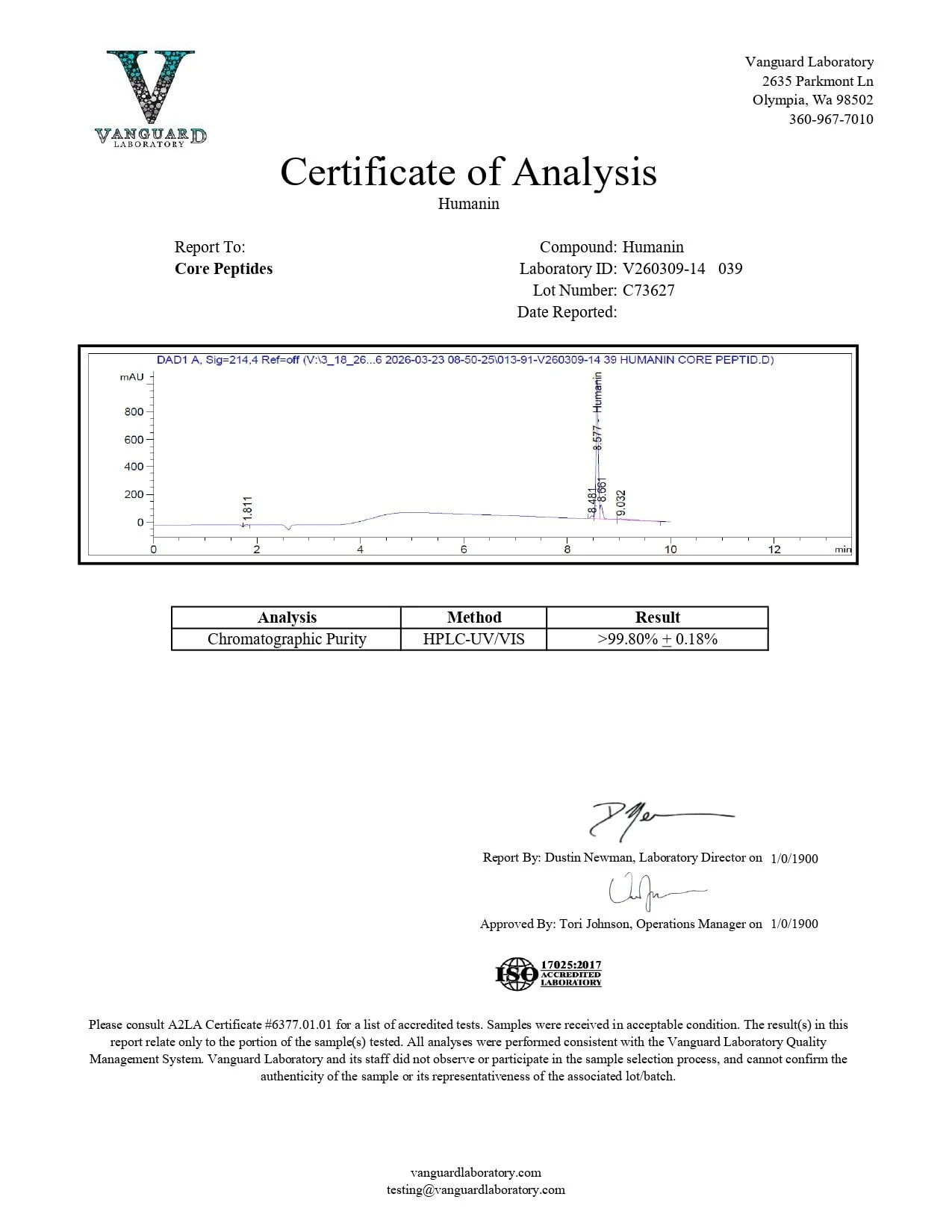
| Purity | >99% |
| SKU | P-HUMANIN-10 |
Mitochondrial Genome Origin
The defining research characteristic of humanin peptide — the feature that separates it from virtually every other peptide in the research peptide category — is its encoding within the mitochondrial genome rather than the nuclear genome.
The human mitochondrial genome is a compact, circular DNA molecule of approximately 16,600 base pairs — encoding only 37 genes compared to the approximately 20,000 genes of the nuclear genome. For decades, researchers considered the mitochondrial 16S ribosomal RNA gene to encode exclusively a structural RNA component of the mitochondrial ribosome. The discovery that this gene also encodes a biologically active peptide — Humanin — fundamentally expanded the understanding of mitochondrial genome biology.
This mitochondrial origin has direct mechanistic relevance. Humanin represents a direct communication link between mitochondrial energy status and broader cellular regulatory pathways — a connection with profound implications for understanding how mitochondrial function influences aging, stress responses and cell survival decisions.
Variable Length Biology — 21 vs 24 Amino Acid Forms
A mechanistically significant feature of humanin peptide buy research is the variable length of the mature peptide depending on where synthesis occurs within the cell.
When synthesised inside the mitochondria — the primary site of Humanin production — the mature peptide contains 21 amino acids. When synthesis occurs outside the mitochondria but within the cytosol — through a separate translational mechanism from the same mitochondrially-encoded RNA — the resulting peptide contains 24 amino acids.
Both the 21-amino-acid and 24-amino-acid forms are suggested to exhibit biological activity — but they may differ in their receptor interactions, cellular distribution and downstream effects. Research characterising the distinct biology of these two Humanin isoforms is an active area of investigation that is relevant to protocol design for in-vitro studies requiring clarity about which form is being examined.
Cell Metabolism Research
The cell metabolism research profile of humanin peptide benefits investigation encompasses Humanin’s proposed role as a mitochondrial signal connecting energy status to downstream cellular behaviour.
Given its encoding within the 16S rRNA gene — a component of the mitochondrial ribosome essential for mitochondrial protein synthesis — Humanin is posited to function as a retrograde signal from the mitochondria to the rest of the cell, modulating metabolic gene expression in response to mitochondrial energy and stress status.
Research has examined Humanin’s potential effects on glucose metabolism, insulin sensitivity and mitochondrial function in cell culture models. These metabolic research directions connect Humanin biology to the broader investigation of metabolic disorders, diabetes and the age-related metabolic dysfunction associated with declining mitochondrial competence.
The relationship between mitochondrial health and metabolic regulation — with Humanin potentially serving as a functional link — makes it a research compound of interest across metabolic biology, aging research and longevity investigation.
Inflammation Response Research
Beyond cell metabolism, researchers have suggested potential for humanin peptide in inflammation response modulation — a research area mechanistically connected to its mitochondrial origin.
Mitochondrial dysfunction is increasingly recognised as a driver of chronic inflammation — damaged mitochondria release mitochondrial DNA and other damage-associated molecular patterns (DAMPs) that activate innate immune inflammatory signalling. As a mitochondrially encoded peptide with potential cell-protective properties, Humanin’s inflammation research profile examines whether it modulates these mitochondria-driven inflammatory mechanisms.
Research has investigated Humanin’s potential cytoprotective effects — capacity to protect cells from apoptosis and stress-induced damage — in models relevant to neurodegenerative disease, cardiovascular stress and age-related cellular damage. These cytoprotective research applications reflect the compound’s proposed role as a mitochondrial survival signal.
Evolutionary Context — Mitochondrial Endosymbiosis
Understanding the evolutionary origin of mitochondria provides important context for humanin peptide dosage and mechanism research. Mitochondria are considered to have originated from the engulfment of individual prokaryotic organisms by ancestral eukaryotic cells — a process termed endosymbiosis.
Over evolutionary time, the engulfed prokaryotes gradually developed into the mitochondria we know today, transferring the vast majority of their genetic material to the host cell’s nuclear genome. The small mitochondrial genome that remains — including the 16S rRNA gene that encodes Humanin — represents the last remnant of this ancestral prokaryotic genome still functioning within the mitochondrial organelle.
This evolutionary heritage means that mitochondrially-encoded peptides like Humanin represent a fundamentally ancient class of signalling molecules — one whose biology reflects the deep evolutionary relationship between mitochondrial function and eukaryotic cell survival.
Research Applications
Humanin is investigated within the following approved in-vitro research domains:
- Mitochondrial genome biology and 16S rRNA gene function
- Cell metabolism and mitochondrial energy sensing research
- Inflammation response modulation and cytoprotective biology
- Insulin sensitivity and glucose metabolism investigation
- Age-related mitochondrial dysfunction research
- Neurodegenerative disease model investigation
- Cardiovascular stress response and cell protection
- Mitochondria-nucleus retrograde signalling studies
- Comparative 21 vs 24 amino acid isoform biology
Reconstitution and Storage
Reconstitute following standard lyophilised peptide protocols appropriate to your research application. Store lyophilised powder at −20°C. Once reconstituted, maintain at 4°C and use within the timeframe specified by your research protocol. Protect from light and avoid repeated freeze-thaw cycles.
Explore additional mitochondrial biology and longevity research compounds in the Longevity and Anti-aging Research and Healing and Regeneration Research categories.
What is humanin peptide? Humanin peptide is a naturally occurring short peptide encoded by the 16S ribosomal RNA gene of the mitochondrial genome — making it one of the very few known peptides encoded outside the nuclear genome. Researchers have suggested potential roles in cell metabolism regulation and inflammation response modulation. Its length varies depending on synthesis location — 21 amino acids when produced inside mitochondria, 24 amino acids when produced in the cytosol. Supplied as a 10mg lyophilised powder with >99% purity for in-vitro scientific research.
Where can I find humanin peptide for research? Humanin peptide buy options are available through specialist research peptide suppliers. This compound is supplied strictly for in-vitro scientific research. It is not approved for human consumption, therapeutic use or any clinical application. Researchers should ensure compliance with all applicable institutional and regulatory requirements.
What are humanin peptide benefits characterised in research? Humanin peptide benefits characterised in research include potential cell metabolism modulation, inflammation response regulation, cytoprotective activity in stress models, insulin sensitivity research, neurodegenerative disease model investigation and age-related mitochondrial dysfunction biology. These are research findings within approved in-vitro frameworks — this compound is not approved for therapeutic use.
What is humanin peptide dosage in research contexts? Humanin peptide dosage parameters in published research vary substantially by experimental model, target cell type and research endpoint. Both the 21 and 24 amino acid isoforms have been examined at various concentrations in cell culture systems. This compound is supplied for in-vitro research use only — no therapeutic or personal dosage recommendation is made or implied. Investigators should reference peer-reviewed literature and approved institutional protocols.
What makes humanin unique among research peptides? Humanin’s defining uniqueness lies in its mitochondrial genome origin — it is encoded by the 16S ribosomal RNA gene within the mitochondrial DNA rather than by the nuclear genome that encodes virtually all other research peptides. This mitochondrial origin connects it directly to cellular energy metabolism, aging biology and the evolutionary history of mitochondria as ancient endosymbiotic prokaryotes — making it a research compound of fundamental biological interest beyond its specific functional properties.
Be the first to review “Humanin 10mg”
Related products
Core Peptides
Core Peptides
Core Peptides
Longevity and Anti-aging Research
Core Peptides
Core Peptides
Cognitive Enhancement Research
Longevity and Anti-aging Research
Reviews
There are no reviews yet.