
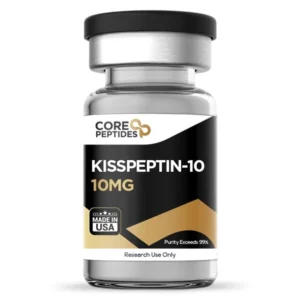
Kisspeptin-10 10mg
€53.10
Kisspeptin Peptide 10mg — Proven GPR54 Research Compound
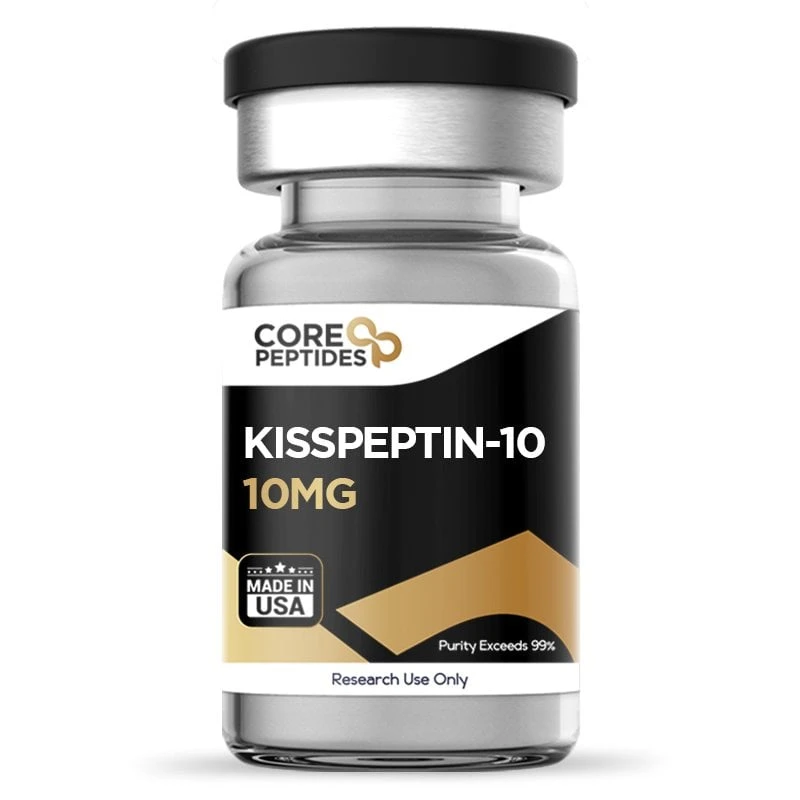
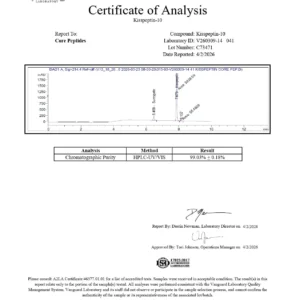
Kisspeptin peptide — specifically the Kisspeptin-10 isoform — is a naturally occurring peptide encoded by the KISS1 gene, produced through a sequential cleavage process from the original 145-amino-acid KISS1 polypeptide precursor. This decapeptide — representing the terminal 10 amino acids of the kisspeptin-54 sequence (Kisspeptin 45-54) — is the shortest biologically active kisspeptin fragment and functions as a ligand for the G-protein coupled receptor 54 (GPR54). Research has established its significance across reproductive endocrinology, hypothalamic-pituitary axis regulation and hypogonadotropic hypogonadism investigation. Supplied as a lyophilised powder in a single 10mg vial at >99% purity for in-vitro scientific research.
⚠️ Research Use Only. This product is intended exclusively for in-vitro scientific research. It is not approved for human or animal consumption, clinical use, or therapeutic application.
Table of Contents
- Product Specifications
- KISS1 Gene Biology and Cleavage Cascade
- GPR54 Receptor Research
- Hypothalamic-Pituitary-Gonadal Axis Research
- Hypogonadotropic Hypogonadism Research
- KISS1 as Tumour Suppressor
- Research Applications
- Reconstitution and Storage
- FAQ
Product Specifications
| Parameter | Detail |
|---|---|
| Peptide | Kisspeptin-10 (Kisspeptin 45-54) |
| Encoding Gene | KISS1 |
| Precursor | 145-amino-acid KISS1 polypeptide |
| Intermediate | Kisspeptin-54 (54 amino acids) |
| Final Fragment | Kisspeptin-10 (10 amino acids) |
| Receptor Target | GPR54 (G-protein coupled receptor 54) |
| Quantity | 10mg |
| Unit | 1 Vial |
| Form | Lyophilised powder |
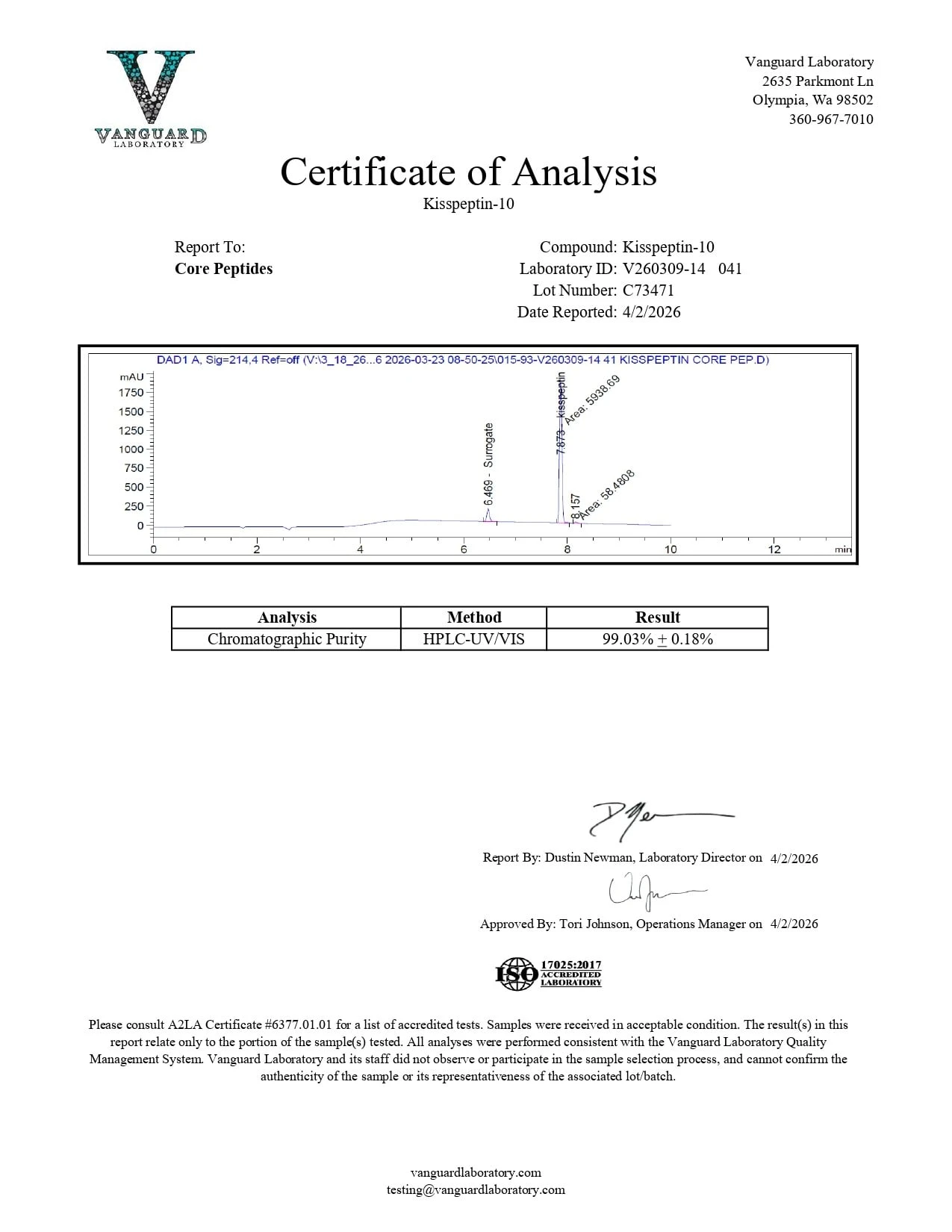
| Purity | >99% |
| SKU | P-KISSPEPT-10 |
KISS1 Gene Biology and Cleavage Cascade
Kisspeptin peptide biology begins with the KISS1 gene — a gene originally identified and named for its role as a metastasis suppressor in melanoma and breast carcinoma research. The KISS1 gene encodes a 145-amino-acid polypeptide precursor that undergoes a sequential proteolytic cleavage cascade to generate multiple biologically active kisspeptin fragments.
The 145-amino-acid precursor is first cleaved to produce Kisspeptin-54 — a 54-amino-acid intermediate that retains the C-terminal sequence essential for GPR54 receptor binding. Kisspeptin-54 is further processed to generate shorter active fragments including Kisspeptin-14, Kisspeptin-13 and the most compact functional fragment — Kisspeptin-10, also designated Kisspeptin 45-54 to reflect its position within the original sequence.
All of these fragments share the C-terminal RF-amide motif essential for GPR54 activation — meaning buy kisspeptin research interest applies across the kisspeptin peptide family with Kisspeptin-10 representing the minimal sequence required for full GPR54 engagement.
GPR54 Receptor Research
The primary molecular target of kisspeptin peptide buy research is GPR54 — the G-protein coupled receptor 54, also designated Kiss1R. This receptor is expressed in the hypothalamus, pituitary gland and peripheral tissues, and its activation by kisspeptin peptides initiates a signalling cascade with broad neuroendocrine implications.
GPR54 activation stimulates phospholipase C through Gαq/11 protein coupling — mobilising intracellular calcium and activating downstream signalling pathways relevant to GnRH neuron activity. Independent studies conducted in the mid-2000s established that Kisspeptin-10 functions as a ligand of GPR54 and may play a role in hypogonadotropic hypogonadism — a finding that fundamentally repositioned KISS1/kisspeptin biology from cancer suppressor research to reproductive endocrinology investigation.
Hypothalamic-Pituitary-Gonadal Axis Research
The reproductive endocrinology research profile of kisspeptin 10 for sale compounds is built on kisspeptin’s proposed role as a key regulator of the hypothalamic-pituitary-gonadal (HPG) axis — specifically through its stimulation of GnRH neuron activity.
GnRH (gonadotropin-releasing hormone) neurons in the hypothalamus are considered the master regulators of reproductive function — their pulsatile GnRH release driving FSH and LH secretion from the anterior pituitary. Kisspeptin-producing neurons in the hypothalamus are positioned to directly regulate GnRH neuron activity, with GPR54 expressed on GnRH neurons serving as the functional connection between kisspeptin signalling and GnRH pulse generation.
Research has examined kisspeptin’s capacity to modulate GnRH pulsatility — with Kisspeptin-10’s GPR54 engagement proposed to stimulate GnRH neuronal firing and GnRH release, thereby elevating downstream FSH and LH secretion and influencing gonadal steroidogenesis.
Hypogonadotropic Hypogonadism Research
The most clinically relevant research application of kisspeptin peptide is hypogonadotropic hypogonadism — the reproductive disorder characterised by insufficient GnRH, FSH and LH secretion due to under-functioning of the hypothalamus or pituitary gland.
Hypogonadotropic hypogonadism results from deficient hypothalamic-pituitary axis drive — the failure of GnRH pulsatility to adequately stimulate gonadotropin secretion and subsequent gonadal hormone production. Given kisspeptin’s proposed role as a GnRH stimulant through GPR54, research has investigated whether Kisspeptin-10 administration in research models can restore GnRH pulsatility and correct the deficient gonadotropin secretion characterising this condition.
Research in this domain investigates GnRH neuron responsiveness to kisspeptin stimulation, the relationship between kisspeptin pulse frequency and LH pulse characteristics, and the potential of GPR54 agonism to restore reproductive axis function in models of hypogonadotropic hypogonadism.
KISS1 as Tumour Suppressor
The original characterisation of the KISS1 gene as a tumour suppressor — specifically for metastasis suppression in melanoma and breast carcinoma — represents a distinct research dimension of kisspeptin biology that predates its reproductive endocrinology profile.
KISS1 is considered to suppress metastases by inhibiting abnormal cell growth and migration in melanoma and breast carcinoma cell line research. This anti-metastatic activity is proposed to operate through mechanisms distinct from GPR54 activation — reflecting a broader KISS1 gene biology that encompasses both cancer biology and reproductive endocrinology research domains.
Research examining the relationship between KISS1 expression, kisspeptin peptide levels and cancer metastasis biology continues alongside the reproductive endocrinology investigation — making kisspeptin a compound of dual research significance across oncology and reproductive medicine research.
Research Applications
Kisspeptin-10 is investigated within the following approved in-vitro research domains:
- GPR54 receptor binding and activation studies
- GnRH neuron stimulation and HPG axis regulation
- FSH and LH secretion modulation research
- Hypogonadotropic hypogonadism model investigation
- Reproductive cycle regulation research
- KISS1 gene biology and expression studies
- Metastasis suppression and cancer biology research
- Kisspeptin peptide cleavage cascade investigation
- Neuroendocrine signalling pathway research
Reconstitution and Storage
Reconstitute following standard lyophilised peptide protocols appropriate to your research application. Store lyophilised powder at −20°C. Once reconstituted, maintain at 4°C and use within the timeframe specified by your research protocol. Protect from light and avoid repeated freeze-thaw cycles.
Explore additional reproductive health and endocrine research compounds in the Reproductive Health Research and Healing and Regeneration Research categories.
FAQ
What is kisspeptin peptide? Kisspeptin peptide — specifically Kisspeptin-10 or Kisspeptin 45-54 — is a naturally occurring decapeptide encoded by the KISS1 gene. Produced through sequential cleavage of a 145-amino-acid precursor, it functions as a ligand for GPR54 receptors on GnRH neurons in the hypothalamus. Research has established its role in HPG axis regulation, hypogonadotropic hypogonadism investigation and its origins as a KISS1 gene metastasis suppressor in cancer biology. Supplied as a 10mg lyophilised powder with >99% purity for in-vitro scientific research.
Where can I buy kisspeptin for research? Buy kisspeptin options are available through specialist research peptide suppliers. This compound is supplied strictly for in-vitro scientific research. It is not approved for human consumption, therapeutic use or clinical application. Researchers should ensure compliance with all applicable institutional and regulatory requirements.
Is kisspeptin 10 for sale for human reproductive use? Kisspeptin 10 for sale through this platform is supplied exclusively for in-vitro scientific research. It is not approved for human administration, reproductive therapy or any clinical application. All research involving this compound should comply with applicable institutional and regulatory requirements.
What is kisspeptin’s role in hypogonadotropic hypogonadism research? In hypogonadotropic hypogonadism research, kisspeptin’s significance derives from its proposed role as a GnRH neuron stimulant through GPR54 agonism. Hypogonadotropic hypogonadism results from deficient GnRH pulsatility — insufficient hypothalamic drive to the pituitary gonadotropin secretion system. Research investigates whether Kisspeptin-10 can stimulate GnRH neuronal activity to restore pulsatile GnRH release and correct the deficient FSH and LH secretion that characterises this condition.
What is the relationship between KISS1 and cancer research? KISS1 was originally identified as a metastasis suppressor gene — specifically for melanoma and breast carcinoma — before its reproductive endocrinology role was discovered. KISS1 is considered to suppress metastases by inhibiting abnormal cancer cell growth and migration. This anti-metastatic biology operates through mechanisms distinct from GPR54 activation — representing a dual research significance for the KISS1 gene and kisspeptin peptides across both oncology and reproductive medicine research domains.
Be the first to review “Kisspeptin-10 10mg”
Related products
Immunity Enhancement Research
Core Peptides
Healing and Regeneration research
Healing and Regeneration research
Healing and Regeneration research

Reproductive Health Research
Longevity and Anti-aging Research

Core Peptides
Reviews
There are no reviews yet.