
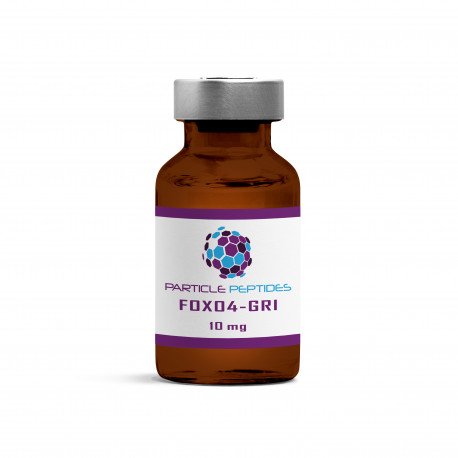
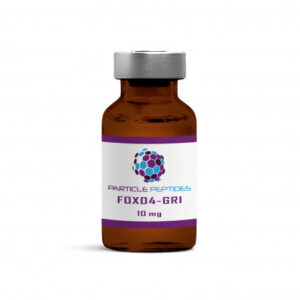
FOXO4-DRI (Proxofim) 10mg
€193.49
FOXO4-DRI Proxofim 10mg — Powerful Senolytic Research Peptide
FOXO4-DRI — also known as Proxofim — is a structurally unique synthetic peptide engineered with a retro-inverso architecture, developed by Dutch researchers as a modified version of the FOXO4 protein with an extended half-life. Its primary investigated function is the selective disruption of the FOXO4-p53 protein interaction in senescent cells — triggering targeted apoptosis in cells that have permanently exited the cell cycle while preserving the viability of healthy, actively dividing tissue. Supplied as a lyophilised white powder in a single 10mg vial with a verified purity of ≥98%, this compound represents one of the most structurally sophisticated senolytic research peptides currently available.
⚠️ Research Use Only. This product is intended exclusively for in-vitro scientific research. It is not approved for human or animal consumption, clinical use, or therapeutic application.
Table of Contents
- Product Specifications
- Retro-Inverso Architecture
- Cellular Senescence Biology and Research Context
- Mechanism of Action — FOXO4-p53 Disruption
- Regulatory Pathway Modulation
- Research Applications
- Reconstitution and Storage
- FAQ
Product Specifications
| Parameter | Detail |
|---|---|
| Peptide | FOXO4-DRI (Proxofim) |
| Quantity | 10mg |
| Unit | 1 Vial |
| Physical Appearance | White powder |
| Salt Form | Not specified |
| Peptide Purity | ≥98% |
| Molecular Mass | 5,358.05 Da |
| CAS Number | 2460055-10-9 |
| Solubility | Bacteriostatic water — 1ml/vial |
| Sequence | DLeu-DThr-DLeu-DArg-DLys-DGlu-DPro-DAla-DSer-DGlu-DIle-DAla-DGln-DSer-DIle-DLeu-DGlu-DAla-DTyr-DSer-DGln-DAsn-Gly-DTrp-DAla-DAsn-DArg-DArg-DSer-Gly-Gly-DLys-DArg-DPro-DPro-DPro-DArg-DArg-DArg-DGln-DArg-DArg-DLys-DLys-DArg-Gly |
Retro-Inverso Architecture
The structural designation “DRI” in fox04-dri refers to the retro-inverso peptide engineering approach — a design strategy that produces a mirror-image version of the parent peptide sequence by incorporating D-amino acids (rather than the natural L-form) throughout the sequence and reversing the peptide bond direction.
This architecture confers two critical research advantages. First, dramatically enhanced resistance to proteolytic degradation — D-amino acid sequences are not recognised by the standard protease enzymes that rapidly cleave native L-amino acid peptides. Second, an extended half-life relative to the parent FOXO4 sequence — enabling sustained target engagement in research protocols.
The retro-inverso design preserves the essential molecular recognition properties of the FOXO4 protein fragment while producing a pharmacokinetically superior compound for research applications requiring stable, long-duration protein-protein interaction modulation.
Cellular Senescence Biology and Research Context
Cellular senescence is the state of permanent, irreversible cell cycle arrest that occurs in response to DNA damage, oxidative stress, oncogene activation and other forms of cellular stress. While senescence initially serves a protective function — preventing the proliferation of potentially damaged cells — the accumulation of senescent cells in tissue over time is a primary driver of age-related functional decline.
Senescent cells are not simply inactive. They develop a pro-inflammatory secretory phenotype — the Senescence-Associated Secretory Phenotype (SASP) — through which they release a range of cytokines, chemokines and matrix metalloproteinases that disrupt the functional microenvironment of surrounding tissue. This SASP-driven chronic inflammation is implicated in multiple age-related pathologies.
The fox-04 peptide research significance lies precisely in this context. Selectively eliminating senescent cells — while preserving healthy tissue — represents a research strategy of substantial interest in longevity biology, tissue function restoration and age-related disease investigation.
Mechanism of Action — FOXO4-p53 Disruption
The mechanism by which fox04 exerts its investigated senolytic activity centres on the interaction between two proteins — FOXO4 and p53 — within senescent cells.
In senescent cells, FOXO4 forms a complex with p53 — sequestering p53 in the nucleus and preventing it from initiating the pro-apoptotic signalling cascade that would normally result in cell death. This FOXO4-p53 interaction effectively allows senescent cells to resist apoptosis and persist in tissue indefinitely.
FOXO4-DRI competes with endogenous FOXO4 for p53 binding — disrupting the FOXO4-p53 complex and releasing p53 to initiate its pro-apoptotic function. The resulting selective apoptosis affects senescent cells where this protective mechanism is active, while healthy cells — in which the FOXO4-p53 interaction is not active in the same manner — are reported to be substantially spared.
Regulatory Pathway Modulation
Beyond its primary FOXO4-p53 mechanism, fox04-dri 10mg research has characterised modulation of additional regulatory pathways within and beyond senescent cells.
Insulin signalling pathway involvement has been investigated — reflecting FOXO4’s established role in insulin and IGF-1 receptor downstream signalling. Cell cycle control pathway modulation has been characterised, consistent with p53’s central role in G1/S checkpoint regulation. Oxidative stress response pathway effects have also been documented, given the relationship between ROS accumulation and FOXO4 activity in stressed cell populations.
These multi-pathway effects position FOXO4-DRI as a research compound of broad mechanistic interest beyond simple senolytic activity.
Research Applications
FOXO4-DRI is investigated within the following approved in-vitro research domains:
- Senolytic mechanism and selective senescent cell apoptosis studies
- FOXO4-p53 protein-protein interaction disruption research
- Cellular senescence biology and SASP elimination
- Biological aging deceleration mechanism investigation
- Insulin signalling and IGF-1 pathway research
- Cell cycle control and p53 regulatory studies
- Oxidative stress response pathway investigation
- Tissue microenvironment restoration research
- Pro-inflammatory senescent phenotype elimination studies
Reconstitution and Storage
Reconstitute with bacteriostatic water at 1ml per vial. Add solvent slowly along the vial wall and allow to dissolve by gentle rotation. Do not shake or vortex.
Store lyophilised powder at −20°C. Once reconstituted, maintain at 4°C and use within the timeframe specified by your research protocol. Protect from light and avoid repeated freeze-thaw cycles.
Explore additional longevity and senolytic research compounds in our Immunity, Healing and Anti-Age research categories.
FAQ
What is FOXO4-DRI? FOXO4-DRI — also known as Proxofim — is a retro-inverso synthetic peptide developed as a modified version of the FOXO4 protein. Its primary investigated function is disrupting the FOXO4-p53 interaction in senescent cells, triggering selective apoptosis in cells that resist normal programmed cell death. The retro-inverso architecture confers resistance to proteolytic degradation and an extended half-life relative to native FOXO4 sequences. Supplied as a 10mg lyophilised white powder with ≥98% purity for in-vitro scientific research.
What is the fox04-dri mechanism of action? Fox04-dri acts by competing with endogenous FOXO4 for p53 binding within senescent cells. In senescent cells, native FOXO4 sequesters p53 — preventing it from initiating pro-apoptotic signalling and allowing senescent cells to persist indefinitely. FOXO4-DRI disrupts this interaction by binding p53 competitively, releasing it to execute its apoptotic function and selectively eliminating senescent cells while reported to spare healthy tissue.
What is cellular senescence and why is fox04 research significant? Cellular senescence is permanent cell cycle arrest — a protective response to cellular stress that becomes pathological when senescent cells accumulate in tissue over time. Senescent cells develop the pro-inflammatory SASP phenotype, secreting cytokines and matrix metalloproteinases that disrupt surrounding tissue function. Fox04 research is significant because selectively eliminating these cells represents a mechanistically precise approach to addressing a primary driver of biological aging and age-related tissue dysfunction.
What is the retro-inverso structure of fox-04 peptide? The retro-inverso structure of fox-04 peptide refers to its composition from D-amino acids with reversed peptide bond directionality — a mirror-image architecture relative to the natural L-amino acid parent sequence. This design produces a peptide that retains the molecular recognition properties needed to disrupt FOXO4-p53 interaction while being resistant to standard proteolytic enzymes, significantly extending its effective half-life in research applications.
What regulatory pathways does fox04-dri 10mg modulate? Beyond its primary FOXO4-p53 disruption mechanism, fox04-dri 10mg has been investigated for effects on insulin and IGF-1 signalling pathways — reflecting FOXO4’s role in these systems — as well as cell cycle control through p53 regulatory function and oxidative stress response pathways. These multi-pathway effects position it as a research compound of broad mechanistic interest in cellular aging and longevity biology.
Be the first to review “FOXO4-DRI (Proxofim) 10mg”
Related products
Immunity Enhancement Research
Longevity and Anti-aging Research

Core Peptides
Core Peptides
Core Peptides
Healing and Regeneration research
Longevity and Anti-aging Research

Reproductive Health Research
Reviews
There are no reviews yet.