
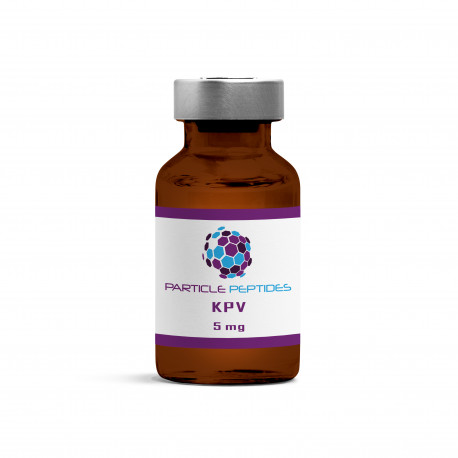
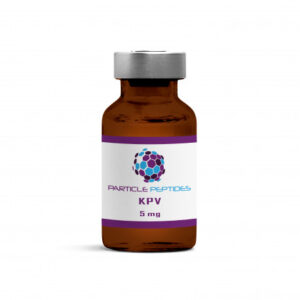
KPV 5mg
€31.99
Peptide KPV 5mg — Proven Anti-Inflammatory Research Tripeptide
Peptide KPV is a short tripeptide derived from alpha-melanocyte stimulating hormone (alpha-MSH) — specifically the C-terminal sequence Lys-Pro-Val. This compact three-amino-acid sequence has demonstrated anti-inflammatory and antimicrobial properties in research, modulating the production of pro-inflammatory cytokines and chemokines through mechanisms that are currently the subject of extensive in-vitro and preclinical investigation. Supplied as a lyophilised white powder in a single 5mg vial with a verified purity of ≥99%, this compound is manufactured to the precise standards required for in-vitro scientific research.
⚠️ Research Use Only. This product is intended exclusively for in-vitro scientific research. It is not approved for human or animal consumption, clinical use, or therapeutic application.
Table of Contents
- Product Specifications
- Alpha-MSH Derivation and Structural Context
- Anti-Inflammatory Mechanism Research
- Inflammatory Bowel Disease Research
- Wound Healing and Antimicrobial Properties
- Research Applications
- Reconstitution and Storage
- FAQ
Product Specifications
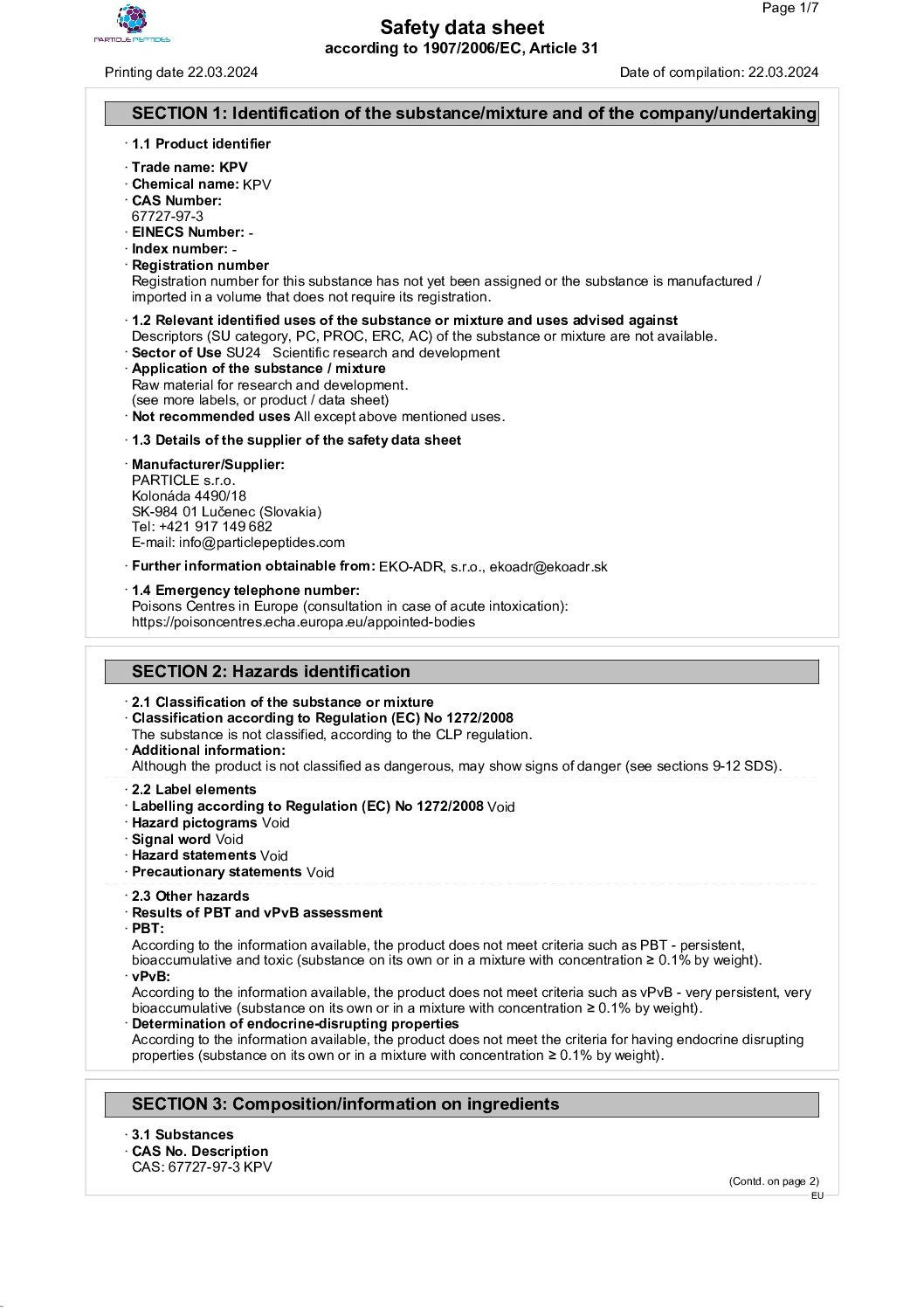
| Parameter | Detail |
|---|---|
| Peptide | KPV |
| Derivation | Alpha-Melanocyte Stimulating Hormone (alpha-MSH) |
| Quantity | 5mg |
| Unit | 1 Vial |
| Physical Appearance | White powder |
| Salt Form | Acetate |
| Peptide Purity | ≥99% |
| Molecular Mass | 342.4 Da |
| CAS Number | 67727-97-3 |
| Solubility | Bacteriostatic water — 1ml/vial |
| Sequence | Lys-Pro-Val |
Alpha-MSH Derivation and Structural Context
Peptide KPV is derived from the C-terminal tripeptide sequence of alpha-melanocyte stimulating hormone — a neuropeptide with well-characterised anti-inflammatory activity. Alpha-MSH’s anti-inflammatory properties have been attributed in research to multiple molecular mechanisms, with its C-terminal sequence identified as a biologically active fragment capable of recapitulating a meaningful portion of the parent molecule’s activity in a structurally minimal form.
The tripeptide architecture of KPV — Lys-Pro-Val — represents one of the smallest research peptides with a characterised anti-inflammatory profile. Its compact structure facilitates investigation across multiple administration routes and delivery systems, including oral, topical and systemic research models.
At a molecular mass of just 342.4 Da, kvp peptides of this structural class present distinct pharmacokinetic and tissue penetration properties compared to larger peptide research compounds — a characteristic of direct relevance to its investigation in mucosal and gastrointestinal research applications.
Anti-Inflammatory Mechanism Research
The primary mechanism under investigation for integrative peptides kpv research involves the modulation of pro-inflammatory cytokine and chemokine production. Research has characterised KPV’s capacity to downregulate the expression and secretion of key inflammatory mediators — including TNF-alpha, IL-1beta and IL-6 — in activated immune cell and epithelial cell research models.
The receptor pathways through which KPV exerts these effects are an active area of investigation. Current research has examined melanocortin receptor involvement — consistent with its alpha-MSH derivation — as well as direct nuclear factor regulatory mechanisms that may operate independently of receptor binding.
These anti-inflammatory mechanisms position KPV as a research compound of substantial interest in conditions characterised by dysregulated inflammatory signalling — particularly at mucosal surfaces where its compact structure and multi-route delivery potential are of direct mechanistic relevance.
Inflammatory Bowel Disease Research
The most extensively investigated therapeutic application of KPV in current research is inflammatory bowel disease (IBD). Studies examining KPV’s effects in IBD models have demonstrated substantial efficacy and safety across multiple administration routes — a finding of significant research interest given the limitations of current IBD pharmacological approaches.
Research has examined KPV’s capacity to reduce intestinal inflammation, protect epithelial barrier integrity and modulate the mucosal immune environment in colitis and related inflammatory gastrointestinal disease models. The compound’s small molecular size facilitates investigation of oral administration routes — relevant to gastrointestinal research applications where larger peptides are typically degraded before reaching their target tissue.
Wound Healing and Antimicrobial Properties
Beyond its anti-inflammatory activity, research has characterised two additional properties of KPV of research significance.
The compound’s potential to accelerate wound healing has been investigated in preclinical models — research examining epithelial cell migration, proliferation and the inflammatory phase of wound resolution. KPV’s capacity to modulate the inflammatory component of wound healing without suppressing the proliferative phase represents a mechanistically interesting research profile for tissue repair biology.
Antimicrobial properties have also been investigated — with research examining KPV’s capacity to inhibit pathogen growth and reduce infection rates in wound biology models. Post-surgical infection and scarring reduction are specific research applications where these combined anti-inflammatory and antimicrobial properties have been characterised.
Research Applications
KPV is investigated within the following approved in-vitro research domains:
- Pro-inflammatory cytokine and chemokine modulation studies
- Melanocortin receptor binding and activation research
- Inflammatory bowel disease and mucosal inflammation models
- Intestinal epithelial barrier integrity research
- Wound healing and tissue repair biology
- Post-surgical infection and scarring reduction studies
- Antimicrobial mechanism investigation
- Nuclear factor regulatory pathway research
- Alpha-MSH derived peptide pharmacology studies
Reconstitution and Storage
Reconstitute with bacteriostatic water at 1ml per vial. Add solvent slowly along the vial wall and allow to dissolve by gentle rotation. Do not shake or vortex.
Store lyophilised powder at −20°C. Once reconstituted, maintain at 4°C and use within the timeframe specified by your research protocol. Protect from light and avoid repeated freeze-thaw cycles.
Explore additional immunity and anti-inflammatory research peptides in our Immunity, Healing and Anti-Age research categories.
FAQ
What is peptide KPV? Peptide KPV is a tripeptide (Lys-Pro-Val) derived from the C-terminal sequence of alpha-melanocyte stimulating hormone. It displays anti-inflammatory and antimicrobial properties in research, modulating pro-inflammatory cytokine and chemokine production. Research has demonstrated substantial efficacy in inflammatory bowel disease models across multiple administration routes, with additional investigation into wound healing acceleration, infection reduction and post-surgical scarring minimisation. Supplied as a 5mg lyophilised white powder with ≥99% purity for in-vitro scientific research.
What is KPV dosing in research? KPV dosing parameters in published preclinical research vary by study model, target tissue, administration route and endpoint. In-vitro effective concentrations differ from in-vivo parameters across gastrointestinal, wound healing and antimicrobial research applications. This compound is supplied for in-vitro research use only — no therapeutic or personal dosing recommendation is made or implied. Investigators should reference peer-reviewed literature and approved institutional protocols.
How does peptide KPV differ from full alpha-MSH? KPV is the minimal C-terminal fragment of alpha-MSH — retaining a meaningful portion of the parent molecule’s anti-inflammatory activity in a structurally compact tripeptide form. Its small molecular mass of 342.4 Da enables investigation across administration routes — including oral delivery in gastrointestinal research — where full-length alpha-MSH is typically degraded before reaching target tissue. This structural minimalism is a practical research advantage rather than simply a limitation of the truncated sequence.
What are kvp peptides in research contexts? KVP peptides is an alternative spelling variant used in some search and research contexts to refer to KPV peptides — the same Lys-Pro-Val tripeptide derived from alpha-MSH. Both designations refer to the same compound. Research interest in this tripeptide class centres on their anti-inflammatory, antimicrobial and mucosal tissue protection properties.
What is the research significance of integrative peptides KPV applications? Integrative peptides KPV research applications reflect the compound’s multi-mechanism activity profile — combining anti-inflammatory cytokine modulation, antimicrobial properties and wound healing acceleration in a single structurally minimal tripeptide. This integration of multiple relevant biological activities makes it a compound of broad research interest in inflammation biology, mucosal immunology and tissue repair investigation. All applications are within approved in-vitro research frameworks.
Be the first to review “KPV 5mg”
Related products
Immunity Enhancement Research
Cognitive Enhancement Research
Cognitive Enhancement Research
Immunity Enhancement Research
Longevity and Anti-aging Research
Longevity and Anti-aging Research
Core Peptides
Immunity Enhancement Research
Reviews
There are no reviews yet.