
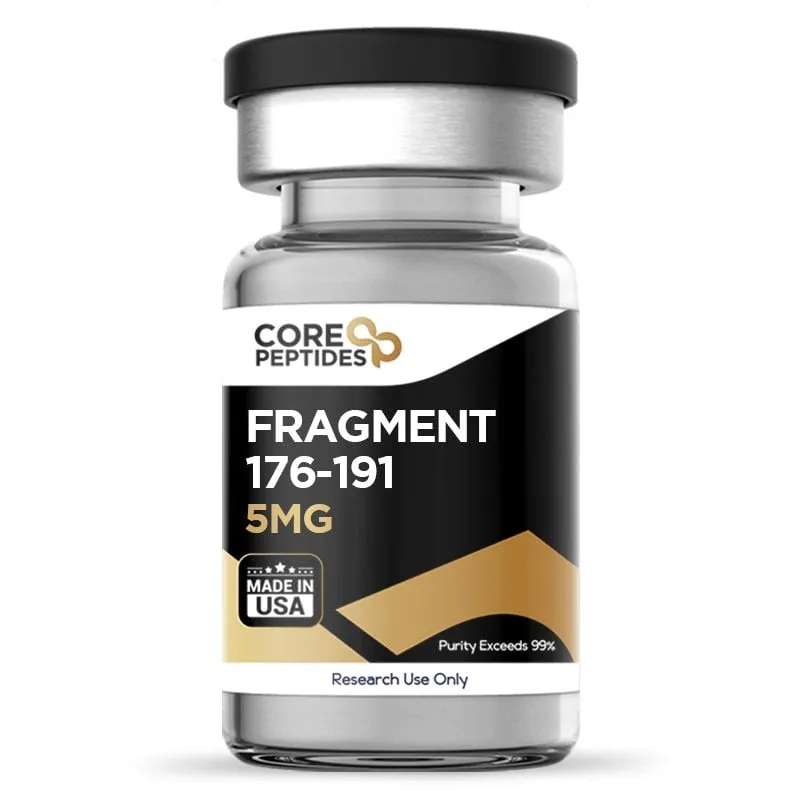
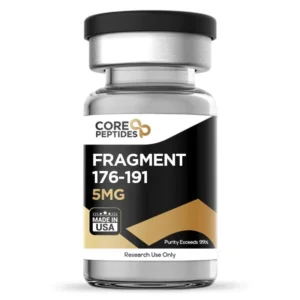
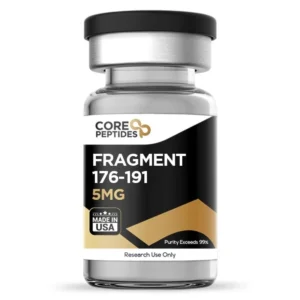
Fragment 176-191 (5mg)
$44.00
Powerful Fragment 176-191
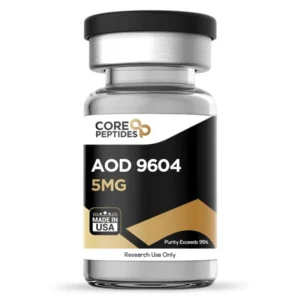
Fragment 176-191 peptide, also known as hGH Fragment , tyr-hGH 177-191, or AOD-9604, has been suggested by researchers to stimulate weight loss and fat burn in a fashion similar to that of the growth hormone (hGH). This remarkable peptide represents a targeted approach to metabolic research, focusing on the lipolytic (fat-bur
ning) properties of human growth hormone without the associated growth-promoting effects. Its unique composition and mechanism of action make it a compelling subject for studies on obesity and metabolic disorders. Many researchers are interested in hgh frag 176-191 for its potential.
hGH is a naturally occurring hormone that, apart from stimulating growth, also plays a crucial role in the catabolism of adipose tissue and the release of lipids from fat cells. Fragment is a small, precisely engineered segment of the hGH molecule, specifically comprising its last 16 amino acids. Scientists propose this particular fragment to be the “lipolytic fragment” of hGH, meaning it is responsible for the hormone’s fat-burning capabilities. This targeted action allows researchers to isolate and study these effects without the broader systemic impacts of full hGH. Discussions about this peptide can often be found on platforms like hgh frag 176 191 reddit.
The term “lipolytic” directly reflects the purported fat-burning properties of this molecule. To potentially improve the stability of the peptide and enhance its research utility, the first amino acid in the hGH Fragment 176-191 sequence is often replaced by tyrosine. Consequently, the peptide is also labelled as Fragment tyr-hGH 177-191. This modification is designed to ensure the peptide remains stable and effective for experimental protocols, providing consistent and reliable results in metabolic research. The precise nature of hgh frag 176 191 makes it a valuable tool for scientific inquiry.
Research into Fragment 176-191 focuses on its ability to selectively reduce adipose tissue, particularly stubborn fat deposits, without affecting blood glucose levels or insulin sensitivity. This makes it an attractive candidate for investigating novel treatments for obesity and related conditions, offering a potentially safer alternative to full growth hormone therapy. Its mechanism involves stimulating the release of fat from fat cells and inhibiting lipogenesis (the formation of new fat), thereby promoting a net reduction in body fat. This dual action underscores its efficacy in metabolic regulation.
For accurate and reliable research, proper handling and reconstitution of Fragment 176-191 (5mg) are essential. It is typically supplied as a lyophilized powder and requires reconstitution with bacteriostatic water. Precise measurements and sterile techniques are crucial to maintain the peptide’s integrity and ensure accurate experimental results. Researchers should always adhere to established protocols for reconstitution to guarantee the purity and efficacy of the peptide for their studies.
Table of Contents
Product Details
|
Detail
|
Value
|
|
Product
|
Fragment 176-191
|
|
Size
|
5mg
|
|
Form
|
Lyophilized powder
|
|
Purity
|
>99%
|
|
SKU
|
P-FRAG176-191
|
|
Sequence
|
Y-Aib-QGTFTSDYSI-αMeLeu-LDK-Lys(19-carboxy- nonadecanoyl-γGlu-AEEA)-AQ-Aib-AFIEYLLEGGPSSGAPPPS-NH2
|
|
Molecular Mass
|
4731.33
|
|
CAS NO.
|
N/A
|
|
Solubility
|
Bacteriostatic water
|
About Fragment 176-191 (5mg)
Fragment 176-191 peptide, also known as hGH Fragment 176-191, tyr-hGH 177-191, or AOD-9604, is an investigational peptide suggested by researchers to stimulate weight loss and fat burn. It is a small, precisely engineered segment of the human growth hormone (hGH) molecule, specifically comprising its last 16 amino acids, believed to be responsible for hGH’s lipolytic effects.
Mechanism of Action: Targeted Fat Loss
This peptide functions by mimicking the lipolytic effects of hGH, promoting the catabolism of adipose tissue and the release of lipids from fat cells. It is designed to selectively target fat reduction without stimulating growth or affecting blood glucose levels, making it a focused tool for metabolic research into obesity and fat metabolism.
Stability and Research Utility
To enhance its stability and research utility, the first amino acid in the hGH Fragment 176-191 sequence is often replaced by tyrosine, leading to its designation as Fragment tyr-hGH 177-191. This modification ensures the peptide remains stable and effective for experimental protocols, providing consistent and reliable results in metabolic research.
Selective Adipose Tissue Reduction
Research into Fragment 176-191 focuses on its ability to selectively reduce adipose tissue, particularly stubborn fat deposits. Its mechanism involves stimulating the release of fat from fat cells and inhibiting lipogenesis (the formation of new fat), thereby promoting a net reduction in body fat. This makes it an attractive candidate for investigating novel treatments for obesity and related conditions.
Frequently Asked Questions
What is Fragment 176-191 (5mg)?
Fragment 176-191 (5mg) is a synthetic peptide derived from human growth hormone (hGH). It is researched for its potential to stimulate fat loss and metabolism by targeting the lipolytic effects of hGH without promoting growth.
How does Fragment promote fat loss?
Fragment 176-191 works by stimulating the breakdown of fat (lipolysis) and inhibiting the formation of new fat (lipogenesis). It selectively targets adipose tissue, promoting the release of lipids from fat cells to aid in weight loss.
What are the other names for Fragment?
Fragment 176-191 is also known as hGH Fragment, tyr-hGH 177-191, or AOD-9604. These names reflect its origin from human growth hormone and specific modifications made for research purposes.
Is Fragment 176-191 approved for human use?
No, Fragment 176-191 is an investigational peptide intended strictly for research purposes. It is not approved for human use, and further studies are required to establish its long-term safety and efficacy in humans.
How should Fragment 176-191 be reconstituted for research?
Fragment 176-191 is typically supplied as a lyophilized powder. For research, it should be reconstituted with bacteriostatic water. Sterile techniques and precise measurements are crucial to ensure the peptide’s purity and efficacy for experimental protocols.
Be the first to review “Fragment 176-191 (5mg)”
Related products
Core Peptides
$72.00
Core Peptides
$104.40
Cognitive Enhancement Research
$9.99
Core Peptides
$20.00 $29.00Price range: $20.00 through $29.00
Longevity and Anti-aging Research
$49.99
Sleep Enhancement Research
$20.00 $29.00Price range: $20.00 through $29.00
Core Peptides
$41.00
Weight Loss Research
$41.00
Reviews
There are no reviews yet.