
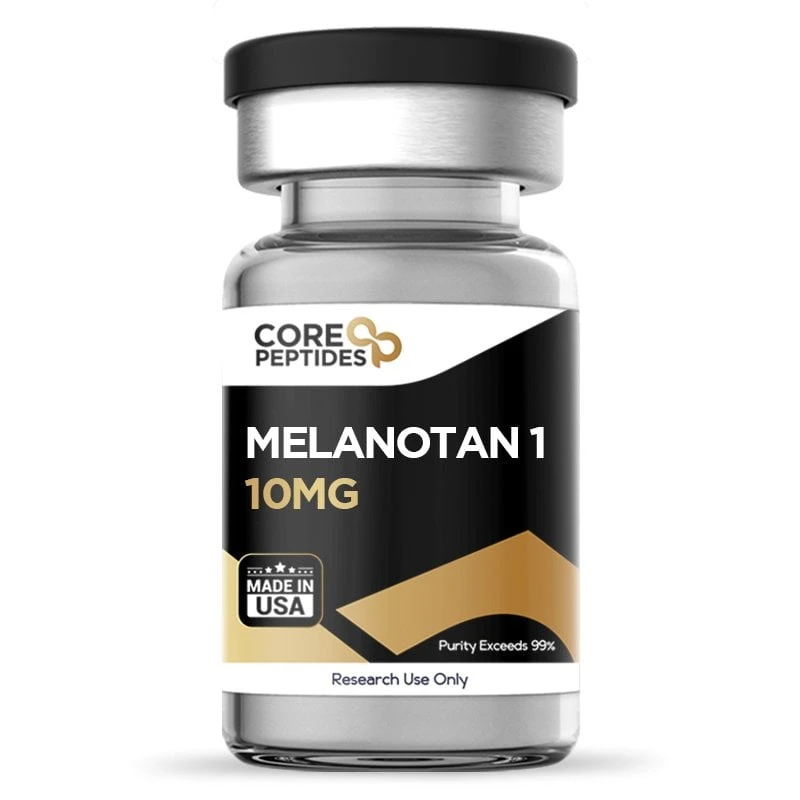
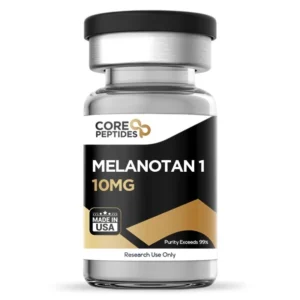
Melanotan 1 10mg
€43.00
Melanotan 1 Peptide 10mg — Proven Alpha-MSH Analogue Research Compound
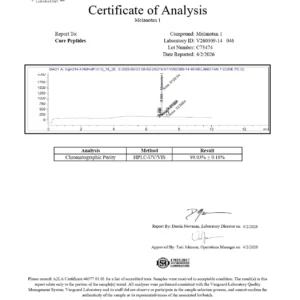
Melanotan 1 peptide is a synthetic 13-amino-acid analogue of endogenous alpha-melanocyte stimulating hormone (α-MSH) — engineered with two targeted structural modifications that researchers suggest may improve receptor affinity and extend its half-life relative to the native hormone. Sharing the same amino acid count as α-MSH but differing at two key positions, Melanotan 1 represents a precision-modified research tool for investigating the melanocortin receptor biology that underlies pigmentation, immune regulation, metabolic function and other physiological processes mediated by the alpha-MSH signalling axis. Supplied as a lyophilised powder in a single 10mg vial at >99% purity for in-vitro scientific research.
⚠️ Research Use Only. This product is intended exclusively for in-vitro scientific research. It is not approved for human or animal consumption, clinical use, or therapeutic application.
Table of Contents
- Product Specifications
- Alpha-MSH Biology and Research Context
- Structural Modifications — Norleucine and D-Phenylalanine
- Receptor Affinity and Half-Life Research
- Melanocortin Research Applications
- Research Applications
- Reconstitution and Storage
- FAQ
Product Specifications
| Parameter | Detail |
|---|---|
| Peptide | Melanotan 1 (MT-I) |
| Parent Hormone | Alpha-Melanocyte Stimulating Hormone (α-MSH) |
| Amino Acids | 13 |
| Modification 1 | Position 4: Methionine → Norleucine |
| Modification 2 | Position 7: L-Phenylalanine → D-Phenylalanine |
| Quantity | 10mg |
| Unit | 1 Vial |
| Form | Lyophilised powder |
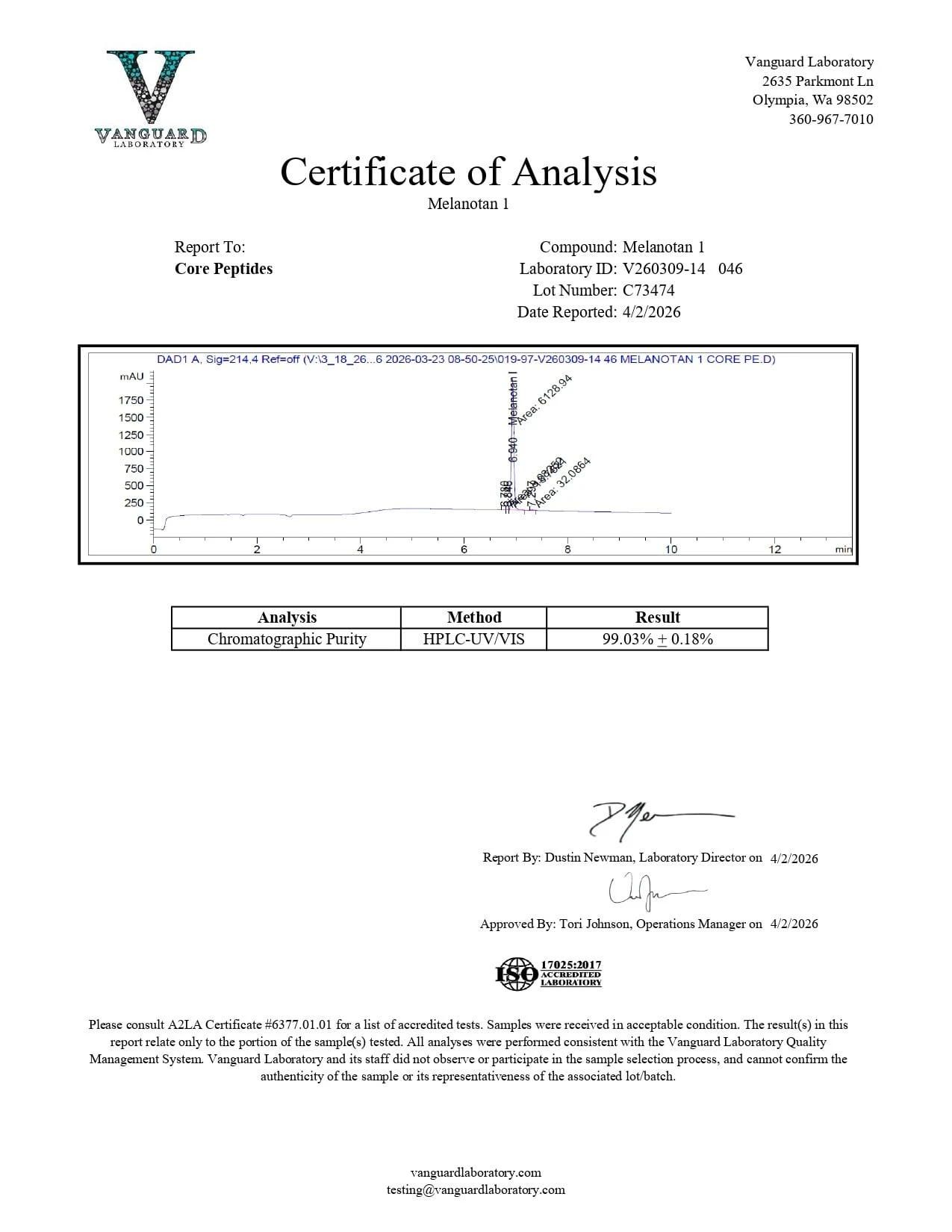
| Purity | >99% |
| SKU | P-MELANTN1-10 |
Alpha-MSH Biology and Research Context
Melanotan 1 peptide is modelled on alpha-melanocyte stimulating hormone — a 13-amino-acid endogenous peptide derived from the POMC (proopiomelanocortin) precursor that plays a central regulatory role across multiple physiological systems. Alpha-MSH acts primarily through melanocortin receptors (MCRs) — a family of five G-protein-coupled receptors (MC1R through MC5R) with distinct tissue distributions and downstream signalling profiles.
MC1R is the primary target for pigmentation biology — expressed on melanocytes, where its activation stimulates melanin synthesis and eumelanin production. MC3R and MC4R are expressed in the hypothalamus and play roles in energy homeostasis, appetite regulation and metabolic rate. MC2R mediates adrenal cortex steroidogenesis. MC5R is expressed across peripheral tissues with diverse functions.
The breadth of melanocortin receptor biology — spanning pigmentation, metabolism, immune function, sexual function and beyond — makes alpha-MSH analogues like mt1 peptide research compounds of interest across multiple physiological research domains.
Structural Modifications — Norleucine and D-Phenylalanine
The two structural modifications that distinguish melanotan 1 for sale research compounds from native alpha-MSH are positioned at residues 4 and 7 of the 13-amino-acid sequence.
Position 4 — Methionine to Norleucine substitution: Methionine is susceptible to oxidative degradation in biological environments — its sulfur-containing side chain is readily oxidised to methionine sulfoxide, reducing the biological activity of native alpha-MSH. Norleucine, an isosteric non-natural amino acid that lacks the sulfur moiety, replaces methionine at position 4 to eliminate this oxidation vulnerability. This substitution preserves the side chain length and hydrophobic character of methionine while removing its primary degradation pathway.
Position 7 — L-Phenylalanine to D-Phenylalanine substitution: The introduction of a D-amino acid at position 7 — the mirror-image stereoisomer of the natural L-phenylalanine — provides resistance to proteolytic enzymes that specifically recognise and cleave L-amino acid sequences. D-Phenylalanine is not a substrate for standard peptidases, making this substitution a primary mechanism for extending the compound’s half-life in research environments.
Together, these two modifications — eliminating oxidative vulnerability at position 4 and introducing proteolytic resistance at position 7 — are the mechanistic basis for researchers’ suggestion that buy melanotan 1 preparations may exhibit higher receptor affinity and a longer half-life than endogenous alpha-MSH.
Receptor Affinity and Half-Life Research
The pharmacological consequences of the norleucine and D-phenylalanine substitutions have been characterised in receptor binding research. Research has examined whether these modifications alter the binding geometry of the peptide at melanocortin receptors in ways that improve or maintain affinity while simultaneously enhancing metabolic stability.
The extension of half-life — through proteolytic resistance — provides a research advantage in protocols requiring sustained receptor engagement. Native alpha-MSH is rapidly degraded by circulating proteases, limiting its utility in research contexts where sustained melanocortin receptor occupancy is required for the full biological response to develop.
Melanotan 1 dosage research in published preclinical investigation has examined dose-response relationships at melanocortin receptors — with receptor binding affinity data informing concentration selection for in-vitro research protocols examining melanocortin receptor biology.
Melanocortin Research Applications
As a melanocortin receptor agonist with enhanced stability, melanotan 1 peptide provides a research tool for investigating the full breadth of melanocortin receptor biology without the rapid degradation that limits native alpha-MSH research utility.
Pigmentation biology research examines MC1R activation and melanin synthesis in melanocyte cell culture models. Metabolic research investigates MC3R and MC4R pathway engagement and downstream energy homeostasis effects. Immune regulation research examines alpha-MSH’s anti-inflammatory melanocortin pathway activity — connecting to the KPV research domain through the shared alpha-MSH mechanistic framework. Sexual function research examines melanocortin pathway involvement in relevant physiological models.
Research Applications
Melanotan 1 is investigated within the following approved in-vitro research domains:
- Melanocortin receptor (MC1R–MC5R) binding and activation studies
- Melanogenesis and pigmentation biology research
- Metabolic rate and energy homeostasis investigation
- Anti-inflammatory alpha-MSH pathway research
- Norleucine and D-amino acid substitution pharmacology
- Alpha-MSH analogue structure-activity relationship studies
- Appetite regulation and hypothalamic melanocortin research
- Comparative alpha-MSH vs Melanotan 1 stability research
Reconstitution and Storage
Reconstitute following standard lyophilised peptide protocols appropriate to your research application. Store lyophilised powder at −20°C. Once reconstituted, maintain at 4°C and use within the timeframe specified by your research protocol. Protect from light and avoid repeated freeze-thaw cycles.
Explore additional melanocortin and anti-aging research compounds in the Longevity and Anti-aging Research and Healing and Regeneration Research categories.
FAQ
What is melanotan 1 peptide? Melanotan 1 peptide is a synthetic 13-amino-acid analogue of alpha-melanocyte stimulating hormone. It shares the same amino acid count as the native hormone but features two strategic modifications — norleucine substitution at position 4 to eliminate oxidative vulnerability, and D-phenylalanine substitution at position 7 for proteolytic resistance. These modifications are suggested by researchers to improve receptor affinity and extend half-life versus endogenous alpha-MSH. Supplied as a 10mg lyophilised powder with >99% purity for in-vitro scientific research.
Is melanotan 1 for sale for human use? Melanotan 1 for sale through this platform is supplied exclusively for in-vitro scientific research. It is not approved for human administration, tanning, cosmetic or any clinical application. All research involving this compound should comply with applicable institutional and regulatory requirements.
Where can I buy melanotan 1 for research? Buy melanotan 1 through specialist research peptide suppliers. This compound is supplied strictly for in-vitro scientific research and is not approved for human consumption, therapeutic use or clinical application. Researchers should verify supplier purity documentation and batch testing credentials before procurement.
What is melanotan 1 dosage in research? Melanotan 1 dosage parameters in published preclinical research vary by experimental model, target receptor and research endpoint. Melanocortin receptor binding assays and cell culture studies use different concentration ranges appropriate to their specific endpoints. This compound is supplied for in-vitro research use only — no therapeutic or personal dosage recommendation is made or implied. Investigators should reference peer-reviewed literature and approved institutional protocols.
What is a MT1 peptide and how does it relate to Melanotan 1? MT1 peptide is the shorthand designation for Melanotan 1 — the synthetic alpha-MSH analogue with norleucine and D-phenylalanine substitutions. The MT1 abbreviation distinguishes it from Melanotan 2 (MT2), which is a structurally different cyclic alpha-MSH analogue with a distinct amino acid count and receptor selectivity profile. Both compounds engage the melanocortin receptor family but with different structural characteristics and research profiles.
Be the first to review “Melanotan 1 10mg”
Related products
Immunity Enhancement Research
Healing and Regeneration research
Core Peptides
Core Peptides
Longevity and Anti-aging Research
Core Peptides
Cognitive Enhancement Research
Longevity and Anti-aging Research
Reviews
There are no reviews yet.