
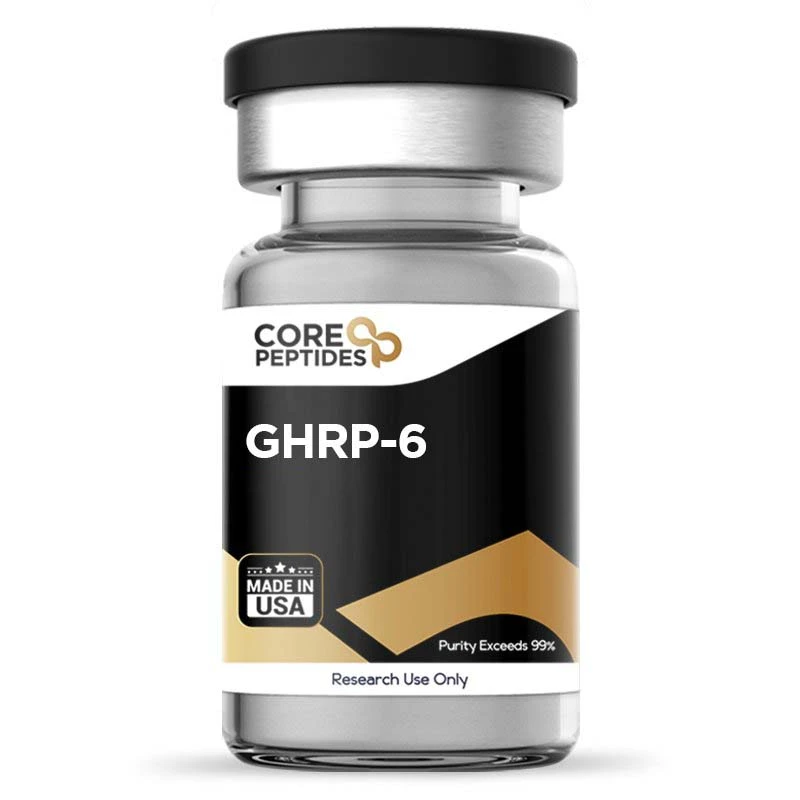
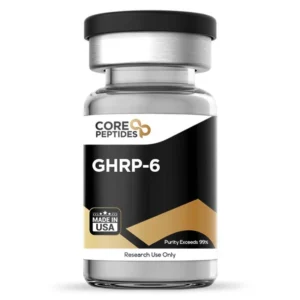
GHRP-6 (Growth Hormone-Releasing Hexapeptide) 5mg / 10mg
€20.00 €29.00Price range: €20.00 through €29.00
GHRP-6 For Sale — Proven GH Secretagogue Research Hexapeptide
GHRP-6 for sale in research-grade form — growth hormone-releasing hexapeptide — belongs to a class of synthetic peptides developed with the potential to stimulate GH secretion and regulate growth hormone levels. Like GHRP-2, it is structurally analogous to the opioid peptide met-enkephalin but is suggested by researchers to lack the opioid activity of its structural template, instead interacting with ghrelin receptors — the growth hormone secretagogue receptors (GHS-Rs) — to exert its GH-stimulating activity. Available in 5mg and 10mg formats at >99% purity, this compound is formulated for in-vitro scientific research.
⚠️ Research Use Only. This product is intended exclusively for in-vitro scientific research. It is not approved for human or animal consumption, clinical use, or therapeutic application.
Table of Contents
- Product Specifications
- Historical Development of GHRPs
- Ghrelin Receptor Biology and GHS-R Interaction
- Hypothalamic Stimulation Research
- Metabolic and Nutrient Absorption Research
- Research Applications
- Reconstitution and Storage
- FAQ
Product Specifications
| Parameter | 5mg Vial | 10mg Vial |
|---|---|---|
| Peptide | GHRP-6 | GHRP-6 |
| Classification | GH Secretagogue Hexapeptide / GHS-R Agonist | GH Secretagogue Hexapeptide / GHS-R Agonist |
| Amino Acids | 6 | 6 |
| Quantity | 5mg | 10mg |
| Form | Lyophilised powder | Lyophilised powder |
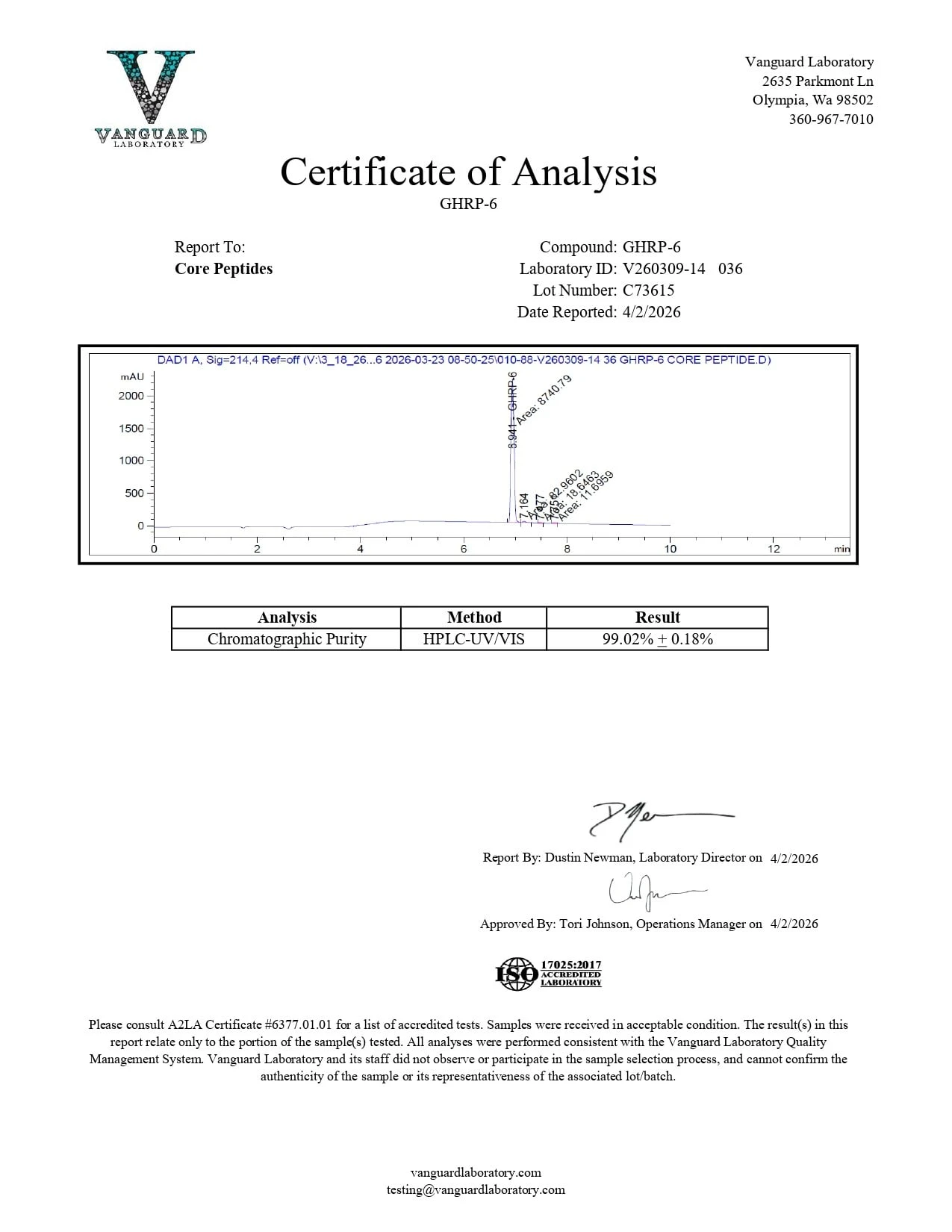
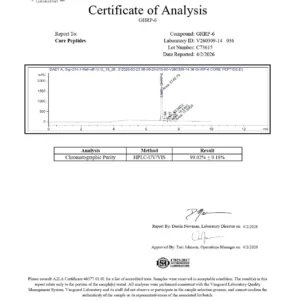
| Purity | >99% | >99% |
| SKU | P-GHRP6 | P-GHRP6 |
Historical Development of GHRPs
The ghrp-6 peptide belongs to a research lineage that began with the intention of synthetically mimicking the mechanism of action of growth hormone-releasing hormones. When GHRH was first isolated in 1984, scientists initially hypothesised that GHRPs might operate through GHRH-related pathways.
Subsequent research revealed a fundamentally different mechanism — GHRPs, including ghrp6, exhibit apparent affinity to bind with ghrelin receptors rather than GHRH receptors. Ghrelin, known as the hunger hormone and naturally produced by the stomach when empty, operates through GHS-R1a receptors to simultaneously regulate food intake and stimulate GH secretion. The discovery that GHRPs share ghrelin’s receptor target — despite having been developed before ghrelin was even identified — represents one of the more scientifically interesting retroactive mechanistic clarifications in peptide research history.
GHRP-6 was among the first synthetic peptides in this class to be rigorously studied, developed more than 25 years ago, with continuous research conducted since to fully characterise its biological properties and research utility.
Ghrelin Receptor Biology and GHS-R Interaction
Buy GHRP-6 research compounds exert their primary activity through binding to ghrelin receptors — GHS-R — which are present in both the hypothalamus and the pituitary gland. This dual anatomical receptor distribution is mechanistically significant.
At the pituitary level, GHS-R activation stimulates GH synthesis and secretion from somatotroph cells — the direct GH-releasing mechanism. At the hypothalamic level, GHS-R activation may involve additional neuroendocrine regulatory effects — including modulation of GHRH release and somatostatin suppression — that amplify the pituitary GH-releasing signal.
This dual-site engagement potentially makes GHRP-6’s GH-stimulating activity more complex than simple direct pituitary stimulation — involving a coordinated hypothalamic-pituitary axis response that mirrors the multi-level regulation of natural GH secretion.
Hypothalamic Stimulation Research
A specific and distinctive research characteristic of ghrp 6 for sale investigation is the hypothalamic stimulation dimension — the proposed capacity of this peptide to influence GH regulation through hypothalamic pathways in addition to its direct pituitary effects.
Researchers have suspected that GHRPs, like ghrelin, may govern action via hypothalamic stimulation — with GHS-R1a engagement in hypothalamic nuclei regulating GHRH and somatostatin secretion in ways that modulate the hypothalamic-pituitary GH axis more broadly than direct pituitary stimulation alone achieves.
This hypothalamic component of GHRP-6 research distinguishes it from purely pituitary-targeted GH secretagogues and makes it a research tool of value for studies examining GH regulation at the level of the hypothalamic-pituitary axis rather than simply the anterior pituitary in isolation.
Metabolic and Nutrient Absorption Research
Beyond GH secretagogue biology, ghrelin receptor agonism research has explored GHRP-6’s potential influence on metabolism and nutrient absorption — reflecting ghrelin’s known physiological roles in energy homeostasis, gastric acid secretion and gastrointestinal motility.
Research examining GHRP-6’s influence on these metabolic and gastrointestinal parameters investigates whether its GHS-R1a agonism reproduces the broader metabolic regulatory effects of endogenous ghrelin beyond simple GH stimulation — providing a research entry point into ghrelin receptor biology across multiple physiological systems.
Research Applications
GHRP-6 is investigated within the following approved in-vitro research domains:
- GHS-R1a ghrelin receptor binding and activation studies
- GH secretion and pituitary somatotroph biology
- Hypothalamic GH axis regulation research
- Met-enkephalin analogue structure-activity research
- Appetite regulation and ghrelin receptor pathway investigation
- Metabolism and nutrient absorption research
- IGF-1 axis modulation downstream of GH stimulation
- Sleep architecture and GH pulse correlation studies
- Comparative GHRP-6 vs other GHS-R1a agonist research
Reconstitution and Storage
Reconstitute with NaCl, sterile water or bacteriostatic water at 1ml per vial. Add solvent slowly along the vial wall and allow to dissolve by gentle rotation. Do not shake or vortex. Store lyophilised powder at −20°C. Once reconstituted, maintain at 4°C and use within the timeframe specified by your research protocol. Protect from light and avoid repeated freeze-thaw cycles.
Explore additional GH secretagogue and metabolic research compounds in our Muscle Growth, Anti-Age and Sleep Enhancement research categories.
FAQ
What is GHRP-6 for sale? GHRP-6 for sale — growth hormone-releasing hexapeptide — is a synthetic six-amino-acid GHS-R1a agonist analogous to met-enkephalin but lacking opioid activity. It binds ghrelin receptors in both the hypothalamus and pituitary to stimulate GH secretion through a dual-site mechanism. Available in 5mg and 10mg lyophilised formats at >99% purity. For in-vitro scientific research only.
What is ghrp6 used for in research? Ghrp6 is used in approved in-vitro research examining GHS-R1a ghrelin receptor binding and activation, GH secretion from pituitary somatotrophs, hypothalamic GH axis modulation, met-enkephalin analogue pharmacology, appetite regulation, metabolism and nutrient absorption research, IGF-1 axis modulation and sleep architecture correlation. All applications are within approved in-vitro and preclinical research frameworks.
Where can I buy GHRP-6 for research? Buy GHRP-6 options are available through specialist research peptide suppliers. This compound is supplied strictly for in-vitro scientific research. It is not approved for human consumption, therapeutic use or clinical application. Researchers should ensure compliance with all applicable institutional requirements.
What is the ghrp-6 peptide structure and classification? The ghrp-6 peptide is a six-amino-acid synthetic hexapeptide classified as a GH secretagogue through GHS-R1a agonism. Its sequence is His-DTrp-Ala-Trp-DPhe-Lys-NH2 — incorporating D-amino acids at positions 2 and 5 for proteolytic stability. Despite structural analogy to met-enkephalin, it is suggested to lack opioid receptor activity, instead activating the ghrelin receptor system to stimulate GH release and influence hypothalamic regulation.
How does GHRP-6 compare to GHRP-2 in research? Both GHRP-6 and GHRP-2 are met-enkephalin analogues that activate GHS-R1a to stimulate GH secretion. Key research distinctions include GHRP-6’s stronger appetite-stimulating activity through hypothalamic GHS-R1a, its hexapeptide versus GHRP-2’s pentapeptide structure, and differences in the relative magnitude of GH, ACTH and cortisol responses. GHRP-6 has one of the most extensive published research profiles of any GHS-R1a agonist — making it a frequent reference compound in comparative GH secretagogue research.
| Select Size | 10mg, 5mg |
|---|
Be the first to review “GHRP-6 (Growth Hormone-Releasing Hexapeptide) 5mg / 10mg”
Related products
Longevity and Anti-aging Research
Cognitive Enhancement Research
Core Peptides
Core Peptides
Core Peptides
Core Peptides
Muscle Growth research
Reviews
There are no reviews yet.