


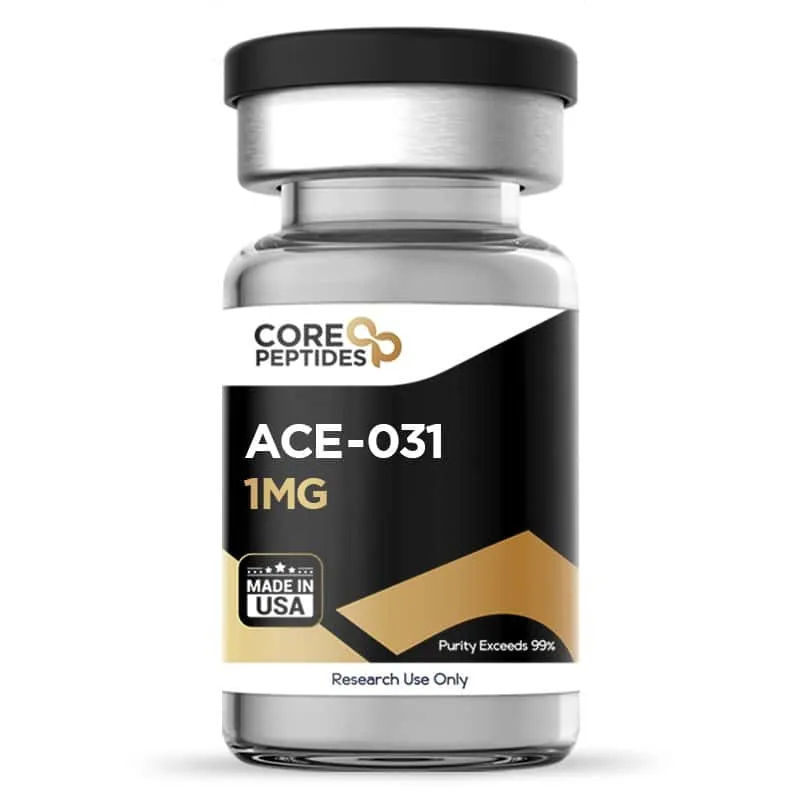
ACE-031 (ActRIIB-IgG1) 1mg
€155.70
ACE 031 Peptide — Proven Myostatin Inhibitor Research Compound 1mg
ACE 031 peptide — formally designated ActRIIB-IgG1-Fc — is a precision-engineered fusion compound consisting of the extracellular domain of activin receptor type IIB (ACV2RB) and recombinant immunoglobulin IgG1 Fc. This structural architecture positions it as a soluble decoy receptor capable of intercepting circulating myostatin and related ligands before they engage native ACV2RB receptors in skeletal muscle tissue. Supplied as a lyophilised powder in a single 1mg vial with a verified purity of >99%, this compound is formulated to the exacting standards required for advanced in-vitro scientific research.
⚠️ Research Use Only. This product is intended exclusively for in-vitro scientific research. It is not approved for human or animal consumption, clinical use, or therapeutic application.
Table of Contents
- Product Specifications
- Molecular Architecture
- Myostatin Biology and Research Context
- Mechanism of Action
- Research Applications
- Reconstitution and Storage
- FAQ
Product Specifications
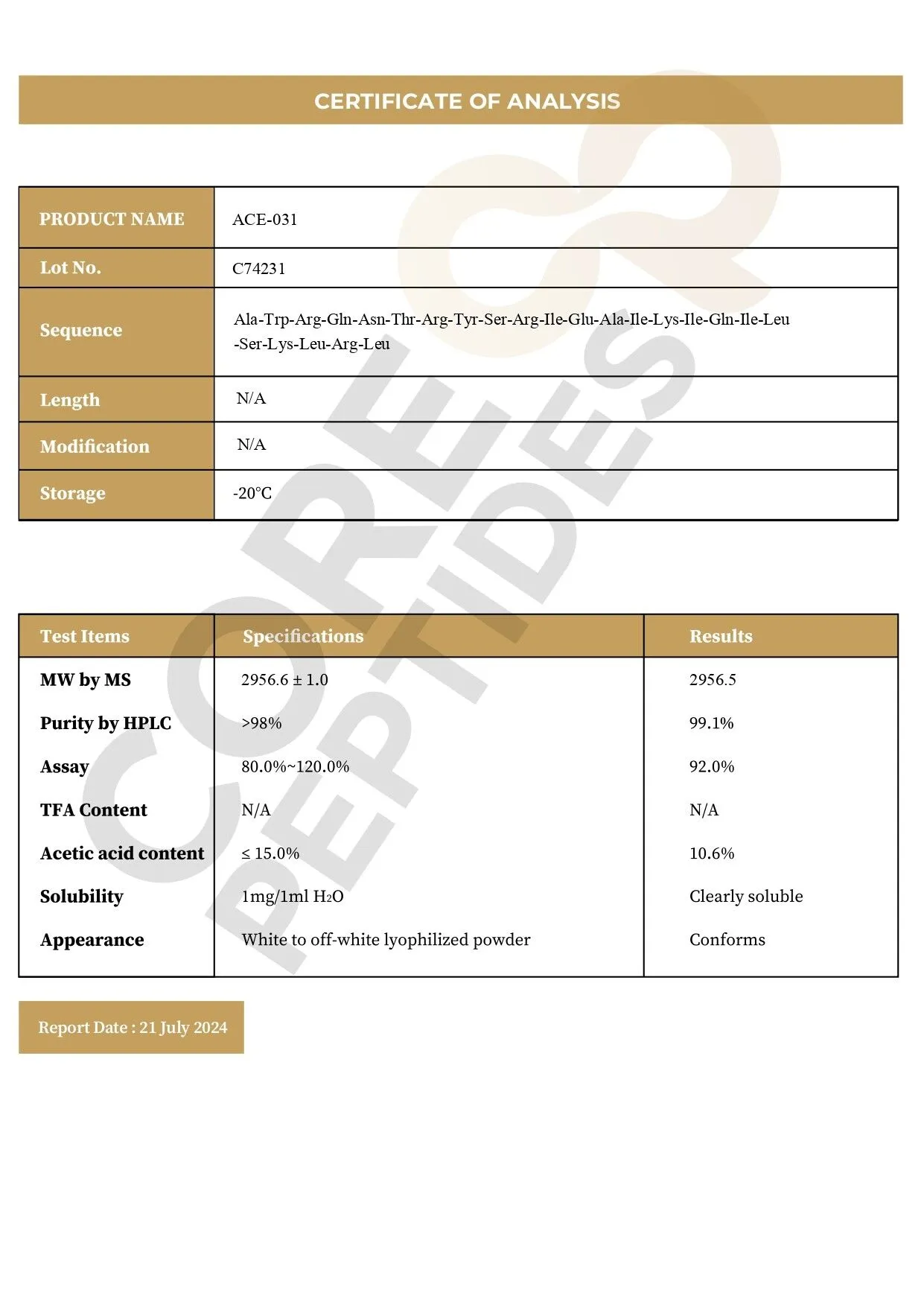
| Parameter | Detail |
|---|---|
| Peptide | ACE-031 (ActRIIB-IgG1-Fc) |
| Quantity | 1mg |
| Unit | 1 Vial |
| Form | Lyophilised powder |
| Purity | >99% |
| Molecular Formula | C3418H5188N928O1062S38 |
| Molecular Weight | 77,489.82 g/mol |
| SKU | P-ACE031-1 |
| Also Known As | Soluble activin type IIB receptor (ActRIIB-IgG1-Fc) |
Molecular Architecture
The ace-031 peptide is structurally distinct from conventional small-molecule or single-chain peptide research compounds. It is a fusion protein — combining two functional domains into a single macromolecular construct.
The first component is the extracellular domain of activin receptor type IIB (ACV2RB) — the native receptor to which myostatin binds with high affinity in skeletal muscle tissue. By incorporating this receptor domain in soluble, circulating form, ACE-031 can intercept myostatin and related TGF-β superfamily ligands before they reach membrane-bound receptors.
The second component is the Fc region of recombinant immunoglobulin IgG1 — a structural element that confers extended circulatory stability, consistent with established antibody pharmacokinetics, and facilitates the dimeric formation of the fusion protein.
With a molecular weight of 77,489.82 g/mol, peptide ace 031 represents one of the larger and more structurally complex research compounds in the myostatin inhibition category.
Myostatin Biology and Research Context
Myostatin — also designated growth and differentiation factor 8 (GDF8) — was first identified in 1997 through comparative murine studies where its absence produced a significant increase in muscle mass. It is a member of the TGF-β superfamily and functions as a negative regulator of skeletal muscle growth.
Myostatin exerts its inhibitory action specifically on skeletal muscle tissue — notably, cardiac and smooth muscle tissues appear unaffected by myostatin’s regulatory activity, a selectivity of direct relevance to research examining targeted muscle growth modulation without cardiac involvement.
The primary cellular mechanism involves myostatin binding to ACV2RB receptors, initiating a Smad2/3 signalling cascade that suppresses satellite cell activation — the committed stem cells responsible for muscle repair and hypertrophy. Additionally, overexpression of myostatin in experimental models has been associated with significant reductions in muscle mass.
Other TGF-β superfamily members — including various GDFs and activins — also bind to ACV2RB and may contribute to muscle mass regulation, making ACV2RB a research target of broad significance beyond myostatin alone.
Mechanism of Action
ACE-031 functions as a soluble decoy receptor — intercepting circulating myostatin and other ACV2RB-binding ligands from the TGF-β superfamily before they can engage native ACV2RB receptors on skeletal muscle cells.
By sequestering these circulating inhibitory ligands, the native ACV2RB receptors on muscle cell surfaces remain uninhibited. Current research hypothesises that this uninhibited receptor status promotes the activation of muscle hypertrophy pathways and results in an increase in skeletal muscle tissue mass.
Beyond its primary skeletal muscle research application, ACE-031 has been investigated for potential effects on metabolic function, adipose tissue regulation and bone mineral density — reflecting the broad tissue distribution of ACV2RB and its associated ligands.
Research Applications
ACE-031 is investigated within the following approved in-vitro research domains:
- Myostatin inhibition and skeletal muscle hypertrophy studies
- ACV2RB receptor-ligand binding assays
- TGF-β superfamily signalling pathway research
- Smad2/3 cascade investigation
- Satellite cell activation and muscle stem cell biology
- Muscle wasting disease model investigation
- Bone density and metabolic function research
- Fat storage and adipose tissue regulation studies
Reconstitution and Storage
Reconstitute with sterile or bacteriostatic water following standard lyophilised protein reconstitution protocols. Add solvent slowly and allow to dissolve by gentle rotation. Given the large molecular weight of this fusion protein, ensure complete dissolution before use.
Store lyophilised material at −20°C. Once reconstituted, maintain at 4°C and use within the recommended timeframe for your research protocol. Avoid repeated freeze-thaw cycles.
Explore additional research compounds in our Muscle Growth and Longevity and Anti-Age research categories.
FAQ
What is ACE 031 peptide? ACE 031 peptide — formally ActRIIB-IgG1-Fc — is a fusion research compound combining the extracellular domain of activin receptor type IIB with recombinant IgG1 Fc. It functions as a soluble decoy receptor that intercepts circulating myostatin and TGF-β superfamily ligands, preventing them from binding to native ACV2RB receptors and potentially inhibiting muscle hypertrophy signalling. With a molecular weight of 77,489.82 g/mol and >99% purity, it is supplied as a 1mg lyophilised vial for in-vitro scientific research.
How does ace-031 peptide work as a myostatin inhibitor? The ace-031 peptide works by acting as a circulating decoy receptor. Its ACV2RB-derived domain binds myostatin and other TGF-β superfamily ligands in circulation before they reach membrane-bound ACV2RB receptors on skeletal muscle cells. With native receptors uninhibited, research hypothesises that the Smad2/3 suppression mechanism is disrupted, allowing muscle hypertrophy pathways to proceed without myostatin-mediated inhibition.
What is myostatin and why is it relevant to peptide ace 031 research? Myostatin (GDF8) is a TGF-β superfamily protein that functions as a negative regulator of skeletal muscle growth. It was identified in 1997 and shown to inhibit satellite cell activation and muscle hypertrophy. Peptide ace 031 is specifically designed to intercept myostatin before it engages native ACV2RB receptors — making myostatin biology central to understanding ACE-031’s research mechanism and its potential applications in muscle wasting disease models.
What are the research applications of ACE-031? ACE-031 is used in approved in-vitro research examining myostatin inhibition, ACV2RB receptor-ligand binding, TGF-β superfamily signalling, satellite cell activation, Smad2/3 cascade dynamics and skeletal muscle hypertrophy pathways. Secondary research areas include bone density, metabolic function and adipose tissue regulation. All applications are within approved in-vitro and preclinical frameworks.
Is ACE-031 approved for human use? No — ACE-031 is supplied exclusively for in-vitro scientific research. It is not approved for human administration, therapeutic use, or any clinical application. Researchers requiring this compound should ensure compliance with all applicable institutional and regulatory requirements governing the use of investigational fusion proteins in research settings.
Be the first to review “ACE-031 (ActRIIB-IgG1) 1mg”
Related products

Core Peptides

Reproductive Health Research
Core Peptides
Core Peptides

Core Peptides
Core Peptides
Longevity and Anti-aging Research
Muscle Growth research
Reviews
There are no reviews yet.