
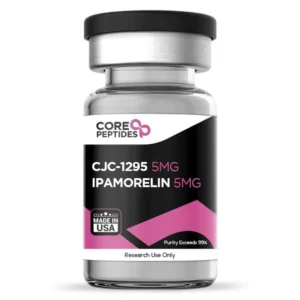
CJC-1295 No DAC & Ipamorelin Blend 10mg
€72.00
CJC 1295 For Sale — Proven Dual GH Secretagogue Blend 10mg
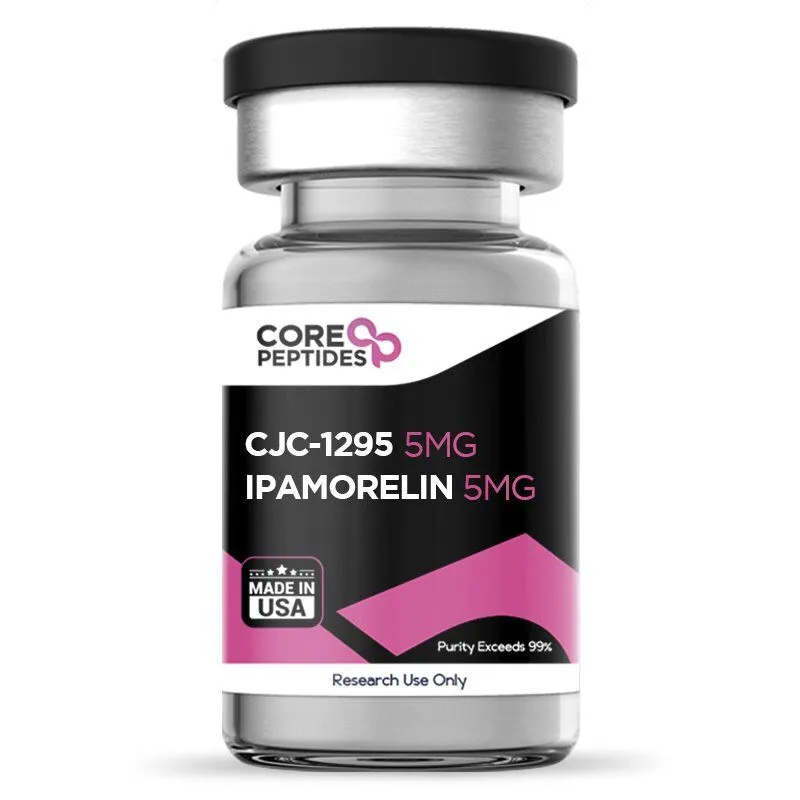
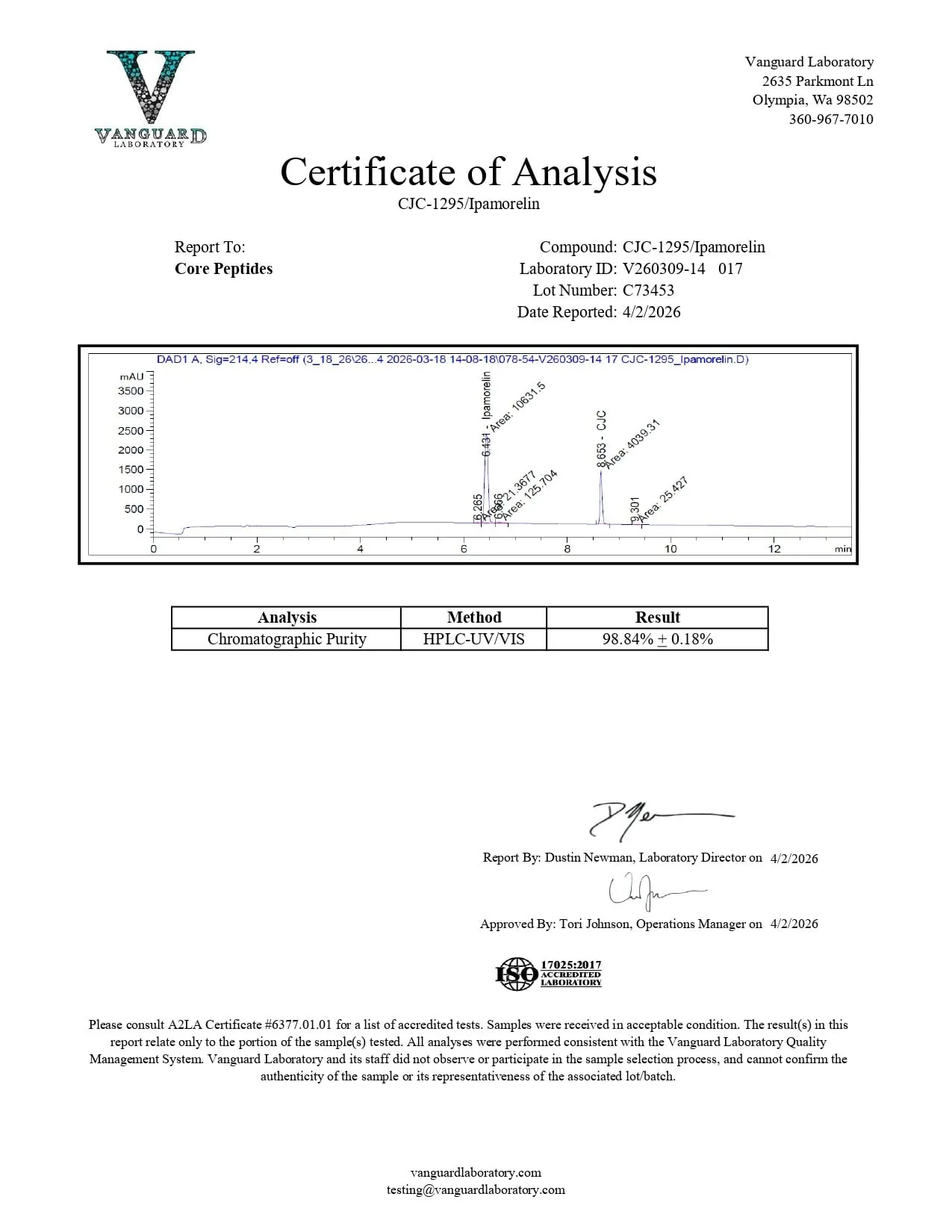
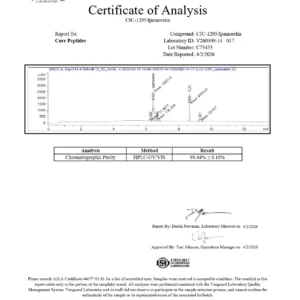
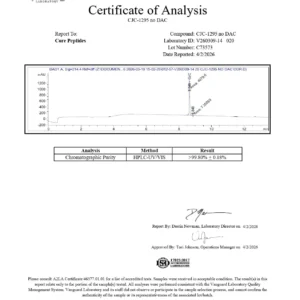
CJC 1295 for sale in this dual blend format combines two of the most widely researched synthetic growth hormone secretagogues in a single 10mg lyophilised preparation — CJC-1295 No DAC (5mg) and Ipamorelin (5mg). Both peptides are classified by researchers as growth hormone secretagogues (GHSs): compounds that stimulate GH release through distinct but complementary mechanisms. CJC-1295 mimics the actions of endogenous GHRH through GHRH receptor agonism. Ipamorelin activates the GHS-R1a ghrelin receptor through a separate pathway. Together, they engage two different receptor systems to produce a GH research profile of greater mechanistic breadth than either compound achieves independently. Supplied at >99% purity for in-vitro scientific research.
⚠️ Research Use Only. This product is intended exclusively for in-vitro scientific research. It is not approved for human or animal consumption, clinical use, or therapeutic application.
Table of Contents
- Product Specifications
- CJC-1295 No DAC Component Profile
- Ipamorelin Component Profile
- Complementary Receptor Research Rationale
- Research Applications
- Reconstitution and Storage
- FAQ
Product Specifications
| Parameter | Detail |
|---|---|
| Blend | CJC-1295 No DAC + Ipamorelin |
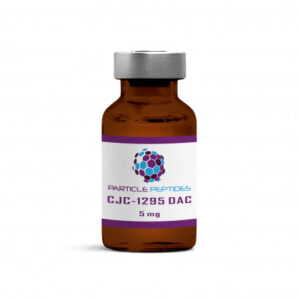
| Total Quantity | 10mg |
| CJC-1295 No DAC (Mod GRF 1-29) | 5mg |
| Ipamorelin | 5mg |
| Form | Lyophilised powder |
| Purity | >99% |
| SKU | P-CJCIPAM-10 |
CJC-1295 No DAC Component Profile
CJC-1295 No DAC — also designated Modified GRF 1-29 or Mod GRF (1-29) — is a synthetic 29-amino-acid analogue of growth hormone-releasing hormone. As the shortest functional analogue of GHRH, it retains the receptor-binding capacity of the full 44-amino-acid native sequence within its initial 29 amino acids — the region identified in research as sufficient to trigger GH release from pituitary somatotroph cells.
The No DAC specification is significant for this blend’s research profile. Without the Drug Affinity Complex albumin-binding modification, CJC-1295 No DAC produces an acute, pulsatile GH release pattern rather than the sustained stimulation associated with the DAC-modified version. This pulsatile release profile is considered by researchers to more closely mirror the physiological GH secretion pattern — a relevant variable for research protocols examining natural GH axis biology.
Ipamorelin Component Profile
Ipamorelin is a synthetic pentapeptide classified among growth hormone secretagogues. It falls into a category of GHSs that stimulate GH release through GHS-R1a (ghrelin receptor) agonism — distinct from GHRH receptor-mediated GH release. Importantly, ipamorelin is not classified as a growth hormone-releasing peptide (GHRP) in the strictest sense — rather, it is a GHS that activates ghrelin receptors to indirectly stimulate GH secretion.
The defining research characteristic of ipamorelin in this context is its selectivity. Unlike GHRP-2 and GHRP-6, ipamorelin does not produce significant ACTH or cortisol elevation at GH-stimulating concentrations — making it the cleaner GHS-R1a agonist for research protocols where adrenal axis confounding must be minimised.
Complementary Receptor Research Rationale
Both ipamorelin peptide for sale and CJC-1295 are classified as GH secretagogues and studied for similar downstream GH-related research applications — but their mechanistic foundations are pharmacologically distinct.
CJC-1295 engages the GHRH receptor — signalling through the cAMP-PKA intracellular cascade. Ipamorelin engages GHS-R1a — signalling through the IP3/calcium intracellular cascade. These are two different receptor systems activating two different intracellular signalling pathways to converge on GH secretion from anterior pituitary somatotrophs.
Where the two peptides appear to differ most meaningfully is in pharmacokinetics. The half-life profile of CJC-1295 No DAC — shorter and more acute than DAC-modified versions — differs from ipamorelin’s own pharmacokinetic profile. Research examining this blend investigates both the combined receptor biology and the interaction of different pharmacokinetic profiles within a single research preparation.
The 10mg cjc 1295 ipamorelin blend format providing 5mg of each component enables equimolar research starting points for comparative and combined activity investigation.
Research Applications
This blend is investigated within the following approved in-vitro research domains:
- GHRH receptor and GHS-R1a simultaneous activation research
- Dual-pathway GH secretagogue biology
- Comparative pharmacokinetic profile investigation
- GH pulsatility and anterior pituitary secretion studies
- IGF-1 axis modulation downstream of dual secretagogue stimulation
- Anabolic signalling pathway research
- Metabolic rate and body composition investigation
- Sleep architecture and GH pulse correlation studies
Reconstitution and Storage
Reconstitute with sterile or bacteriostatic water. Add solvent slowly along the vial wall and allow to dissolve by gentle rotation. Do not shake or vortex. Store lyophilised powder at −20°C. Once reconstituted, maintain at 4°C and use within the timeframe specified by your research protocol. Protect from light and avoid repeated freeze-thaw cycles.
Explore additional GH secretagogue blend and individual compound preparations in our Anti-Age, Muscle Growth and Weight Loss research categories.
FAQ
What is the CJC 1295 for sale ipamorelin blend? CJC 1295 for sale in this dual blend format is a 10mg lyophilised research preparation combining CJC-1295 No DAC / Mod GRF 1-29 (5mg) and Ipamorelin (5mg) at >99% purity. Both are classified as GH secretagogues — CJC-1295 through GHRH receptor agonism and ipamorelin through GHS-R1a ghrelin receptor agonism. Together they engage two distinct receptor systems for multi-pathway GH secretagogue research. For in-vitro scientific research only.
What is ipamorelin peptide for sale used for in research? Ipamorelin peptide for sale is used in GH secretagogue receptor binding studies, GHS-R1a agonism research, GH pulsatility investigation, IGF-1 axis modulation, sleep architecture correlation and metabolic rate research. Its selectivity — not producing significant ACTH or cortisol elevation at GH-stimulating doses — makes it a particularly clean research tool for isolating GH-specific physiological effects without adrenal axis confounding.
Is ipamorelin for sale the same as a GHRP? Ipamorelin for sale is classified as a growth hormone secretagogue (GHS) rather than a growth hormone-releasing peptide (GHRP) in the strictest mechanistic classification. It stimulates GH release through GHS-R1a ghrelin receptor agonism — the same receptor family as GHRP-2 and GHRP-6 — but is distinguished by its selective pharmacology, not producing the ACTH and cortisol elevation associated with classical GHRPs at equivalent GH-stimulating doses.
What is ipamorelin price for research-grade preparations? Ipamorelin price for research-grade lyophilised preparations reflects the compound’s pentapeptide synthesis requirements, >99% purity specification and quality standards for reproducible in-vitro research. Price reference details for this blend are provided in the specifications above. The blend format combining CJC-1295 No DAC and ipamorelin offers research value for protocols requiring both compounds simultaneously.
How does the CJC-1295 & ipamorelin dual blend differ from the triple blend with GHRP-2? The dual CJC-1295 and ipamorelin blend provides GHRH receptor and GHS-R1a dual-pathway stimulation through ipamorelin’s selective GHS-R1a activity. The triple blend adds GHRP-2 as a second GHS-R1a agonist — enabling comparative GHS-R1a pharmacology between ipamorelin and GHRP-2 within the same framework. The dual blend is appropriate for research focussing cleanly on GHRHR/GHS-R1a synergy without the additional ACTH and cortisol variables introduced by GHRP-2.
Be the first to review “CJC-1295 No DAC & Ipamorelin Blend 10mg”
Related products
Longevity and Anti-aging Research
Weight Loss Research
Core Peptides
Core Peptides
Muscle Growth research
Longevity and Anti-aging Research
Cognitive Enhancement Research
Longevity and Anti-aging Research
Reviews
There are no reviews yet.