
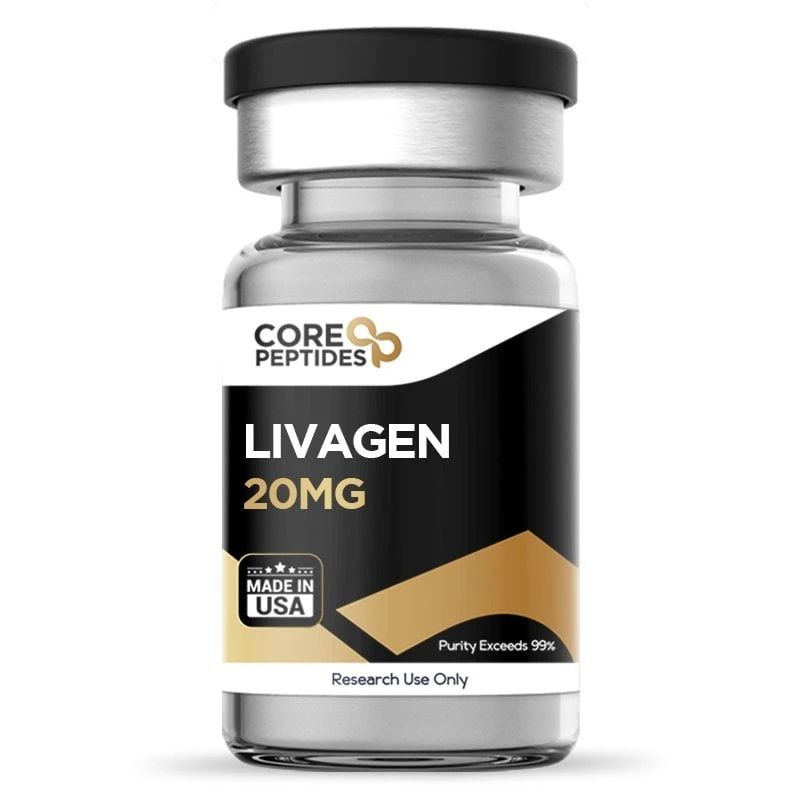
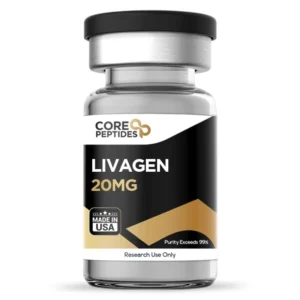
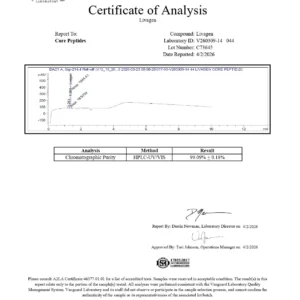
Livagen 20mg
€62.10
Livagen Peptide 20mg — Proven Chromatin Bioregulator Research Compound
Livagen peptide is a short tetrapeptide bioregulator containing four amino acids — lysine, alanine, aspartic acid and glutamic acid. Classified as a bioregulator in the tradition of short signalling peptides that act directly on DNA structure and gene expression, Livagen is primarily investigated for its proposed capacity to act on chromatin, DNA and gene expression patterns. Its most mechanistically distinctive proposed activity is the de-condensation of chromatin — potentially reactivating genes that had become non-functional through chromatin condensation during the aging process. Supplied as a lyophilised powder in a single 20mg vial at >99% purity for in-vitro scientific research.
⚠️ Research Use Only. This product is intended exclusively for in-vitro scientific research. It is not approved for human or animal consumption, clinical use, or therapeutic application.
Table of Contents
- Product Specifications
- Chromatin Biology and Research Context
- De-Condensation Mechanism Research
- Gene Reactivation and Cell Activity Research
- Lymphocyte and Immune Research
- Comparison with Related Bioregulators
- Research Applications
- Reconstitution and Storage
- FAQ
Product Specifications
| Parameter | Detail |
|---|---|
| Peptide | Livagen |
| Amino Acids | Lysine-Alanine-Aspartic Acid-Glutamic Acid |
| Classification | Tetrapeptide Bioregulator |
| Quantity | 20mg |
| Unit | 1 Vial |
| Form | Lyophilised powder |
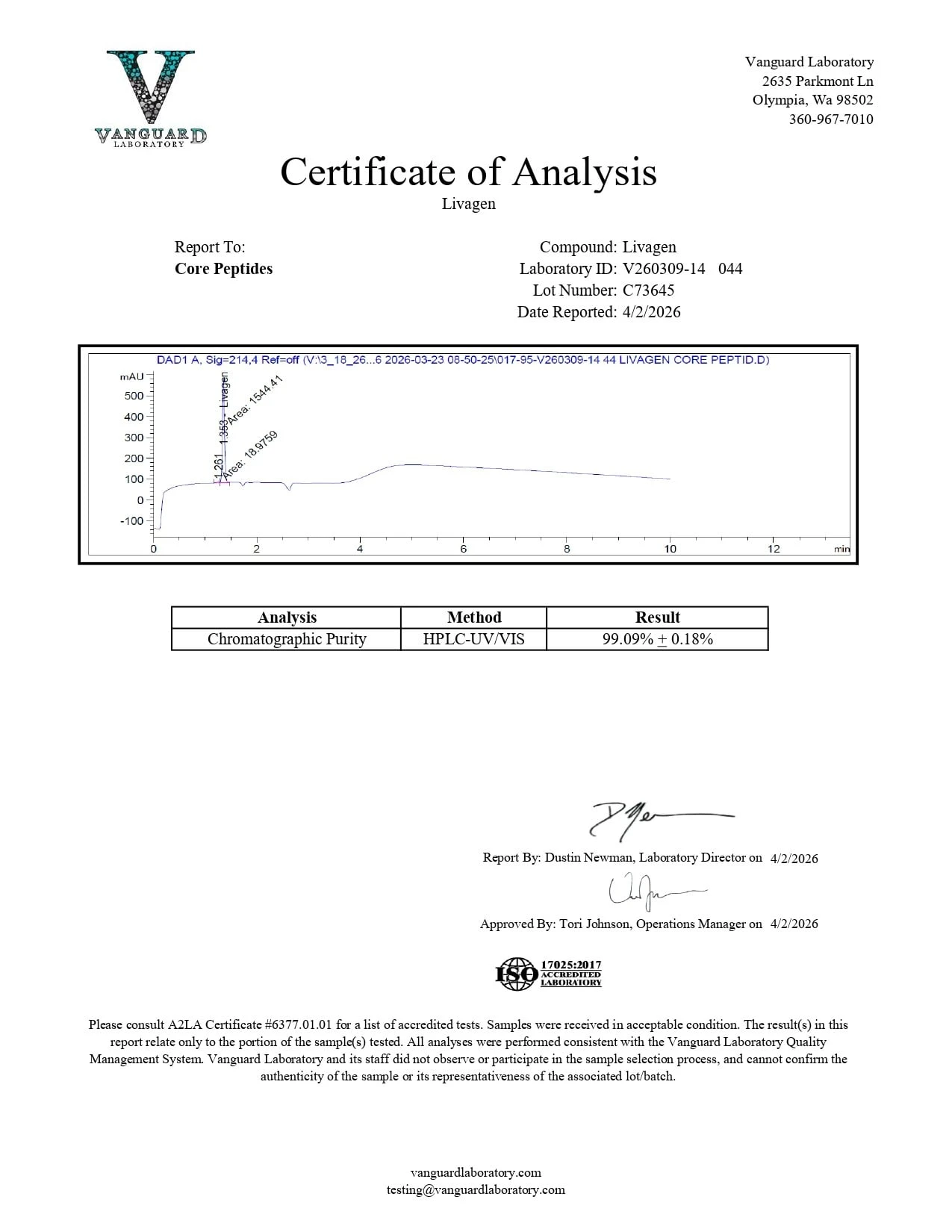
| Purity | >99% |
| SKU | P-Livagen |
Chromatin Biology and Research Context
To understand the research significance of livagen peptide, it is essential to understand the structural hierarchy of genetic material — from DNA through chromatin to chromosomes.
DNA is a double-helix structure that does not exist freely within the nucleus. Instead, it is tightly associated with proteins called histones — small, positively charged proteins that bind to the negatively charged DNA backbone through electrostatic interactions. Multiple DNA-histone complexes are organised into nucleosomes, which further condense into chromatin fibres. Multiple chromatin fibres then condense into the chromosomes visible during cell division.
This chromatin architecture has profound functional consequences. Genes whose chromatin is tightly condensed — heterochromatin — are generally transcriptionally inactive, their promoters inaccessible to transcription machinery. Genes in less condensed euchromatin are transcriptionally accessible. The balance between chromatin condensation states is therefore a primary regulator of gene expression patterns across cell types and across the aging process.
De-Condensation Mechanism Research
The primary mechanistic research focus of livagen is chromatin de-condensation — the proposed capacity of this tetrapeptide to reduce chromatin condensation, transitioning genes from inactive heterochromatic states to more accessible euchromatic states.
If chromatin de-condensation is achieved, genes that had become transcriptionally silent through progressive chromatin compaction — a process well-documented in aging cells — might be reactivated. This reactivation has the potential to restore cell activity and function that has declined through age-associated gene silencing.
Research has posited that Livagen acts on chromatin by interacting with histone proteins or the DNA-histone interface — potentially modifying the post-translational modification state of histones (acetylation, methylation) that controls chromatin condensation levels. This proposed mechanism connects Livagen research to the broader field of epigenetic biology — where chromatin modification states represent a central regulatory layer of gene expression.
Gene Reactivation and Cell Activity Research
The downstream consequences of chromatin de-condensation investigated for livagen for sale compounds include gene reactivation — the restoration of transcriptional activity to previously silenced genes — and the resulting improvements in cellular function and production.
Research has suggested that Livagen may increase energy levels and skin elasticity through gene reactivation mechanisms. These functional improvements are proposed to reflect the restoration of gene expression programmes that had been progressively silenced during the aging process — connecting Livagen’s chromatin biology research profile directly to longevity and anti-aging investigation.
The concept that reversing chromatin condensation can restore youthful gene expression patterns is a central hypothesis in aging biology — and Livagen’s proposed de-condensation activity makes it a research tool of direct relevance to this investigation.
Lymphocyte and Immune Research
A mechanistically important and specific research dimension of livagen peptide benefits investigation involves lymphocytes — the white blood cells essential for adaptive immune responses.
Research has suggested that Livagen acts on lymphocytes — specifically proposing that it may reactivate ribosomes within lymphocytes by unpacking chromatin and modifying gene expression. Lymphocyte function is critically dependent on their capacity for rapid gene expression changes in response to immune activation — signalling, proliferating, differentiating and mounting targeted immune responses. Age-related decline in lymphocyte function is a well-documented feature of immunosenescence.
The proposed mechanism by which Livagen may coordinate cellular responses and control inflammatory responses in lymphocytes connects its chromatin biology research to immunosenescence investigation — the age-related decline in immune competence that increases susceptibility to infection and malignancy in aging models.
A clinical research study by T. Lezhava et al. specifically examined the effects of the peptide bioregulators Epitalon, Livagen and Vilon on chromatin in lymphocytes of aged research models — reporting that these peptides caused activation (deheterochromatinisation) of chromatin in lymphocytes. This finding directly supports the mechanistic hypothesis of Livagen-induced chromatin de-condensation in immune cells.
Comparison with Related Bioregulators
Livagen is not the only bioregulator peptide investigated for chromatin de-condensation activity. The Lezhava et al. research specifically examined Livagen alongside Epitalon (the pineal gland-derived telomerase activator) and Vilon (another short bioregulator peptide) — finding that all three produced chromatin activation in aged lymphocyte models.
This comparative context positions Livagen within the Khavinson-adjacent bioregulator tradition — short signalling peptides that operate through DNA and chromatin interaction mechanisms rather than conventional receptor pharmacology. While Livagen shares this general mechanistic framework with compounds like Bronchogen, Cartalax and Cardiogen, its specific amino acid sequence (KADE) and proposed immune cell targeting through lymphocyte chromatin de-condensation distinguishes it as a mechanistically specific research tool within this broader compound class.
Research Applications
Livagen is investigated within the following approved in-vitro research domains:
- Chromatin de-condensation and heterochromatin reactivation research
- Histone modification and epigenetic gene regulation studies
- Gene expression reactivation in aged cell models
- Lymphocyte chromatin biology and immune function research
- Immunosenescence investigation and immune reactivation
- Energy metabolism gene expression research
- Skin biology and connective tissue gene regulation
- Comparative bioregulator chromatin activation research
- Aging biology and longevity gene expression investigation
Reconstitution and Storage
Reconstitute following standard lyophilised peptide protocols appropriate to your research application. Store lyophilised powder at −20°C. Once reconstituted, maintain at 4°C and use within the timeframe specified by your research protocol. Protect from light and avoid repeated freeze-thaw cycles.
Explore additional bioregulator and longevity research compounds in the Longevity and Anti-aging Research and Immunity Enhancement Research categories.
FAQ
What is livagen peptide? Livagen peptide is a tetrapeptide bioregulator (Lysine-Alanine-Aspartic Acid-Glutamic Acid) proposed to act on chromatin, DNA and gene expression. Its primary investigated mechanism is chromatin de-condensation — potentially reactivating genes silenced through progressive chromatin condensation during aging. Research has examined its effects on lymphocyte function, immune coordination, energy levels and skin elasticity through gene reactivation. Published research by T. Lezhava et al. documented chromatin activation in aged lymphocyte models. Supplied as a 20mg lyophilised powder with >99% purity for in-vitro scientific research.
What are livagen peptide benefits characterised in research? Livagen peptide benefits characterised in research include chromatin de-condensation and gene reactivation in aged cell models, lymphocyte chromatin activation and potential immune function restoration, possible improvements in energy levels and skin elasticity through gene expression restoration, and coordination of cellular immune responses. These findings are within approved in-vitro research frameworks — not approved therapeutic claims.
Is livagen for sale for human use? Livagen for sale through this platform is supplied exclusively for in-vitro scientific research. It is not approved for human administration, anti-aging therapy or any clinical application. All research involving this compound should comply with applicable institutional and regulatory requirements.
What is chromatin de-condensation and why is it relevant to livagen research? Chromatin de-condensation refers to the transition of tightly packed heterochromatin — where genes are transcriptionally inactive — to more accessible euchromatin states where gene transcription can resume. This transition is mechanistically significant in aging biology because progressive chromatin condensation is associated with the silencing of genes involved in cellular maintenance, energy production and immune function. Livagen’s proposed capacity to induce this de-condensation is therefore of direct relevance to research examining the molecular mechanisms of aging and potential approaches to restoring youthful gene expression patterns.
How does livagen compare to Epitalon in bioregulator research? Both Livagen and Epitalon are short bioregulator peptides investigated for anti-aging biology — and both were examined in the same T. Lezhava et al. research study for their effects on lymphocyte chromatin in aged models. Epitalon (Ala-Glu-Asp-Gly) is primarily characterised for telomerase activation and telomere maintenance. Livagen (Lys-Ala-Asp-Glu) is primarily characterised for chromatin de-condensation and gene reactivation in lymphocytes. Both produce chromatin activation effects in aged lymphocytes but through potentially distinct mechanistic pathways and with different primary research applications.
Be the first to review “Livagen 20mg”
Related products
Longevity and Anti-aging Research
Longevity and Anti-aging Research
Immunity Enhancement Research
Healing and Regeneration research
Healing and Regeneration research
Core Peptides
Longevity and Anti-aging Research
Core Peptides
Reviews
There are no reviews yet.